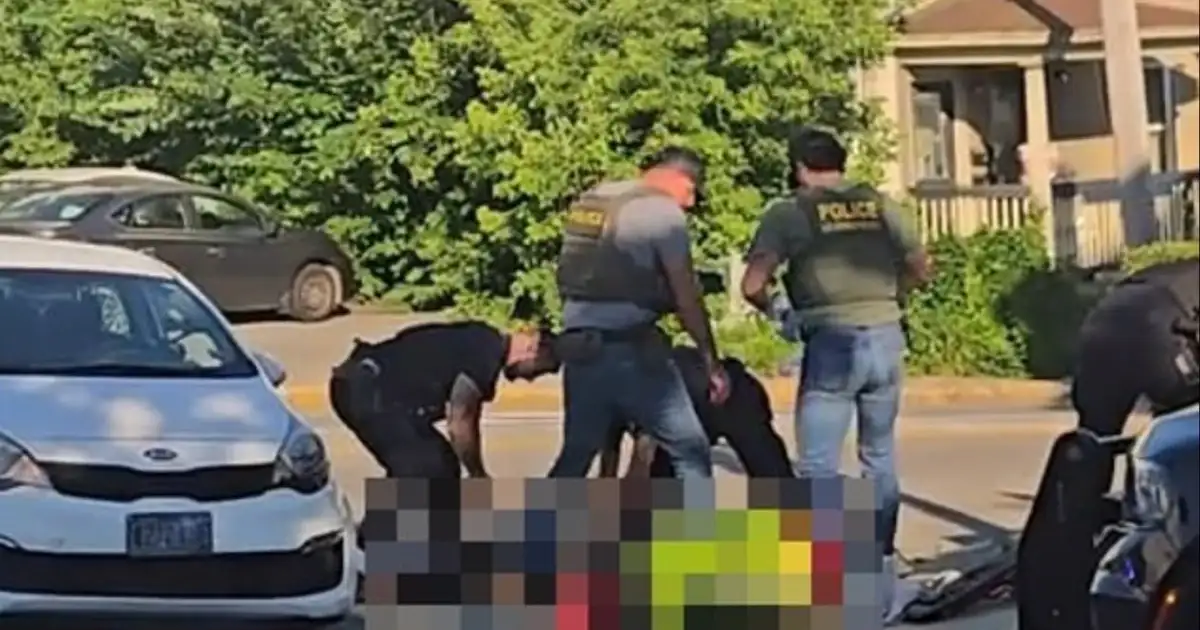

The footage from Maine isn’t just a gut punch; it’s a cold, calculated dissection of state power, a stark, unforgiving look at how swiftly a life can unravel and extinguish under the unblinking gaze of federal authority. A man, alone in a white Kia, driving in slow, agonizing circles before ending up dead on a sidewalk. This isn’t merely “disturbing”; it’s a searing indictment, a question mark branded onto the public consciousness, demanding answers that will undoubtedly be met with obfuscation.
The Slow Dance of Death
Forget the carefully curated press releases and the anodyne talking points. The raw visual tells a story that words struggle to sanitize, a narrative ripped from the sterile halls of bureaucracy and splattered onto the asphalt. A vehicle, moving with an almost surreal, dreamlike slowness – not in a high-speed chase, not threatening immediate harm, but seemingly disoriented, perhaps even in distress. And then, the abrupt, brutal end: a man shot, lying dead, his life extinguished in a moment of federal action.

What exactly transpired in those terrifying moments leading up to the gunfire? What was the actual perceived threat that escalated to a fatal conclusion against someone merely driving in circles? We are relentlessly fed the narrative of split-second decisions, of the inherent dangers faced by law enforcement. But the chilling footage of a slow-moving Kia doesn’t just complicate that narrative; it shatters it. It rips away the convenient excuses and forces us to confront the stark reality of federal agents operating with a chilling level of autonomy, often bypassing local oversight entirely, making their decisions – and their devastating consequences – feel both distant and horrifyingly intimate.
Maine has, for too long, been a crucible for these simmering tensions, with ICE operations frequently stirring up local unease and demands for transparency that routinely go unanswered. Communities don’t just want to know; they deserve to know who is operating on their streets, under what authority, and with what level of accountability. This incident, captured on film for the world to see, isn’t just another data point in a long list of grievances; it’s a flashpoint. It strips away the bureaucratic language, the officialese, and presents the unvarnished, brutal truth of a life ended, raising agonizing questions about training, de-escalation protocols, and the dangerously low threshold for lethal force when federal power is unleashed.
Federal Hand, Local Blood
The federal government, through agencies like ICE, wields an almost terrifyingly immense power. Their mandate is not just broad, their resources not just vast; their operations are frequently cloaked in a convenient shroud of ‘national security’ or ‘enforcement necessity.’ But when that abstract, distant power translates to a cold body on a sidewalk in a local community, the academic debates evaporate. The abstract becomes brutally, intensely personal.
The calls for transparency aren’t just academic musings; they are screams of raw frustration, driven by the stark reality of incidents like this. People don’t just want to understand; they demand to understand the protocols, the chain of command, the review processes. They demand to know if every conceivable avenue for a non-lethal resolution was not just considered, but actively exhausted. When the “disturbing footage” shows something less like a high-stakes confrontation and more like a tragic misunderstanding, a colossal failure of de-escalation, or a situation catastrophically mishandled, the already fragile trust between federal agencies and the public doesn’t just erode; it shatters, leaving only cynicism and fear.
It’s all too easy for federal agencies to operate under the convenient assumption that their actions are inherently justified by their mission, that their badge is a blank check for lethal force. But the public, particularly when confronted with the visceral, undeniable visual evidence of a life lost under such profoundly ambiguous circumstances, is — and should be — utterly unforgiving. This isn’t about condemning every federal agent; it’s about demanding that such immense, life-ending power be exercised with extreme caution, with an unwavering commitment to de-escalation, and with absolute, non-negotiable accountability, especially when it results in death.
The Red Marker
Here’s the bitter truth, scrawled in blood-red across the sanitized official reports: This isn’t just an “incident” that warrants an “investigation.” This footage, showing a man driving a white Kia in slow, agonizing circles before being shot dead by federal agents, is a chilling, unvarnished demonstration of the absolute, unyielding, almost divine power of the state. The real takeaway isn’t just about the immediate cause of death, but the systemic, ingrained tolerance for such outcomes. It tells us, unequivocally, that when federal authority confronts ambiguity, confusion, or even profound distress, the default setting can still be — terrifyingly — lethal force.
The “transparency” everyone is clamoring for? It’s a hollow promise that won’t change the cold, hard fact that the federal government’s primary motive, when push comes to shove, is the assertion and maintenance of its own dominance. The human cost, particularly for those already on the margins or perceived as non-compliant, is often just unfortunate, acceptable collateral damage. This isn’t about justice for the victim; it’s about sending a stark, brutal message to us all: comply, or face the ultimate, irreversible consequence. The true power on display here isn’t justice, it’s the unchecked ability to end a life, and the footage of that slow, agonizing circle is merely the public’s front-row seat to its raw, unapologetic, and terrifying display. What will it take for us to look away from this morbid spectacle and demand something more?
Source: Google News