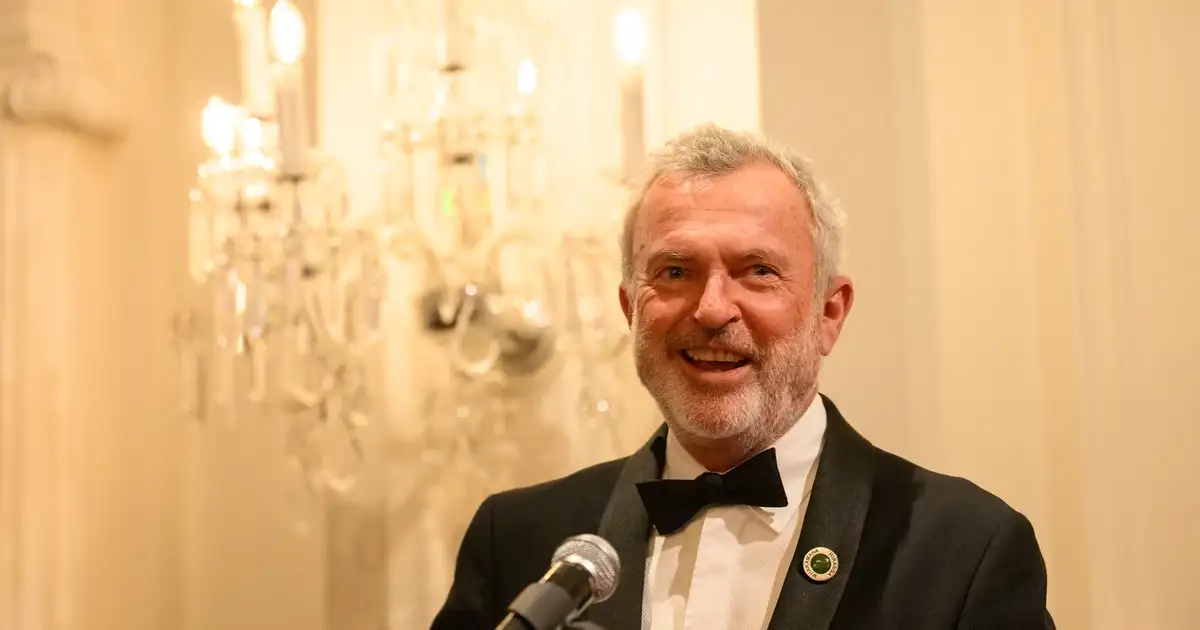

In a world often fixed on the glitz and glamour of celebrity, the passing of Sam Neill, the iconic star whose gravitas graced everything from Jurassic Park to the gritty streets of Peaky Blinders, has offered a profoundly human story far more compelling than any of his on-screen dramas. Neill’s final moments, surrounded by his beloved family, were marked by a reunion almost too perfect for a screenplay: a quarter-century after placing his son for adoption, the two reconnected, bringing a poignant, bittersweet closure to a hidden chapter of the actor’s life.
This deeply personal reconciliation, 25 years after Neill made the agonizing decision to put his son up for adoption, illuminates a hidden truth about the actor’s life. It wasn’t merely a private matter; it was a reflection of the enduring, often circuitous, path of familial love and the relentless human yearning for completion.

A Life Lived, A Family Reclaimed
Neill, celebrated for roles from Dr. Alan Grant to Major Chester Campbell, maintained a public persona of dignified charm and quiet intensity. Yet, behind the cameras, a private struggle of immense emotional weight unfolded.
The decision to place his son for adoption years ago was an agonizing, solitary burden. While details remain scant, respecting privacy, their reunion speaks volumes about Neill’s character and his ultimate priorities.
Industry insiders have often noted Neill’s quiet determination, a quality extending far beyond his craft. His unwavering resolve to mend this familial bond, even facing mortality, is a powerful, almost cinematic, demonstration of the human spirit. This underscores a fundamental truth: family, in all its complex forms, frequently holds ultimate sway.
For a man portraying so many compelling characters, his most compelling role might well have been his own, played out in the quiet drama of his final years.
“Sam Neill always carried a certain gravitas, a quiet strength that emanated from the screen,” observed one veteran Hollywood publicist, speaking to Reuters. “But this story of reconciliation, at the very end, truly defines his character off-screen. It’s a profound lesson in humanity, a reminder that even the most celebrated among us grapple with deeply personal, often painful, decisions.”
The Unseen Chapters of Stardom
Celebrity often presents a meticulously curated image, a polished facade designed for public consumption. We see red carpets and glittering awards, but rarely glimpse the raw, vulnerable decisions made far from public scrutiny. Neill’s story is a stark reminder of these unseen chapters: the sacrifices and private battles accompanying a life in the unforgiving spotlight.
How does one manage such intensely personal choices when every move risks becoming tabloid fodder?
The pressures are immense, multifaceted, and relentless:
- Early career demands: The relentless, often brutal, pursuit of success in Hollywood can consume every waking moment, often overshadowing personal priorities, relationships, and even the very notion of a stable home life.
- Privacy concerns: Public figures, acutely aware of the media’s insatiable appetite, often shield their most sensitive family matters from intense, often invasive, scrutiny, leading to isolation and unspoken burdens.
- The weight of time: Years can pass, creating vast, seemingly insurmountable distances, but also paradoxically fostering a deep-seated, sometimes desperate, desire for connection and resolution as life’s clock ticks ever louder.
This reunion suggests a profound, undeniable shift in priorities as Neill faced his final act. The glittering accolades of Hollywood, the critical acclaim, the adoration of millions – surely all these paled in comparison to the quiet comfort, the profound peace, of a family made whole. It’s a narrative far more compelling than any screenplay, a raw, unflinching glimpse into the soul of a man who, at the very end, sought and found a measure of peace and closure.
Reconciliation’s Enduring Power
The concept of reconciliation, particularly as life draws to a close, carries immense emotional weight. It speaks to a deep, universal human need for resolution, forgiveness, and connection – a mending of one’s history.
For Sam Neill, this reunion with his son was paramount, a final, essential piece of his life’s puzzle. It allowed him to depart not just surrounded by loved ones, but by a more complete, authentic version of his family. This act of mending bridges echoes loudly across the entertainment landscape, a counterpoint to tales of celebrity excess and estrangement.
It’s a narrative that transcends mere celebrity. It’s about the profound power of forgiveness, the quiet strength of understanding, and the relentless pull of blood ties. The timing, coinciding with his death, is not merely poignant; it feels almost fated, a final, deliberate act of love and healing.
This encourages observers to reflect on their own relationships, unspoken words, and bridges needing mending. Neill’s final act, a reflection of human capacity for growth and grace, prompts these deeply personal questions.
A Final Bow, A Lasting Message
Sam Neill’s career was a masterclass in versatile acting, bringing unparalleled depth to every role. From Dr. Alan Grant to Major Chester Campbell, he captivated audiences with his presence and talent.
Yet, his final, most intimate performance was perhaps his most impactful. Reconnecting with his son was a quiet, monumental achievement, a personal triumph that offered him and his family a profound sense of closure and peace.
His death, surrounded by loved ones including his long-lost son, provides a powerful, enduring message. The true measure of a life, it insists, is not solely fame or awards, but love fostered, connections reclaimed, and peace found within one’s heart.
What quiet battles do other stars fight behind their carefully constructed facades? What profound reconciliations, what hidden truths, await them? Neill’s story reminds us that even the grandest public lives hold the most intimate, human stories.
His legacy is not just of a brilliant actor, but of a man who understood, at the very end, what truly mattered. It is a legacy richer, deeper, and infinitely more human for it.
Source: Google News