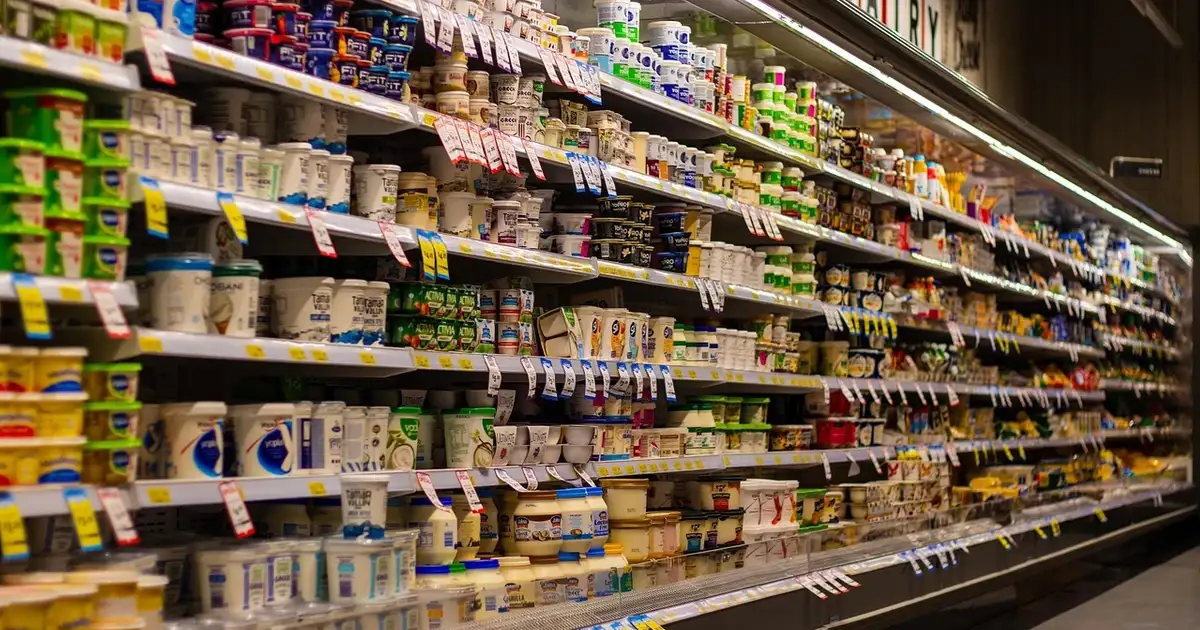

The American consumer isn’t just feeling the pinch at the supermarket; they are being systematically fleeced, and the polite term for it is “inflation.” For every dollar spent, less food makes it into the cart, a brutal economic reality that is reshaping household budgets and political landscapes.
New economic data confirms this painful truth with stark clarity. The Consumer Price Index reveals that “food at home” costs remain stubbornly, punishingly high. Shoppers are forced to spend more while taking home fewer goods, a trend that gnaws at family budgets every single day, forcing impossible choices on millions.
The Shrinking Cart, The Expanding Bill
The arithmetic is unforgiving. While grocery store dollar sales might have increased by a modest 3.5% year-over-year, the actual volume of goods sold has, in a cruel twist, decreased by an average of 2.8% over the same period. This isn’t growth; it’s a stark illustration of inflation hitting hard, a silent tax on every household. Consumers are shelling out more cash for less product, a raw deal by any measure, and one that Washington seems incapable or unwilling to truly address.
Families, cornered by these relentless price hikes, are desperate for relief. Many are now forced to abandon their preferred brands, opting instead for cheaper private-label alternatives. Sales of these store-brand products surged by a staggering 7.4% in the last quarter, a clear and undeniable shift in purchasing habits. This isn’t about brand loyalty; it’s about survival, about actively seeking out any alternative just to keep food on the table.
Consider the cold, hard numbers: the average American household’s monthly grocery bill has ballooned by approximately $150, a staggering 28% increase compared to just two years ago.
This isn’t spare change that can be shrugged off. That extra cash is gone, evaporated from savings, meaning less money for rent, utilities, or essential school supplies. Basic necessities, once taken for granted, have become unaffordable luxuries for far too many, pushing families closer to the brink.
Fresh produce, once a staple of a healthy diet, is now an indulgence many budgets simply cannot bear. People are making impossible choices: cutting back on fruits, vegetables, and other discretionary food purchases. This isn’t merely an economic inconvenience; it impacts the health, well-being, and quality of life for millions across the country. The financial strain is widespread, undeniable, and frankly, shameful in a nation of such abundance.
Washington’s Political Vaudeville
President Donald Trump’s administration finds itself squarely in the harsh spotlight of this grocery crisis. Republicans, the party currently in power, acknowledge the challenge of food inflation, but their rhetoric is a predictable exercise in deflection. They are quick to point fingers elsewhere, often attributing persistent high prices to nebulous “global factors” or, more pointedly, to the lingering effects of past administrations’ policies, particularly the much-maligned “Bidenomics.”
The White House, for its part, highlights initiatives aimed at stabilizing supply chains and increasing competition in the food sector. These efforts, they assert, will curb what they suggest is “potential price gouging.” It’s a familiar, well-worn tune: blame external forces, tout minor reforms, and hope the public buys the narrative.
“We are actively working to untangle global supply chain issues that have plagued our economy for years,” a Republican spokesperson told CNBC recently. “The President is committed to bringing down costs for American families, despite the headwinds created by previous policies.”
Meanwhile, the Democratic opposition fires back with equal ferocity. They relentlessly criticize the Trump administration’s economic policies, labeling the current situation as a direct and unavoidable consequence of “Trump’s policies” or “MAGA-nomics.”
Democrats argue, with considerable fervor, that excessive government spending, ill-conceived tax cuts, and regulatory policies under the current administration are the true fuel for this inflationary fire. They claim these policies make everyday life prohibitively expensive for American families, transforming the grocery crisis into a potent, emotional campaign talking point.
The aim is clear: galvanize voters ahead of upcoming elections by painting the current economic climate as a direct failure of Republican governance. Both sides offer plenty of excuses, plenty of blame, but precious little in the way of tangible relief. No one, it seems, wants to truly own the very real pain felt by families every time they push a cart through a supermarket aisle.
“This grocery crisis is a direct result of reckless spending and failed policies from this administration,” a prominent Democratic Senator declared to The Washington Post. “Families cannot afford another four years of this economic pain, this assault on their wallets and their dinner tables.”
It is, in essence, a classic Washington D.C. blame game, a political vaudeville act designed to distract and obfuscate. The establishment, regardless of party, always protects its own, offering platitudes and engaging in endless finger-pointing while the actual cost, the real human burden, lands squarely on the shoulders of the American taxpayer. This is the enduring, cynical truth of how power operates in this town, a cycle as predictable as the tides.
History’s Echoes, Taxpayers’ Burden
This isn’t just about abstract statistics on a ledger; it’s about the gut-wrenching reality of parents skipping meals to ensure their children eat. It’s about seniors on fixed incomes agonizing over choices between life-sustaining medication and basic groceries. This tangible, crushing burden affects millions of households daily, a grinding reality that saps hope and financial security.
The current prolonged period of high food inflation draws stark, unsettling parallels to the late 1970s and early 1980s. That era was characterized by widespread public discontent, a pervasive sense of economic malaise, and escalating costs for essential goods that became the defining political issue of the day. It contributed to significant shifts in political power, as the feeling of “stagflation”—high prices coupled with economic stagnation for many—resonates with an eerie familiarity today. Have we learned nothing from history, or are we simply doomed to repeat its most painful lessons?
The “why” behind this crisis is complex, yet some factors are undeniably clear. Post-pandemic supply chain disruptions continue to linger like a bad hangover, while ongoing geopolitical instability, from Eastern Europe to the Middle East, impacts global food and energy markets with brutal efficiency.
These factors combine to create a unique and persistent inflationary environment, a perfect storm not witnessed in decades. Yet, while these global forces undoubtedly play a role, one cannot ignore the uncomfortable truth that corporate profits are also soaring to unprecedented heights.
Is this “greedflation,” where corporations exploit inflationary pressures to boost their profit margins at the expense of the everyday consumer? Or is it simply the unavoidable consequence of genuinely rising input costs for labor, energy, and raw materials? The answer, predictably, depends entirely on who is talking.
Grocery retailers and food producers vociferously argue their hands are tied, claiming they face elevated costs themselves and that price increases are merely necessary to maintain profitability and ensure supply.
Consumer advocates and Democratic politicians, however, accuse them of exploiting the situation, of prioritizing shareholder returns over the public’s ability to eat. The debate rages, but the outcome is always the same.
Either way, the everyday American pays the price. The money flows, relentlessly, from family budgets into the coffers of corporations, and into the political machines of Washington. The cycle continues, unbroken, unwavering. This is the fundamental equation of power and money in America, an equation that rarely, if ever, changes. The politicians in Washington might ignore this reality at their peril, but the American consumer cannot. Their wallets, and their dinner tables, bear the unvarnished truth.
Source: Google News