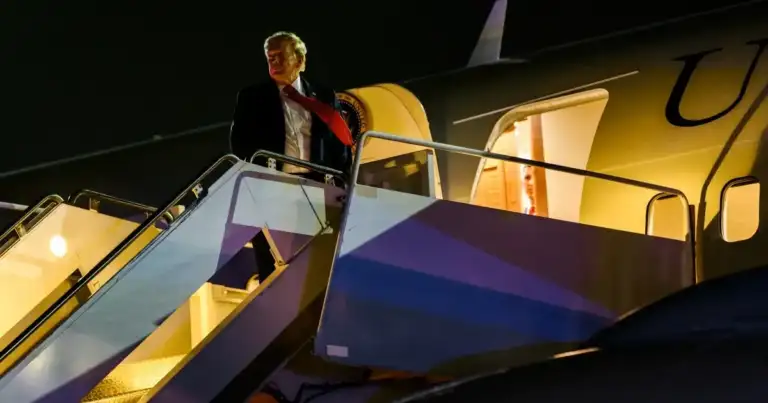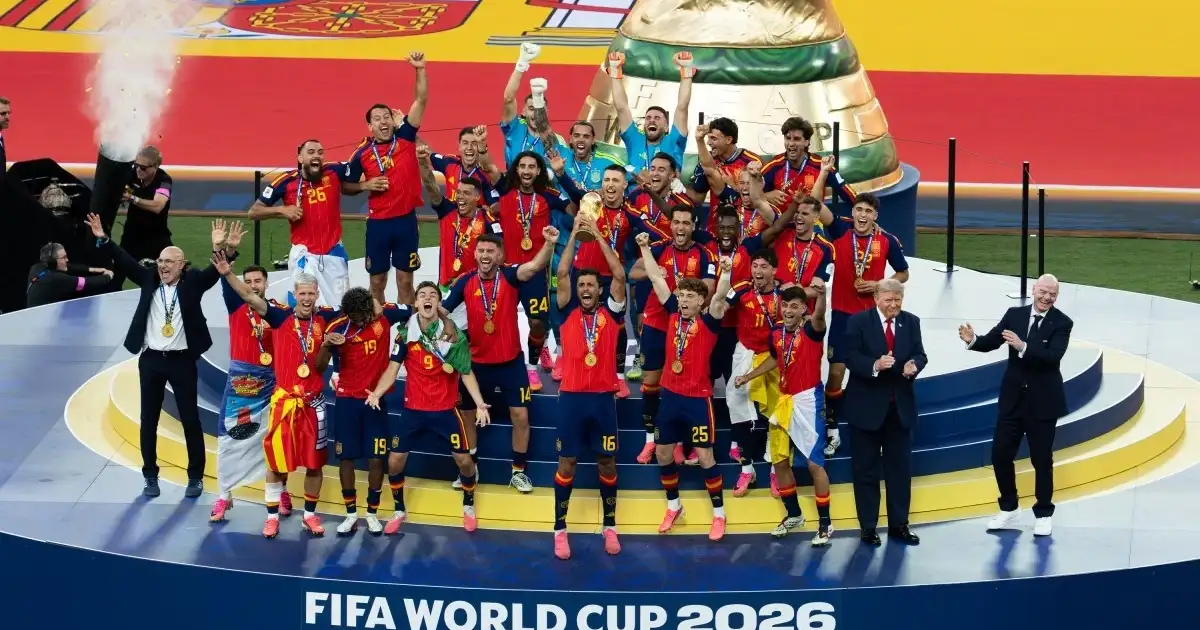

President Donald Trump’s cringe-worthy World Cup cameo wasn’t just an unfortunate moment; it was the ultimate, grotesque symbol of a tournament already drowning in its own excess. This wasn’t merely a finale; it was a fitting, ugly capstone to a spectacle blighted by unchecked greed and FIFA boss Gianni Infantino’s twisted, self-serving dreams of grandeur.
The 2026 FIFA World Cup Final, a supposed global celebration held at MetLife Stadium on July 19, 2026, devolved into an unmitigated disaster. Thousands of fans, many having saved for years for this pilgrimage, were delayed, stranded, or simply abandoned for hours. Public transport systems buckled under the strain, transforming access roads into an impenetrable nightmare. Traffic ground to a standstill, not for minutes, but for an eternity.

Attendees battled through chaotic queues that snaked for miles, a cruel gauntlet designed, it seemed, to test their very resolve. Many, utterly defeated, missed the electrifying start of the match they had come so far to witness. And then, a final, infuriating insult: President Trump’s motorcade, oblivious to the suffering, carved its path through the gridlock, his entourage gliding effortlessly into a plush, climate-controlled VIP section, far removed from the sweltering, frustrated masses.
The Sickening Chasm: VIP Privilege vs. Public Pain
The contrast was not just stark; it was sickening, a visceral punch to the gut for anyone trapped in the misery outside. While ordinary fans faced hours of gridlock, missed crucial moments, and had their dreams of a perfect day shattered, President Trump sailed past the suffering, his arrival a brazen display of untouchable privilege. Social media exploded with condemnation, and major news outlets like Reuters and The Guardian quickly amplified the outrage, painting a damning picture of this glaring disparity.
Was this truly a global festival of sport, or a stark, brutal reminder of who these mega-events truly serve? They do not cater to the passionate supporter; they cater exclusively to the powerful, the privileged, and the politically connected. Everyone else is left to endure the consequences, to navigate the broken systems, and to pay the exorbitant price, both financially and emotionally. This is the modern reality of global sports: the elite luxuriate in their exclusive boxes, sipping champagne, while the common fan endures endless frustration, treated as little more than a necessary nuisance.
The images were inescapable: hordes of stranded fans, their faces etched with disbelief and anger, desperately trying to reach a stadium that seemed determined to keep them out. This was not a celebration of unity or athletic prowess; it was a damning testament to catastrophic planning and the corrosive power of privilege. One frustrated fan, battling the suffocating crowds, didn’t mince words, declaring the entire scene “an absolute joke.” Another, staring at a static sea of brake lights, simply posed the haunting question: “Who is this actually for?”
The World Cup, in its purest form, should unite people, transcending borders and differences. This tournament, however, achieved the opposite. It vividly highlighted the widening chasm between the haves and the have-nots, a divide that President Trump’s appearance amplified with chilling precision. His effortless access while thousands struggled was more than just a gaffe; it was a direct slap in the face, perfectly symbolizing the tournament’s deep, systemic flaws and the utter contempt held for the very people who make the sport vibrant.
Infantino’s Hubris: A Nightmare Disguised as a Dream
This entire fiasco, from the traffic snarls to the shattered expectations, rests squarely on the shoulders of FIFA. More precisely, it rests on the shoulders of Gianni Infantino, the man at the helm, whose vision for the World Cup is not merely ambitious, but pure, unadulterated hubris. Infantino dreams of an ever-expanding empire: more teams, more games, more money. He cares little for the fan experience, even less for basic logistics, and seemingly nothing for the spirit of the beautiful game itself.
This expanded tournament was trumpeted as a triumph, a new era of inclusivity. Instead, it became a symbol of corporate greed run amok, a monument to organizational failure on a colossal scale. FIFA’s history is already a sordid tapestry woven with threads of corruption and scandal. The 2026 World Cup, far from turning a new page, merely continued that tradition, proving beyond a shadow of a doubt that nothing has truly changed within its shadowy halls. The focus, as always, remains relentlessly on profit margins, never on the integrity of the sport, and certainly never on the passionate, loyal people who actually love the game.
Infantino’s “dreams” are, in reality, nightmares for everyone else. They are not about fostering football; they are about expanding FIFA’s global footprint, about maximizing revenue streams at any cost. The much-vaunted expansion to 48 teams was a transparent cash grab, a cynical move that stretched already strained resources to their breaking point. It placed immense, unmanageable pressure on host cities, guaranteeing that the fan experience, the very heart of any sporting event, would suffer catastrophically. While FIFA executives jet across continents, staying in opulent five-star hotels and demanding VIP treatment, this culture of entitlement trickles down, poisoning every aspect of their events.
The MetLife Stadium debacle was not an anomaly; it was tragically predictable. It was the direct, inevitable consequence of FIFA’s arrogance, a testament to their twisted priorities, where spectacle trumps substance and profit obliterates people. How many more times must fans endure this before the message truly sinks in?
The Blight of Excess and Insatiable Greed
This World Cup was about more than just poor planning; it was a masterclass in rampant excess and insatiable greed. The entire event reeked of it, from the moment tickets went on sale to the final whistle. Ticket prices were not merely high; they were exorbitant, designed to gatekeep the experience for all but the wealthiest. Concessions were ludicrously overpriced, transforming a simple hot dog and soda into a luxury item. Every single aspect of the event was meticulously engineered to extract maximum cash, treating fans not as valued attendees, but as walking wallets to be emptied.
The host infrastructure simply could not cope. MetLife Stadium is, by any measure, a major venue, capable of handling vast crowds. But the surrounding transport systems, the vital arteries connecting fans to the spectacle, failed spectacularly. This isn’t just an oversight; it shows a fundamental, unforgivable disrespect for the very people who fuel the sport. Mega-events like this promise glory, unity, and unforgettable moments. What they consistently deliver, however, is inconvenience, frustration, and an pervasive sense of being exploited.
The sheer volume of money poured into these events is staggering, a dizzying sum that could solve countless societal problems. Yet, paradoxically, basic services often falter, leaving attendees in the lurch. This is not an isolated incident; it is a depressingly common pattern, repeating itself time and again across global sporting spectacles. The spectacle itself becomes more important than the substance of the game, the VIP experience overshadows everything, and the regular person, the lifeblood of football, becomes a mere afterthought, an expendable cog in FIFA’s money-making machine.
This tournament was a microcosm of larger, more insidious problems plaguing our global society. It laid bare how wealth and power can become utterly disconnected from reality, showcasing a world meticulously built for a select, privileged few. The “twisted dreams” of Infantino are crystal clear: he dreams of bigger, richer, more exclusive events. He does not dream of accessible, joyful football for all. The immense cost to host these tournaments, often borne by taxpayers, yields benefits that are disproportionately concentrated, while local communities frequently bear the brunt of disruption, seeing little lasting gain. This 2026 World Cup was a prime example, a masterclass in how not to host a global event, and a damning lesson in how to alienate your core audience.
The Red Marker Verdict: A Rotten Core Exposed
The 2026 FIFA World Cup Final was not just a disappointment; it was a disgrace. President Trump’s VIP arrival, while thousands struggled in a logistical hellscape, wasn’t merely ironic; it was the ultimate, undeniable symbol of this tournament’s rotten core. This entire event was a monument to FIFA’s insatiable greed and Gianni Infantino’s self-serving, hubristic vision. They preach unity and global celebration, yet they practice exclusion and blatant exploitation. The real motive is now clearer than ever: maximum profit, minimum accountability, and a complete, utter disregard for the ordinary fan. This was not a celebration of football. It was a brazen, unapologetic celebration of power and money, plain and simple.
The message delivered by MetLife Stadium on July 19, 2026, is loud, clear, and utterly damning. These mega-events, in their current form, are fundamentally broken. They prioritize the powerful and the privileged, leaving ordinary people, the true heart of the game, discarded in the dust. It’s time to demand a radical change, to insist on integrity and respect for the fans. Or perhaps, it’s time to stop paying attention altogether, and let FIFA’s gilded cage collapse under the weight of its own avarice.
Source: Google News