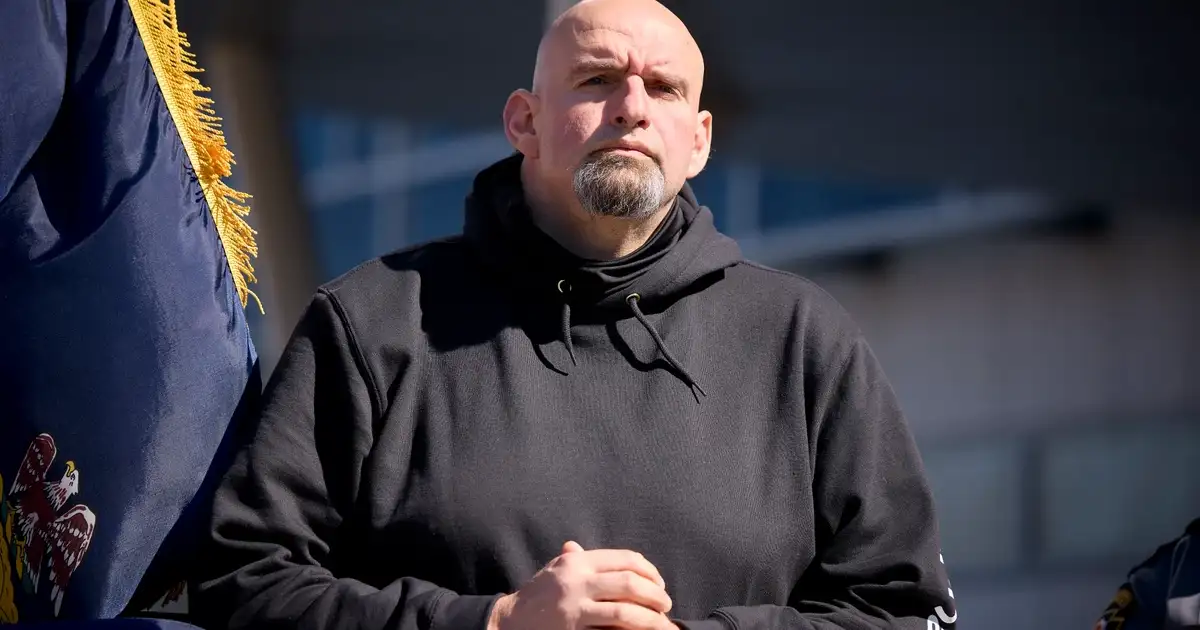

Senator John Fetterman hasn’t just dropped a political bombshell; he’s detonated a tactical IED under the very foundation of the Democratic Party’s legislative agenda. His “crazy ultimatum” on the Federal Infrastructure Modernization and Green Jobs Act isn’t merely causing friction; it’s ripping the coalition apart at the seams, threatening to derail a cornerstone initiative.
The Pennsylvania Democrat is demanding seismic shifts to the Federal Infrastructure Modernization and Green Jobs Act (FIMGJA). He stands ready to cast the deciding “no” vote against the colossal $1.2 trillion bill without them. This isn’t a negotiating tactic; it’s a declaration of war on the status quo. Fetterman insists on ironclad “Made in America” mandates for steel and manufacturing components, prioritizing Pennsylvania jobs above all else – regardless of the projected costs or potential delays to the ambitious national rollout.

This uncompromising stance has plunged the entire FIMGJA into a perilous state of jeopardy. Senate Majority Leader Chuck Schumer and the White House are caught in a desperate scramble, frantically searching for a compromise that appears increasingly elusive. As of July 22, 2026, Fetterman remains unyielding.
His office has unequivocally stated that anything less than his proposed amendments would constitute nothing short of a “betrayal of American workers.” This isn’t just politics; it’s a high-stakes game of legislative chicken, and Fetterman is holding the wheel.
The Price of Principle: Fetterman’s Ironclad Demand
Fetterman’s core demand is a monumental leap in domestic content requirements. He is pushing for federally funded projects under FIMGJA to utilize a staggering 90% domestic steel and iron. This isn’t a minor tweak; it’s a radical overhaul from the current 60% threshold, representing a seismic shift in procurement policy.
The implications are stark. Analysts from the Congressional Budget Office (CBO) have already issued a sobering assessment: such a move could inflate project costs by an additional 10-15% and stretch timelines by a grueling 18-24 months. These aren’t just numbers; they represent tangible delays and significant financial burdens that could cripple the bill’s intended impact and public perception. Is the principle worth such a steep price?
For Fetterman, this isn’t about cost-benefit analysis; it’s a principled, non-negotiable stand for American labor. His populist brand, forged in the industrial heartland of Pennsylvania, is built upon this very foundation. Recent polling within the Keystone State underscores his strategic acumen: his approval rating among union households stands at a robust 68%, significantly higher than his overall state approval of 52%. His base isn’t just behind him; they’re marching in lockstep.
My vote is not for sale, and neither are American jobs. This bill must put Pennsylvania steelworkers and manufacturers first, or it’s not a bill for the American people. Anything less is a betrayal.
He views the push for “green” initiatives as intrinsically linked to being “Made in America.” This isn’t just rhetoric; it’s a direct challenge, forcing the Democratic Party to put its money where its mouth is when it comes to supporting unions and bolstering domestic industry. It exposes a fundamental tension within the party’s priorities: climate action versus immediate, tangible job protection. Which side will ultimately prevail?
Cracks in the Coalition: Democratic Disarray
- Mainstream Democrats: Senate Majority Leader Schumer and the White House are seething. They perceive Fetterman’s demands as utterly unrealistic, a reckless gamble that could torpedo a vital piece of legislation. This bill isn’t just about infrastructure; it’s designed to create jobs, aggressively combat climate change, and modernize critical national infrastructure.
- This trifecta of policy wins is desperately needed, but the political optics of internal party warfare are catastrophic. Especially with the looming specter of the 2026 midterm elections, this isn’t just a bill; it’s their credibility on the line.
We are working tirelessly to find a path forward that addresses Senator Fetterman’s very real concerns while ensuring we pass this vital legislation for our nation’s future. Unity is paramount.
- Progressive Democrats: The progressive flank finds itself in an uncomfortable bind. Many instinctively champion robust domestic labor provisions, aligning with Fetterman’s core message. Yet, a significant contingent harbors profound concerns that his inflexible approach could sink the entire bill, thereby sacrificing crucial climate provisions they’ve fought tooth and nail for.
- Others, however, view Fetterman’s hardline as a necessary, even overdue, push to guarantee that “green jobs” are genuinely good, unionized American jobs, not just a label. It’s a classic progressive dilemma: purity of principle versus pragmatic legislative victory.
While the #FIMGJA is critical for climate action, Senator Fetterman raises valid points about ensuring these are truly good American jobs. We must find a way to strengthen domestic labor protections without sacrificing the bill’s core goals.
- Republicans: The opposition is not merely enjoying the spectacle of Democratic infighting; they are actively weaponizing it. They seize upon Fetterman’s stance to amplify their narrative of the FIMGJA’s “radical” nature, simultaneously lambasting Democrats for their perceived inability to govern or unite. While some within their ranks might quietly applaud Fetterman’s “America First” manufacturing stance, their primary objective remains to exploit and exacerbate the disunity, turning Democratic internal conflict into potent electoral ammunition.
The Bill’s Fate: Will Fetterman Kill the FIMGJA?
The immediate, chilling question reverberating through Washington is whether this ultimatum will effectively kill the entire infrastructure bill. The answer, without a dramatic shift, is a resounding “yes.”
The FIMGJA, a cornerstone of President Biden’s agenda, requires a simple majority of 50 votes in the Senate to pass via the budget reconciliation process – a procedural maneuver designed to bypass the filibuster. The Senate currently stands at a precarious 50-50 split, with Democrats, plus Independents caucusing with them, holding exactly half. Fetterman’s single “no” vote would, therefore, be the executioner’s axe, dooming the bill entirely. The prospect of a Republican crossing the aisle to salvage a Democratic priority is, given the current hyper-partisan climate and the bill’s expansive scope, virtually non-existent.
As of July 22, 2026, negotiations between Fetterman’s office and Senate leadership have stalled, yielding no discernible breakthrough. Reports from CNN and The Washington Post confirm the impasse. Fetterman’s demands for 90% domestic content for steel and iron are proving to be an insurmountable hurdle.
These demands are impossible to meet without incurring significant cost increases or triggering severe supply chain disruptions. Other moderate Democrats, already wary of the bill’s price tag, are unwilling to accept these terms, creating a deadlock that threatens to consume the entire legislative effort.
Should the FIMGJA fail in its current form, Democrats will face an agonizing set of choices. They might attempt to dismember the bill, breaking it into smaller, more palatable pieces – a significant setback that would delay key projects for months, if not years. Another, less ambitious option is a temporary funding extension for existing programs, a band-aid solution that would fall far short of the FIMGJA’s ambitious goals for national modernization and climate action.
The political fallout from such a catastrophic failure would be immense, a devastating blow to the Democratic Party’s credibility, particularly heading into the critical 2026 midterm elections. Republicans would be handed a potent, ready-made narrative, painting the party as ineffective, hopelessly divided, and incapable of delivering on its promises. This isn’t just about one bill; it’s about exposing and deepening the ideological fissures within the party, a high-stakes game of political chicken with the future of American infrastructure hanging in the balance.
So, what’s the play here? Will the Democratic leadership fold under Fetterman’s relentless pressure, accepting a more expensive, delayed bill? Or will this critical piece of legislation crash and burn, taking with it the party’s midterm hopes and a significant chunk of its progressive agenda?
The clock is ticking, and the stakes could not be higher for American workers, the Democratic Party, and the nation’s crumbling infrastructure. Fetterman has called the bluff; now, we wait to see if the House will fall.
Photo: Wikimedia Commons (query: John Fetterman)
Source: Google News