
The knife attack outside a Brooklyn synagogue wasn’t just a random act of madness; it was another brutal touchdown in a growing, insidious game of hate against New York’s Jewish community. This wasn’t a fumble or a missed tackle; it was a calculated strike, a chilling reminder that the playbook of bigotry is being executed with ruthless efficiency on our city streets.
On Wednesday evening, July 22, 2026, a maniac wielding a knife launched a direct assault, targeting two innocent individuals outside Congregation Beth Elohim synagogue in Park Slope, Brooklyn. The assailant didn’t hide his motive, reportedly screaming “Allahu Akbar” during the heinous act.
This wasn’t a random mugging; this was a declaration of war on faith.
The victims, both dedicated members of the synagogue, sustained non-life-threatening stab wounds, but the emotional scars run far deeper. They are currently stable at Methodist Hospital, recovering from the physical trauma.
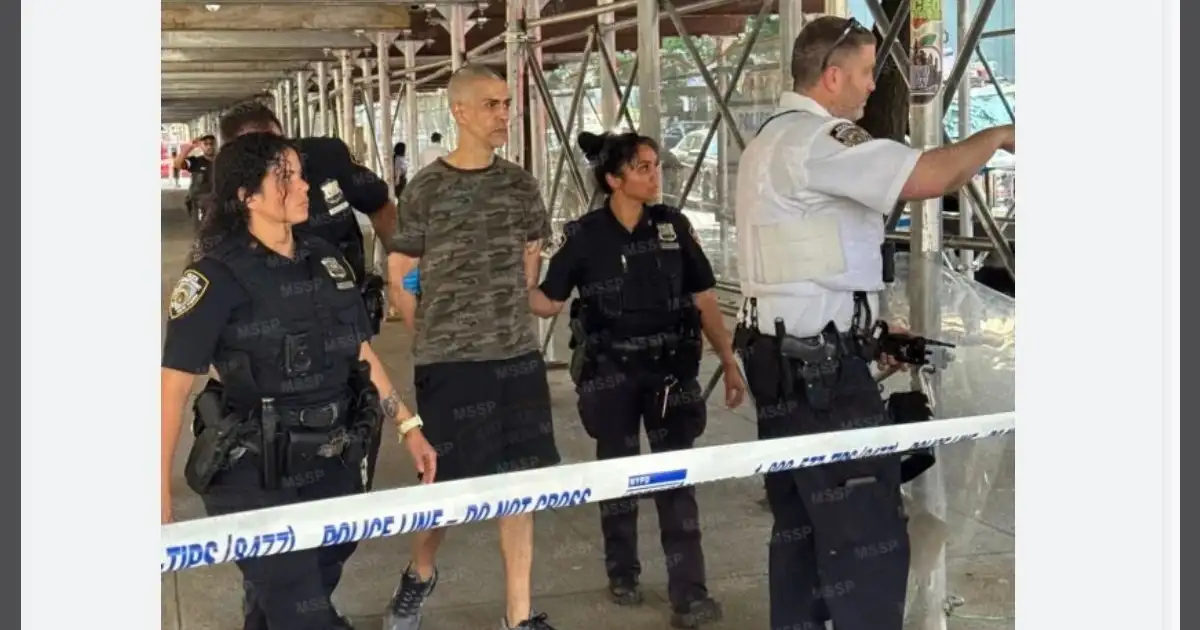
Thankfully, police moved with swift precision, apprehending Mustafa Al-Hamad, 34, just blocks away from the scene. He now faces a formidable lineup of charges, including attempted murder, assault, and crucially, a hate crime. This isn’t just a criminal act; it’s a direct challenge to the fabric of our society.
This Is No Isolated Incident: The Escalating Offensive
Let’s be unequivocally clear: this isn’t a one-off hit, a rogue play by a lone wolf. This attack is merely the latest, most visible maneuver in a disturbing, well-documented trend. New York City is currently grappling with an alarming spike in religiously motivated violence, with Jewish communities bearing the brunt of this escalating offensive. To ignore this pattern is to concede victory to the forces of hate.
The numbers don’t just speak; they scream. Law enforcement agencies and intelligence apparatuses across the nation have issued dire warnings of persistent, multifaceted threats.
We’re fighting a two-front war against bigotry: one against domestic white supremacists who spew their venom online and in the shadows, and another against radicalized Islamist extremists who translate their hateful ideologies into violent action. Both factions view Jewish institutions as prime targets, and both are actively seeking to undermine the safety and sanctity of these communities.
This escalating violence isn’t just about physical injury; it’s about the erosion of a fundamental right – the right to feel secure practicing one’s faith.
When citizens walk in fear, when they must constantly look over their shoulders simply for being who they are, that’s a losing proposition for any city that prides itself on diversity and freedom. It’s a strategic failure that demands immediate rectification.
The Grim Scorecard: Numbers That Demand Action
The statistics paint a grim, undeniable picture, a chilling scorecard of hate. The NYPD Hate Crime Task Force, our city’s frontline defense against such atrocities, reports a significant, alarming surge. Antisemitic incidents have jumped by approximately 25% in the first half of 2026 alone, a stark comparison to the same period in 2025. This isn’t just a percentage point; it’s a tangible increase in fear and aggression.
Jewish individuals, tragically, remain the most targeted group for hate crimes in this city. This isn’t a subjective assessment; it’s a cold, hard fact confirmed by independent analysis.
The Anti-Defamation League (ADL), a leading authority on antisemitism, backs this up with irrefutable data. Their comprehensive 2025 audit documented over 500 antisemitic incidents across New York State, with a massive chunk of those occurring right here in the five boroughs. These aren’t just abstract figures; they represent real people, real families, and a pervasive, chilling fear that permeates daily life.
The financial investment in security measures further underscores the gravity of the danger. The federal Nonprofit Security Grant Program (NSGP) poured over $300 million nationally in 2025, with a significant portion allocated to New York organizations.
Synagogues aren’t spending these funds on luxuries; they’re deploying them for essential defensive infrastructure: state-of-the-art cameras, reinforced doors, and highly trained security personnel. This isn’t just a budget line item; it’s a desperate attempt to build a robust defensive line against a relentless, unyielding attack. But is a defensive posture enough when the offense is so aggressive?
Politicians Weigh In, But Where’s the Game Plan?
As expected, the politicians rushed to the microphones, delivering the standard condemnations. Mayor Eric Adams, to his credit, delivered a strong message, acknowledging the broader implications of such an attack. He stated:
An attack on any house of worship is an attack on all New Yorkers. We stand in absolute solidarity with our Jewish brothers and sisters. There is no place for hate in our city, and we will ensure justice is served.
Noble words, Mayor, but words alone won’t stop the next guy with a knife. What’s the concrete strategy to move beyond solidarity and ensure justice before the attack occurs?
Assemblyman Zohran Mamdani, whose condemnation rightly made headlines, also blasted the “hateful” attack, emphasizing the need for collective action:
I am horrified by the hateful attack outside Congregation Beth Elohim. My thoughts are with the victims and the entire Jewish community. We must unequivocally condemn all acts of bigotry and work together to build a city where everyone feels safe and respected, regardless of their faith.
Again, the sentiment is correct. But “working together” needs a detailed blueprint, not just a general aspiration. What specific plays are we running to achieve this safety?
Condemnation is the bare minimum; proactive prevention is what the community truly needs.
NYPD Chief of Department Jeffrey Maddrey promised action from the city’s finest, stating:
Our Hate Crime Task Force is fully engaged. We will investigate every angle to determine the full scope of this individual’s motivations and ensure that those who commit acts of hate are held accountable to the fullest extent of the law.
The NYPD’s swift response and commitment to investigation are commendable, a crucial part of the defensive effort. But the community needs more than just a strong post-attack investigation. They need a comprehensive game plan that actually works, a strategy that tackles the root causes of this escalating hatred, not just its symptoms. We need to prevent the next down, not just clean up after the tackle.
Rabbi Rachel Timoner of Congregation Beth Elohim, a voice of resilience amidst the terror, articulated the community’s unwavering spirit:
Our community is shaken, but not broken. We will continue to gather, to pray, and to build a world free of hatred. We are grateful for the swift response of the NYPD and the outpouring of support from our neighbors.
Her resolve is inspiring, but it shouldn’t have to be tested so frequently. The burden of building a world free of hatred shouldn’t fall solely on the shoulders of the targeted. Our leaders must step up and provide a robust, proactive defense.
The Real Cost of Fear: Beyond the Physical Wounds
This isn’t just about physical wounds that eventually heal. This is about the profound psychological toll, the unseen scars etched onto the psyche of an entire community.
The constant fear, the gnawing anxiety that forces individuals to confront hatred every single day, is an unbearable burden. It impacts how children play, how families worship, and how communities interact. It’s a silent, debilitating attack on the soul of our city.
Past atrocities are not distant memories; they are fresh wounds that refuse to close. The horrific Pittsburgh Tree of Life Synagogue Shooting in 2018, which claimed eleven innocent lives, remains a chilling benchmark.
The Poway Synagogue Shooting in 2019, taking another life, and the brutal Monsey Hanukkah Stabbing in 2019, leaving five injured, serve as constant, visceral reminders that such violence is not an anomaly but a recurring nightmare. These aren’t just historical footnotes; they are the grim context for every new attack, every new threat.
The question is no longer whether this kind of virulent hatred exists – that much is painfully obvious. The real question, the one demanding immediate answers and decisive action, is how we stop it from spreading, from metastasizing into an even greater threat.
It’s about whether our political leaders can finally move beyond empty statements and implement a real, tangible defense against bigotry. We need to tackle this problem head-on, with the same strategic intensity we’d apply to any other existential threat.
This latest attack in Brooklyn highlights a national problem that has reached a critical juncture in New York. It forces an urgent, uncomfortable debate on the efficacy of current hate crime laws, the desperate need for more robust mental health resources, and the glaring gaps in security for religious institutions.
The game of hate is escalating, and New York is falling behind on the scoreboard. We need more than just a defensive strategy; we need an aggressive, comprehensive offensive to win this war against bigotry, before more lives are irrevocably altered.
Photo: Wikimedia Commons (query: Mustafa Al charged)
Source: Google News