
Donald Trump, ever the disruptor, has once again bulldozed his way into the delicate architecture of Middle East diplomacy. His ultimatum to Saudi Arabia – recognize Israel or forget a nuclear deal – isn’t a nuanced negotiating tactic; it’s a political declaration of war on conventional foreign policy, delivered with the blunt force only Trump can muster.
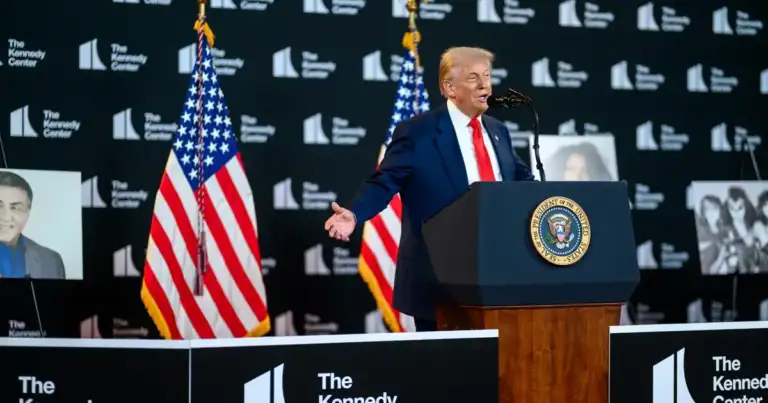
Speaking at a rally in Pennsylvania on July 23, 2026, President Trump unambiguously stated his terms. Any future nuclear agreement with the Kingdom hinges entirely on formal recognition of Israel. He called this condition “non-negotiable” for his administration, a characteristic declaration of finality.

This pronouncement detonates a diplomatic bomb, shattering the already complex Middle East negotiations. The Biden administration has been painstakingly trying to broker a broader, more integrated deal, one that includes security guarantees, advanced weaponry, and civilian nuclear cooperation, all tied to potential normalization with Israel. Trump’s move signals a starkly alternative vision, a direct challenge to the Biden administration’s painstaking, often plodding, diplomatic efforts.
Trump’s Ultimatum: A High-Stakes Wager
President Trump positioned his demand as an expansion of the Abraham Accords, the historic agreements he oversaw during his previous term. Those accords saw several Arab nations establish diplomatic ties with Israel. Trump sees Saudi recognition as the “ultimate prize” for regional stability, a direct continuation of his audacious “outside-in” strategy, which shrewdly bypasses the intractable Palestinian issue.
This approach prioritizes Arab-Israeli cooperation against common threats, namely Iran. It bluntly ignores traditional demands for progress on the Palestinian issue.
For Trump and his loyalists, this is an unapologetically America-first stance. It leverages U.S. influence to secure regional peace and protect Israeli security interests.
They argue it’s pragmatic, consolidating past gains and containing Iranian power. This worldview sees the Palestinian question as a perpetual roadblock, not a prerequisite for peace. For Trump, pragmatism trumps idealism every single time.
The current White House, however, predictably recoiled. An unnamed White House official responded on July 24, 2026, emphasizing a “comprehensive approach” that strengthens regional security, advances U.S. interests, and works towards a two-state solution.
“Our administration remains committed to a comprehensive approach that strengthens regional security, advances U.S. interests, and works towards a two-state solution. We believe in a diplomatic path that addresses all stakeholders’ concerns.”
— Unnamed White House Official, CNN, July 24, 2026
It is either a stroke of Machiavellian genius or a reckless gamble, but one thing is certain: Trump’s direct, conditional demand has irrevocably altered the diplomatic landscape. It certainly provides voters with a clear alternative vision for Middle East policy, and it forces Saudi Arabia’s hand, cornering Riyadh in a manner the Biden administration, with its penchant for multilateralism and caution, has painstakingly avoided.
Riyadh’s Quandary: A Nuclear Deal at What Price?
Increased Pressure on Riyadh
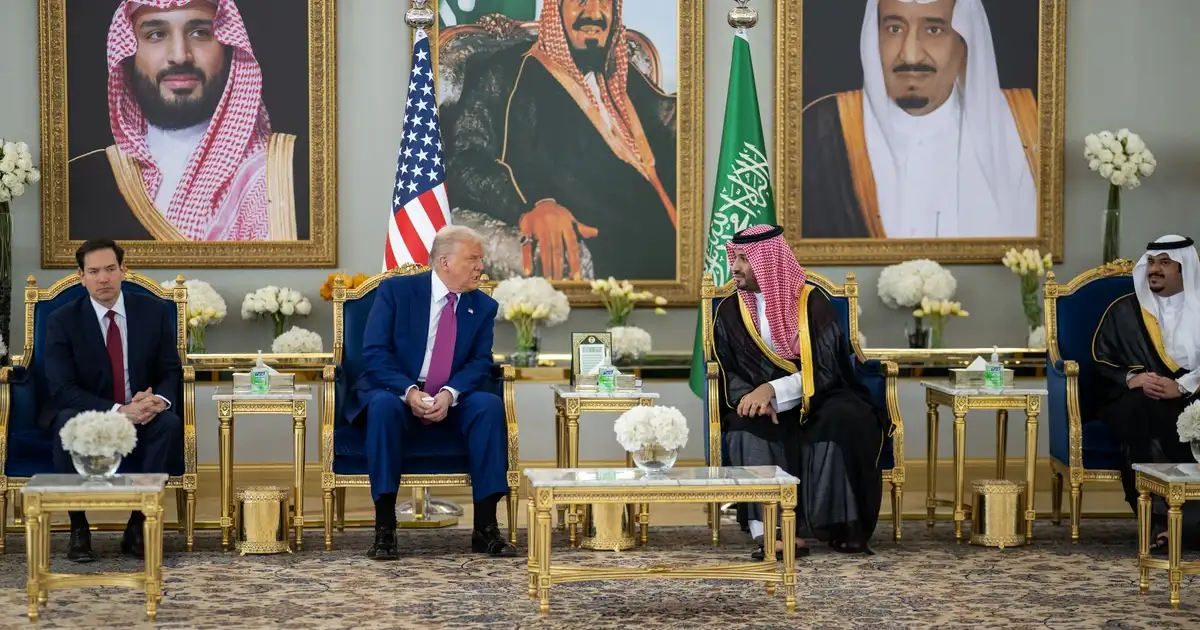
Trump’s explicit “recognition first” condition puts unprecedented public pressure on Riyadh, forcing the Kingdom to confront a stark choice.
They must now make a significant political concession. This could force their hand if they truly prioritize the nuclear deal and U.S. security guarantees.
Saudi Arabia, the world’s largest oil exporter and a key strategic partner for the U.S., views a nuclear program not just as a pathway to energy independence. It is also a potent symbol of national prestige and regional dominance. The Kingdom covets that deal, and Trump, with his transactional brilliance, understands this leverage implicitly.
The potential nuclear deal is worth billions of dollars in contracts for American companies. This provides a powerful economic incentive for Washington.
This isn’t just about geopolitics; it’s about cold, hard cash flowing into U.S. pockets. The Saudis desperately want the technology.
Trump is dangling it as the ultimate prize. However, the entry fee is nothing short of a geopolitical paradigm shift.
The Shadow of Bipartisan Obstruction
Many Republicans would cheer Trump’s audacious stance. However, a nuclear deal, even under the most favorable political winds, is a legislative minefield.
Democrats, and even some moderate Republicans, will inevitably raise concerns. Non-proliferation is always a thorny issue.
Giving a nuclear program to any nation in a volatile region carries immense risks. These deep-seated concerns could create significant congressional hurdles, true regardless of who occupies the White House.
The fine print of any deal will be ripped apart limb by limb. Critics will demand exhaustive safeguards and uncompromising oversight.
They will question whether Saudi Arabia, with its human rights record and regional ambitions, can truly be entrusted with the keys to the nuclear kingdom.
This isn’t just a presidential decree. Congress has a say, and they will undoubtedly extract their pound of flesh.
The Palestinian Elephant in the Room
The true geopolitical Gordian knot lies here. Trump explicitly links the nuclear deal to Israel recognition, but with a characteristic disregard for any genuine progress on Palestinian statehood.
This approach will undoubtedly alienate Saudi Arabia’s Arab and Muslim allies. These nations have, for generations, fiercely prioritized the Palestinian cause.
Such a move could make the deal politically untenable for Riyadh to stomach. It would be difficult to justify to its own populace and the broader Arab street.
Saudi Arabia has long maintained that full normalization requires significant progress for Palestinians. Trump’s demand bluntly dismisses this long-held tenet.
It asks Riyadh to make a monumental concession without delivering on a core Arab demand. This will almost certainly ignite a furious backlash, emboldening hardliners and radical elements within the Kingdom and across the region.
The potential for destabilization, both within the Kingdom and across the volatile region, is a risk Trump seems willing to take. But at what ultimate price?
Contrasting Diplomatic Playbooks
The Biden administration has pursued a more traditional, painstakingly integrated approach. Their strategy includes security guarantees and a potential pathway for Palestinian statehood, running alongside normalization efforts.
Trump’s demand, by contrast, is strikingly, almost brutally, transactional and conditional. It presents a stark, undeniable choice for voters and for the Saudis themselves.
Does Riyadh prefer the comprehensive, slower approach, or Trump’s direct, high-stakes gamble?
“If I’m President, Saudi Arabia will recognize Israel, and they’ll do it to get the nuclear deal. It’s very simple. No recognition, no deal. We did the Abraham Accords, and this would be the biggest one of all.”
— Donald Trump, Fox News, July 23, 2026
This isn’t negotiation; it’s dictation. And while such clarity can, in rare instances, shatter impasses and expedite deals, it more often backs parties into an inescapable corner, making compromise a political impossibility.
The Abraham Accords Precedent
The Abraham Accords demonstrated unequivocally one thing: several Arab nations are willing to normalize ties with Israel even without a resolution to the Palestinian conflict.
The UAE, Bahrain, Sudan, and Morocco all did it in 2020. This historical precedent suggests Trump’s strategy has a track record of disruptive, albeit effective, transactional diplomacy.
It shows that such an approach can yield results. Saudi Arabia, however, is not just another signatory; it’s the undisputed heavyweight, and the stakes could not be higher.
The ramifications of this geopolitical gamble are nothing short of monumental. For Riyadh, it’s a Faustian bargain: atomic power and American protection in exchange for abandoning a foundational pillar of Arab solidarity.
For Washington, it’s a profound reorientation of its Middle East strategy. It could reshape alliances and the regional balance of power for generations, all while committing American taxpayers to untold security guarantees.
For American taxpayers, this means significant U.S. security commitments and billions in potential economic activity. It also means shaping the future direction of U.S. foreign policy in a critical region, impacting alliances and the balance of power for decades to come. Will the price of this deal be worth the cost?
Ultimately, Trump’s audacious ultimatum isn’t merely a negotiating position. It’s a political declaration designed to force a reckoning.
It puts Riyadh squarely in the crosshairs, demanding they choose between the allure of nuclear power and the fading, yet still
Source: Google News