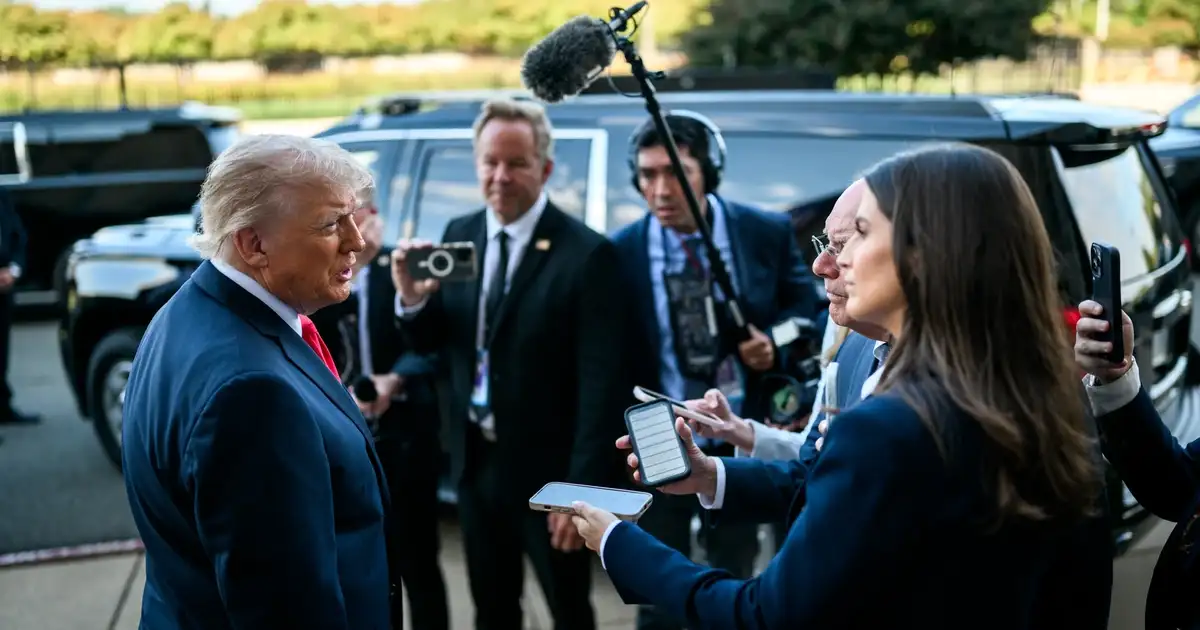

Donald Trump just weaponized the White House Correspondents’ Dinner. He publicly stated he mistook CNN anchor Kaitlan Collins for a trans influencer, delivering a brutal, calculated jibe. This was no accident; it was a deliberate political strike.
The former president, ever the provocateur, used the supposed moment of media-politician detente to launch a personal attack. His target was a prominent journalist.

The specific nature of the insult, linking Collins to a “trans influencer,” was a clear signal. It was meant to stir controversy and rally his base.
The Trump Playbook: Always Attack
This move fits perfectly into the established Trump playbook. He consistently attacks media figures he views as hostile.
CNN, in particular, has been a frequent punching bag for him. This public jab at Collins serves multiple purposes for the former president.
- It discredits a journalist known for tough questions.
- It energizes his core supporters with anti-establishment rhetoric.
- It injects cultural wedge issues into mainstream political discourse.
Trump understands the power of a spectacle. The White House Correspondents’ Dinner is designed for insider conviviality.
Trump weaponizes that very stage. He turns a night of forced smiles into a battleground.
His supporters see this as strength. They view it as their leader fighting back against a biased media.
This kind of rhetoric solidifies his image as an outsider. He is the one willing to say what others won’t.
The Calculated Insult and Its Message
The specific choice of “trans influencer” for the jibe was highly deliberate. It was not a random thought.
This phrase taps into current cultural debates and anxieties. It acts as a dog whistle for a segment of his base. This base feels alienated by evolving social norms.
Trump knows exactly what he is doing. He picks words that resonate with his voters.
He uses language that triggers an immediate reaction. This ensures maximum outrage from his opponents. It guarantees loyalty from his followers.
The jibe was more than just a personal insult. It was a political statement. It was a declaration of war on conventional civility.
It sends a message: his opponents will be targeted, personally and publicly. No stage is sacred. No journalist is off-limits.
“This isn’t just about Kaitlan Collins; it’s about signaling to every journalist that they are fair game,” one veteran political strategist, who requested anonymity, observed. “He’s reminding them who’s in charge of the narrative.”
The intent is to make the media defensive. It forces them to react on his terms.
This strategy keeps him in control of the news cycle. It distracts from other issues he might prefer to avoid.
The WHCD: A Stage for Disruption
The White House Correspondents’ Dinner has long been a symbol of Washington’s cozy relationship with the press. It’s a night where journalists and politicians pretend to be friends.
They share laughs. They trade self-deprecating jokes. Trump has always seen this as hypocrisy.
He views the entire event as part of the establishment he despises. His refusal to play by its rules is a core part of his brand.
By delivering such a harsh, personal jibe, he actively disrupted the dinner’s decorum. He turned an evening of smiles into a moment of palpable tension.
This disruption is not a bug; it is a feature. Trump thrives on chaos.
He gains power by overturning expectations. He makes his own rules, even in traditional settings. This move reinforces his image as a political outsider.
It also forces the media to confront its own role. Are they too close to power? Are they too willing to be part of the Washington bubble?
Trump’s actions, however crude, force these questions. He exposes the underlying dynamics of power and media.
Who Profits and Who Pays? The Real Costs
So, who profits from this brutal jibe? Donald Trump, unequivocally.
He strengthens his bond with his base. He reinforces his anti-media narrative. He demonstrates his willingness to fight dirty.
He generates headlines without spending a dime on advertising. The media, whether condemning or defending, gives him oxygen.
This keeps him relevant. It keeps him at the center of attention.
But who pays the price? The American public, for starters.
This kind of rhetoric further poisons our political discourse. It normalizes personal attacks.
It makes genuine dialogue impossible. It erodes trust in institutions.
The media pays a price too. They become targets, not just reporters.
This creates a hostile environment for journalism. It makes it harder to hold power accountable. It adds another layer of cynicism to public life.
The dignity of political office also suffers. When a former president engages in such public taunts, it lowers the bar for everyone.
It signals that anything goes. This is a profound cost to the nation’s political health. It is a cost that impacts every citizen.
What Happens Next: More of the Same
Do not expect this to be an isolated incident. This is Trump’s strategy, refined over years.
He will continue to use controversial statements. He will keep targeting perceived enemies. He will maintain his grip on the news cycle through provocation.
The media will react. His base will cheer. The divide will deepen.
This cycle is designed to keep him in the spotlight. It keeps his opponents on the defensive. It is a constant campaign, regardless of the calendar.
His tactics are effective, however polarizing. They tap into deep-seated frustrations. They exploit cultural fault lines.
This is the new normal in American politics. Expect more personal attacks. Expect more blurred lines between politics and entertainment.
The jibe at Kaitlan Collins was not a spontaneous outburst. It was a calculated political maneuver.
It achieved its goal: to dominate headlines and energize his base. The cost to public discourse is steep, but for Trump, the political gain is worth it. This is how power operates in his world.
Source: Google News