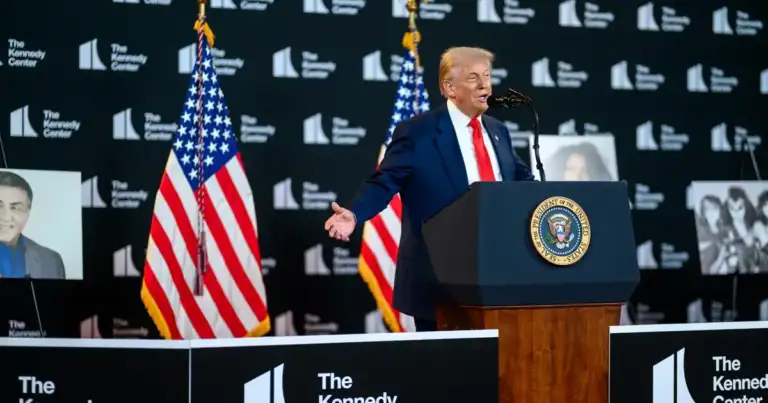

President Donald Trump declared Israel would have been wiped off the face of the Earth had he not been re-elected president. This audacious claim is classic Trump, always positioning himself as the indispensable savior.
Trump made this statement in the last 48-72 hours, specifically between July 25-28, 2026. It’s a familiar refrain from his playbook, consistently highlighting his foreign policy record. He frequently tells voters that only his leadership can guarantee the safety of America’s allies.

Trump’s Self-Proclaimed Indispensability
The President’s assertion isn’t just a casual remark; it’s a cornerstone of his political identity. He frames himself as the sole protector against global chaos. This latest pronouncement feeds directly into that narrative, painting a stark picture of what the world would look like without him at the helm.
His supporters eat it up. They see him as a strong leader who doesn’t mince words, delivering hard truths. Critics, however, view it as self-aggrandizing rhetoric, designed to inflate his ego and dismiss the complexities of international relations.
Trump’s argument rests on his past actions. He points to the Abraham Accords as proof of his unique diplomatic skills. These deals normalized relations between Israel and several Arab nations. He withdrew the U.S. from the Iran Nuclear Deal, a move he championed as vital for Israel’s security.
“Israel would have been wiped off the face of the Earth had I not been re-elected president,” Trump stated, leaving no room for doubt about his conviction.
This statement isn’t new. He has made similar claims throughout his political career. It’s a calculated message, meant to resonate with voters who prioritize national security and a strong stance on foreign policy. It also serves to remind everyone of his self-perceived unique role on the world stage.
The Reality of Geopolitical Chess
Let’s strip away the bravado and look at the actual gears of power. Trump’s claim implies that without his specific policies, Israel faced immediate existential threat. This ignores decades of U.S. military aid and strategic alliances that predate his presidency.
The U.S. commitment to Israel’s security is deep. It spans administrations, both Republican and Democrat. Billions in aid, intelligence sharing, and military cooperation are constants. This isn’t something that vanishes with a change in Oval Office occupants.
However, Trump’s approach did mark a shift. His “America First” doctrine often meant a more transactional foreign policy. Allies were expected to pay their share. This style, while disruptive, did yield results like the Abraham Accords.
The question remains: did these actions truly prevent Israel from being “wiped off the face of the Earth”? Or did they simply alter the diplomatic playing field? Geopolitics is rarely a simple cause-and-effect equation. It involves countless actors, shifting alliances, and complex historical grievances.
The ongoing US-Iran War 2026 adds another layer of complexity. The conflict, which began with military strikes on February 28, 2026, directly impacts regional stability.
Trump’s rhetoric positions him as the only one capable of handling such treacherous waters. The Strait of Hormuz remains a major flashpoint.
His claim suggests that any other president would have failed to protect Israel in this current environment. This is a direct challenge to the competence of his political rivals. It also implies that the current military actions are a direct result of his foresight and strength.
Who Profits From This Narrative?
Follow the money, always. Trump’s narrative of being Israel’s indispensable shield serves multiple purposes. First, it mobilizes his base, particularly evangelical Christian voters who are strong supporters of Israel. It reinforces their belief in his strong leadership.
Second, it positions him as the only reliable partner for Israel on the global stage. This can influence lobbying efforts and aid packages. Defense contractors and foreign policy think tanks often benefit from a narrative of heightened global threat.
The cost to the American taxpayer is ongoing military support and potential entanglement in regional conflicts. When a president declares a nation’s survival hinges on his presence, it implies a deeper, potentially more costly, commitment. It gives him immense leverage over foreign policy decisions.
This rhetoric is not just about Israel. It’s about projecting an image of unrivaled strength and decision-making. It’s about making sure everyone knows who is in charge. It’s about consolidating power both domestically and internationally.
His claim also shifts blame. If something goes wrong, it can be framed as a consequence of past administrations’ weakness. If things go right, it’s solely due to his genius. It’s a win-win for his political brand.
The establishment, both political and military, often cringes at such hyperbolic statements. They prefer diplomacy and measured language. But Trump thrives on breaking those norms. He uses direct, often inflammatory, language to cut through what he sees as bureaucratic spin.
What Happens Next?
This statement, made as the US-Iran War continues, sends a clear message. It tells Israel that their security is directly tied to Trump’s tenure. It tells Iran that Trump sees himself as their ultimate adversary, willing to go to great lengths to protect U.S. allies.
For American voters, it frames the upcoming political landscape as a choice between strength and weakness. It forces a discussion about foreign policy that is often oversimplified. The message is simple: only one man can keep the world safe.
The implications for future U.S. foreign policy are significant. If Trump’s re-election is indeed seen as the sole guarantor of Israel’s existence, it binds U.S. policy even tighter to his personal vision. This leaves little room for alternative diplomatic approaches or multilateral efforts.
It also undermines the idea of a consistent, bipartisan U.S. foreign policy. It suggests that every four years, the entire structure of international relations could be upended. This creates instability and uncertainty for allies and adversaries alike.
This kind of strongman rhetoric also has a chilling effect on internal dissent. To question Trump’s approach is, by extension, to question Israel’s survival. It shuts down nuanced debate and forces a binary choice.
President Trump understands the power of a bold declaration. He knows it gets attention. He knows it galvanizes his base. And he knows it makes his opponents react.
The reality is that Israel is a sovereign nation with a powerful military and strong alliances. While U.S. support is undeniably vital, suggesting its entire existence rests on one man’s presidency is a dangerous oversimplification. It’s a political move, pure and simple, designed to solidify his power and narrative.
Trump’s claim is not just about history; it’s about shaping the future. He is defining the terms of engagement for his current term and any potential future ones. He is telling the world that he is the indispensable variable in the equation of global power.
This is how power operates in Washington: through grand pronouncements that reshape perception. It’s not about subtle diplomacy; it’s about making sure everyone knows who calls the shots. The price of such rhetoric is often paid in the currency of international instability and domestic division.
Source: Google News