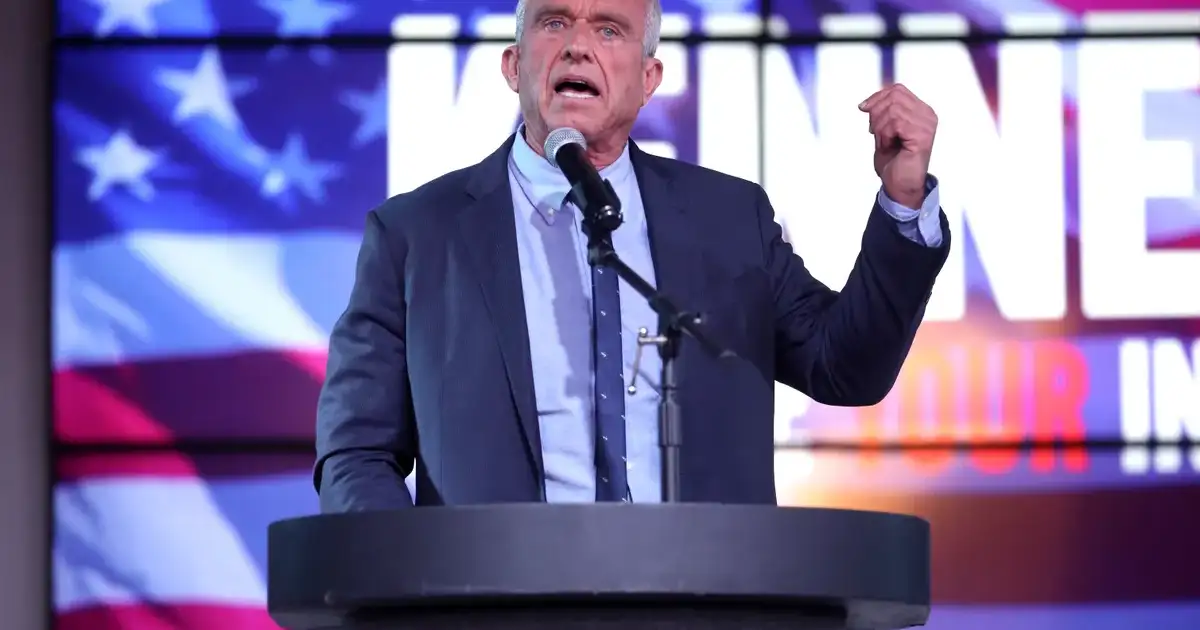

RFK Jr. Explodes in CNN COVID Fight: What This Means for His Campaign
Robert F. Kennedy Jr. didn’t just have a heated exchange with CNN host Kaitlan Collins; he detonated a political grenade, spraying shrapnel across his independent presidential campaign and the broader media landscape. What unfolded on live television was either a courageous stand against entrenched power or a spectacular, self-immolating meltdown, depending entirely on which side of America’s widening chasm you inhabit.
The fiery interview, broadcast on the evening of August 1, 2026, was intended to be a discussion of Kennedy’s platform. Instead, the independent presidential candidate’s sit-down with Collins swiftly devolved into a shouting match, a collision of narratives that laid bare the raw nerves of American political discourse.
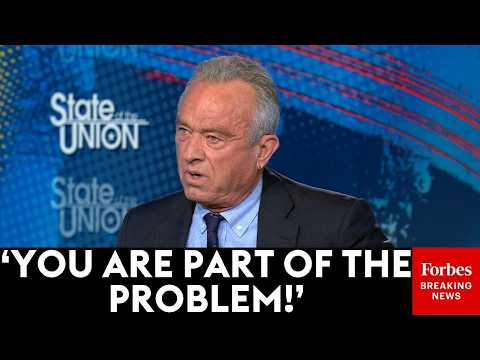
Collins, sharp and relentless, pressed Kennedy on his long-held criticisms of public health institutions and his persistent promotion of theories widely dismissed as misinformation by the scientific consensus.
The segment reached its boiling point when Collins introduced data from the Centers for Disease Control and Prevention (CDC) concerning vaccine efficacy and safety. Kennedy, abandoning any pretense of decorum, reportedly raised his voice dramatically, his accusations flying.
He branded Collins and CNN as “propagandists for the pharmaceutical industry” and dismissed the CDC’s meticulously compiled data as nothing more than “manipulated statistics.” As Collins attempted to interject, to fact-check the candidate’s increasingly strident claims, both spoke over each other in an agitated cacophony. The segment, a masterclass in televised chaos, ended abruptly, leaving viewers to pick through the wreckage.
The Political Fallout: A Calculated Risk or Unforced Error?
This explosive interview was far more than mere television drama; it was a potent political maneuver, intentional or not, for Kennedy’s nascent presidential run. The core question for any political observer is stark: Does this kind of public brawl actually advance his cause or irrevocably damage it?
For his most fervent supporters, the confrontation was an unmitigated triumph. They hail Kennedy as a brave truth-teller, a modern-day David standing defiantly against the Goliath of “mainstream media bias” and a “corrupt public health establishment.”
This televised clash undoubtedly solidified their conviction, likely translating into a surge in grassroots fundraising and volunteer efforts. These are the voters who feel unheard, censored, and actively disdained by traditional institutions; Kennedy, in this moment, spoke their language with an undeniable, if abrasive, authenticity.
Yet, the aggressive nature of the exchange risks alienating precisely the demographic Kennedy desperately needs to expand his appeal. Moderate and independent voters, often wary of extreme rhetoric and prioritizing evidence-based public health, will find Kennedy’s wholesale dismissal of scientific consensus deeply troubling. This brand of confrontational politics, characterized by accusations and unsubstantiated claims, rarely wins over the crucial swing voters who ultimately decide elections. It paints him not as a thoughtful alternative, but as a fringe provocateur.
A Publicity Bonanza, For Better or Worse
Let’s be blunt: the viral nature of this “screaming match” is a public relations goldmine for Kennedy, regardless of its content. Clips of the heated exchange circulated like wildfire across social media platforms, catapulting Kennedy into the national conversation for millions who might previously have been oblivious to his campaign. In the attention economy of modern politics, any publicity – even the most contentious – is often deemed good publicity, particularly for an underdog candidate struggling for oxygen.
This incident also solidifies the “spoiler” narrative that has dogged Kennedy’s campaign from its inception. He is not merely a candidate; he is a disruptive force, pulling votes from both disaffected Democrats, weary of the party’s establishment, and Trump-skeptical Republicans looking for an anti-system voice. His anti-establishment rhetoric, amplified by such viral moments, resonates with a significant segment of Americans fed up with the status quo, making him an unpredictable and potentially decisive factor in the 2026 election.
The drama will undoubtedly cast a long shadow over future presidential debates. Networks, caught between the public’s right to hear from all viable candidates and the imperative to avoid platforming dangerous misinformation, face an unenviable decision regarding Kennedy’s inclusion. This fiery CNN performance will hardly simplify that complex calculus, forcing media executives to grapple with the ethical tightrope of impartiality versus responsibility.
The Data Divide: A Clash of Realities
Collins, acting as a bulwark for established fact, cited specific data points during the interview. She referenced compelling CDC data indicating that over 70% of the U.S. population had received at least one COVID-19 vaccine dose by late 2024.
Furthermore, she highlighted numerous studies, widely published and peer-reviewed, that consistently demonstrated a significant reduction in severe illness, hospitalization, and death for vaccinated individuals. The FDA and CDC, along with virtually every major health organization worldwide, continue to affirm the vaccines’ safety, unequivocally stating that serious adverse events are exceedingly rare.
Kennedy, however, fired back with his own set of claims, largely untethered from mainstream scientific consensus. He invoked unspecified “excess mortality” data, which he directly attributed to vaccine side effects – a claim broadly and consistently disputed by public health organizations globally. He also brought up economic figures related to the staggering cost of lockdowns and their devastating impact on small businesses, further alleging billions in illicit profits for pharmaceutical companies derived from vaccine sales.
“You are a mouthpiece for Big Pharma, and you are deliberately ignoring the truth about what these vaccines have done to millions of Americans!” Kennedy reportedly yelled, his voice rising to a fever pitch.
“Mr. Kennedy, you are citing discredited studies. The CDC and every major health organization worldwide affirm the safety and efficacy of these vaccines. Why do you continue to spread these dangerous falsehoods?” Collins retorted, her frustration palpable.
Kennedy’s Long Game: The Unwavering Anti-Establishment Crusader
This isn’t Kennedy’s first foray into challenging established narratives; it’s a consistent throughline of his public life. He has been a prominent, if controversial, figure in the anti-vaccine movement for decades, founding Children’s Health Defense, an organization notorious for promoting skepticism about vaccine safety and questioning government health policies.
His views have led to widespread deplatforming from social media and frequent, scathing criticism from medical and scientific communities.
His independent presidential bid, however, elevates these long-held beliefs from the fringes into the very mainstream of political discourse. Media outlets, accustomed to a more traditional political debate, visibly struggle with how to cover his often-provocative stances without inadvertently legitimizing claims widely considered baseless. This CNN confrontation is merely the latest chapter in a predictable pattern of heated exchanges with journalists attempting to fact-check his assertions, only to be met with Kennedy’s characteristic, unyielding pushback.
The incident starkly highlights America’s deeply polarized debate, touching on fundamental questions of public health, scientific authority, and the very trustworthiness of government. For Kennedy’s skeptics, it represents dangerous misinformation that erodes public safety. For his followers, it is a necessary, even heroic, challenge to perceived corruption and an oppressive, unaccountable elite.
The True Cost of the Culture War
While the political gladiators clash, it is the ordinary American taxpayer who ultimately bears the true cost of this constant, grinding culture war. With every screaming match, every dismissal of established fact, trust in public institutions crumbles further, leaving a void that demagogues are all too eager to fill.
When citizens doubt scientific consensus, public health initiatives suffer; when they distrust the media, informed decision-making becomes an impossibility. This ongoing tension doesn’t just impact future health crises; it corrodes the very fabric of civil society, making effective, bipartisan policy implementation a distant dream.
Kennedy’s undeniable ability to command attention, even through hostile interviews, ensures he will continue to shape political discourse. His presence on the ballot could significantly influence the upcoming election, forcing both major parties to confront issues they might prefer to ignore, particularly the widespread, simmering distrust in government experts. He taps into a deep vein of resentment, a feeling that the system is rigged, and that the “experts” are not to be trusted.
This fight was more than just a television spectacle; it was a visceral, raw display of America’s profound divisions. It laid bare the seething hatred for “the establishment” that animates a significant, vocal chunk of the electorate.
Kennedy doesn’t just survive in that environment; he thrives in it, a political ecosystem where disruption is currency and outrage is oxygen. The question isn’t whether he can win the presidency. It’s how much chaos he can unleash, and how much further he can fracture the national consensus, along the way.
Source: Google News