

The Cosmic Litter Problem
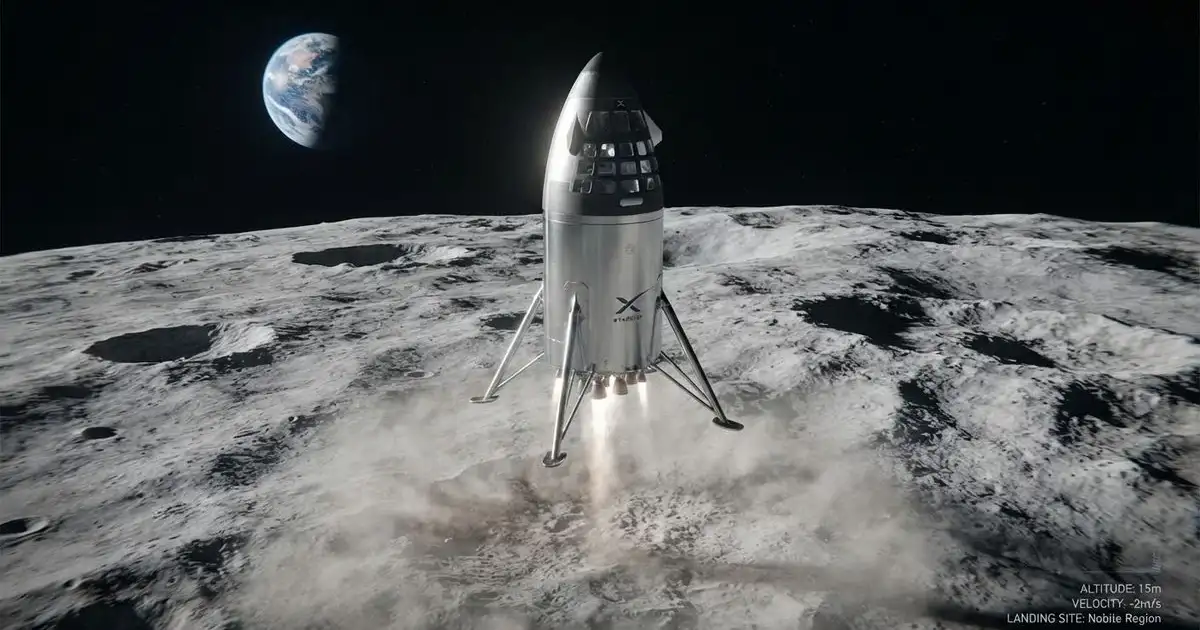
Pause for a moment and truly grasp the gravity of that statement. We’re no longer content with merely choking our own planet; we’ve officially begun exporting our trash problem to the cosmos. This wasn’t a precision landing, a scientific endeavor. This was an act of cosmic littering – a spent, forgotten piece of a rocket booster, left to drift like a plastic bag in the ocean, only to culminate in a violent, uncontrolled collision with our closest celestial body. The booster in question was a relic of a Falcon 9 rocket, launched in 2015 to deploy NASA’s Deep Space Climate Observatory. Mission accomplished, it seems, then promptly forgotten. For seven agonizing years, this piece of industrial waste became an untracked, silent projectile. It highlighted our ‘out of sight, out of mind’ approach to space. Now, the Moon, a stoic witness to millennia of cosmic ballet, bears a fresh, man-made wound. What does this say about our responsibility, or rather, our profound lack thereof, when venturing further into the universe?Musk’s Mark on the Moon
Elon Musk, the visionary who dreams of Martian colonies and orbital mega-constellations, now adds ‘lunar crater artist’ to his resume. While we laud his audacious goals, we must also confront the inconvenient truth: what about the cosmic detritus left in his wake? This lunar impact isn’t just an unfortunate accident; it’s a glaring, unignorable billboard screaming about the critical, unregulated problem of space junk. SpaceX prides itself on groundbreaking reusable rocket technology – a commendable leap forward. Yet, the irony is not lost: even their “discarded” pieces become uncontrollable, dangerous projectiles. The Moon is not, and never was intended to be, humanity’s convenient cosmic landfill. It’s a stark, undeniable truth: every launch, every mission, every technological triumph currently contributes to an ever-growing, unregulated junkyard in our immediate solar neighborhood. We are treating the universe like a boundless, consequence-free dumping ground. The Moon just sent us a very expensive, very visible invoice.What Does This Mean for the Moon?
Of course, scientists will now descend upon this new wound with enthusiasm, eager to glean insights into lunar geology. A “unique opportunity” for research, they’ll say. But let’s be blunt: at what moral and environmental cost do we gain this knowledge? Are we so desperate for data that we’ll actively embrace the vandalization of celestial bodies? The impact, remarkably, created a double crater. This showed the rocket body remained largely intact, a hollow cylinder hitting end-on. This offers fascinating, albeit morbid, insights into hypervelocity lunar impacts. We’re learning how our trash interacts with the cosmos. But is this the kind of scientific discovery we should be making? Are we merely documenting the destruction we ourselves cause, rather than preventing it? Future missions might indeed intentionally target specific lunar spots for scientific gain. But the line between legitimate research and reckless wreckage blurs with every uncontrolled impact. How many more “discarded” rockets, how many more forgotten satellites, will we allow to make their permanent, ugly mark on the Moon before deciding enough is enough?The Unseen Consequences of Space Travel
We stand mesmerized by the spectacle of rocket launches, our imaginations captured by breathtaking images from Mars. Yet, in our collective awe, we conveniently ignore the dirty secret of space exploration: the mounting pile of waste. The debris, the dead satellites, the spent boosters – these are not just “consequences”; they are the deliberate, often unacknowledged, price of our cosmic ambition. While this particular crash might be deemed “relatively small” in the grand scheme of a colossal Moon, it sets a chilling precedent. What happens when larger, more substantial pieces of our space-faring junk collide? What happens when these impacts become not anomalies, but frequent, expected occurrences? The Moon, a celestial archive recording the solar system’s ancient history, is being defiled. Every artificial impact, every human-made crater, distorts that pristine record, adding our clumsy, destructive fingerprints to a canvas that predates humanity itself. This isn’t merely a discussion about a new crater; it’s a damning indictment of our collective irresponsibility. It’s about the indelible mark we choose to leave behind. Elon Musk envisions humanity as a multi-planetary species, an admirable goal. But if we can’t even manage the trash in our own celestial backyard, what right do we have to colonize another? The Moon now bears a fresh, permanent scar – a monument to our careless ambition. It’s time we stopped gazing at the stars with wide-eyed wonder and started looking inward, asking ourselves the uncomfortable question: Is this the ignoble legacy we truly wish to engrave upon the universe?Source: Google News