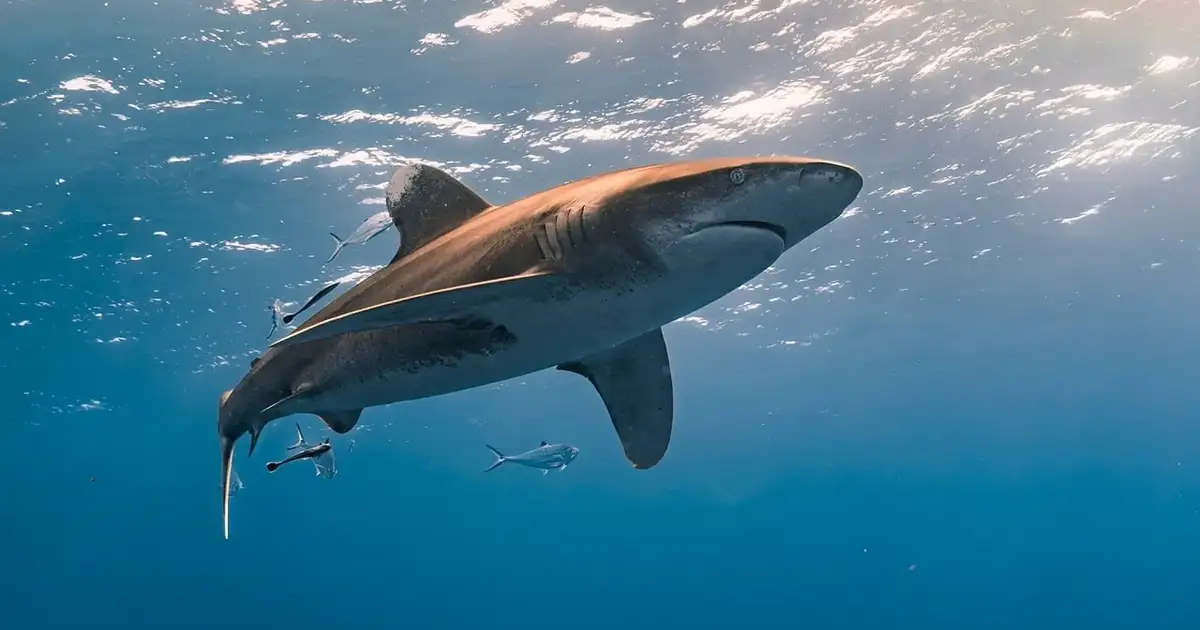

The idyllic late afternoon calm off Scarborough’s Pine Point Beach shattered on August 9th. While most folks were winding down, 22-year-old municipal lifeguard stood in waist-deep water, simply doing her job.
Then, the water erupted. She was dragged under, fighting for her life against a powerful, toothy predator.

She miraculously broke free and is now recovering in Maine Med. But let’s be brutally clear: a great white shark tried to claim one of our own.
This isn’t just a story of individual bravery, though her courage is undeniable. This is a stark, terrifying narrative about a coastline in undeniable flux, and a state that has been dangerously slow to truly grapple with its implications.
The New Normal at Maine Beaches
Scarborough beaches are shut down, drones buzz overhead, and patrol boats scour the waters. Officials, predictably, are trotting out phrases like “public safety” and “assessing the threat.”
Dr. James Peterson, a respected marine biologist, offers a blunt truth: “We share these waters with apex predators.” He’s not wrong, not by a long shot.
Our burgeoning seal population, a conservation success story in its own right, has created an irresistible buffet for their primary predators – the white sharks – and they are following the food.
This isn’t some freak occurrence or a throwback to a bygone era; this is the undeniable, terrifying new normal.
Remember the fatal attack off Bailey Island in 2020? That was supposed to be our definitive wake-up call, wasn’t it?
We responded with a few apps, a handful of drones. And now, a municipal lifeguard, on duty, in broad daylight, is dragged beneath the waves.
How many more “stark reminders” do we need, how many more lives must be put at risk, before the endless talk finally translates into actual, robust action that goes beyond mere temporary closures and platitudes?
The Price of Paradise
Here’s the brutal truth, and anyone with roots in this town knows it intimately. Scarborough beaches are the lifeblood of our summer economy, drawing tens of thousands of visitors annually.
That translates to significant revenue for our restaurants, our shops, our rental properties.
The “safety first” mantra, while noble, rings hollow the moment the tills stop ringing. Local business owners are already bracing for a devastating financial hit.
You can bet your last dollar that behind the closed doors of official meetings, the urgent conversation isn’t solely about shark species or ecological shifts; it’s about how swiftly those “safe” signs can be re-posted before the entire tourist season evaporates like sea mist.
This isn’t to diminish the genuine concern for Sarah Chen; people absolutely care. But the longer our beaches remain closed, the louder the drumbeat of economic anxiety will become.
And that, inevitably, is when “robust safety plans” begin to morph into “reopen as soon as plausibly deniable” strategies, often with minimal regard for genuine, thorough threat assessment.
The Red Marker: Let’s be brutally honest. The official narrative will praise the lifeguard’s bravery and the swift response. But the underlying motive driving a lot of these “urgent discussions” is the tourism dollar. Maine’s coast is beautiful, wild, and increasingly, dangerous. The real hypocrisy here is the slow-motion scramble to acknowledge a predictable ecological shift while simultaneously trying to preserve the illusion of a perfectly safe summer playground. We’re asking lifeguards like Sarah Chen to put their lives on the line in conditions that are becoming more volatile, and then we’re surprised when the inevitable happens. The question isn’t if another incident will occur, but when, and whether we’ll have done anything meaningful besides temporary closures and hand-wringing by then. The real safety measure won’t be a faster drone; it’ll be a harder look at what we’re willing to sacrifice – be it tourist revenue or human lives – to keep the dream alive.
It’s time for Maine to stop pretending. The ocean is changing, and with it, the risks.
We can either face this new reality head-on, with comprehensive, long-term strategies that prioritize human safety over seasonal profits, or we can continue to offer up our beautiful, wild coast as a gamble.
The choice is ours, but the consequences, as Sarah Chen’s terrifying ordeal reminds us, are becoming increasingly clear and tragically unavoidable.
Source: Google News