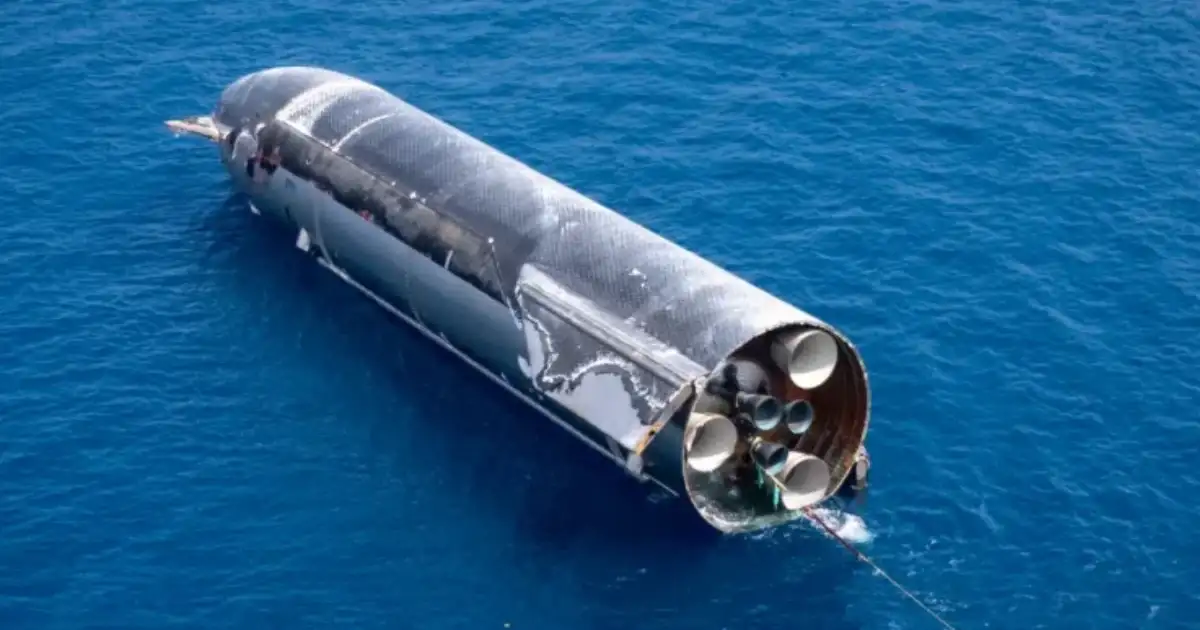

SpaceX Shatters Expectations: Recovered an Entire Starship in One Piece — A New Era Begins
SpaceX has achieved what many thought impossible: recovering an intact Starship after its latest test flight. This breakthrough could reshape the future of space travel, making it more feasible and affordable than ever before.
The Breakthrough Moment: How SpaceX Made It Happen
On August 17, 2026, SpaceX launched Starship Flight 13 from Boca Chica, Texas. The spacecraft reached 150 kilometers, surpassing the Kármán line, and demonstrated its ability to withstand real-world stresses. But the real story is how they brought it back.

Unlike previous attempts where Starship disintegrated or was recovered in pieces, this time, the ship returned completely intact. SpaceX’s engineers used a revamped autonomous landing platform with precision thruster controls and real-time telemetry. The ship floated back to the coast and was recovered whole — a sign that reusable space vehicles are becoming a reality.
Decoding the Recovery: The Technical Masterstroke
- Enhanced thruster control maintained stability during descent, preventing structural stress.
- Real-time telemetry enabled precise mid-air adjustments and safe landing execution.
- The platform’s new algorithms managed the process autonomously, reducing human error.
- Secure flotation and transport protocols ensured the ship arrived undamaged at base.
This achievement shifts SpaceX from experimental to operational, paving the way for rapid, cost-effective reuse of Starship. Past failures now seem like relics of a less confident era. This recovery proves reusability is no longer just a goal — it’s happening.
Implications for the Future: Spaceflight Reinvented
For years, skeptics doubted Starship’s reusability. Falcon 9’s first-stage recoveries revolutionized launch economics, but Starship’s potential was bigger and riskier. Now, that potential is materializing.
The recovered ship showed only minor surface abrasions and thermal shield wear, indicating it can handle multiple reentries. Elon Musk tweeted:
“Starship Flight 13’s successful, intact recovery proves our approach is working. This is a huge step toward making space more accessible and affordable.”
This isn’t just hype — it’s a game-changer. Lower launch costs, new markets, lunar bases, and Mars colonies are now within reach. Each successful flight brings us closer to transforming space from exploration frontier to a bustling industry.
The Market Reaction: A Stock Market Rocket
With SpaceX’s valuation already surpassing $150 billion, this milestone will likely boost it further. Investors want tangible progress, and this recovery signals that SpaceX is shifting from hype to real tech achievement. The potential to cut Starship launch costs from around $2 million to a fraction could unlock trillions in new economic activity, from space tourism to resource mining.
Having invested over $5 billion into Starship since 2019, SpaceX is now reaping the rewards. Expect its stock — or new space-focused investments — to surge as confidence in Musk’s vision solidifies. This isn’t speculation; it’s a sign that SpaceX is entering a new phase of dominance.
Global Competition and Industry Leadership
While Blue Origin, ULA, and others race to catch up, SpaceX has redefined the game. Blue Origin’s New Glenn and ULA’s Vulcan are still in development, but they can’t match Starship’s reusability and scale. SpaceX’s success now cements its position as the leader for orbital and lunar launches.
NASA’s Artemis program relies heavily on SpaceX’s lunar landers. This milestone confirms Musk’s company as the top partner for government and commercial missions. The space industry just shifted gears — and SpaceX is in the driver’s seat.
The Road Ahead: From Test to Orbit and Beyond
SpaceX aims for orbital Starship flights by late 2026, with lunar missions possibly launching as early as 2027. The goals? Establish a lunar base, prepare for Mars, and make space routine for humans. This recovered ship shows how close they are to that vision.
NASA is already contracting SpaceX for lunar landers. The new milestone means less refurbishment, lower costs, and faster turnaround. SpaceX is racing toward a future where space travel is routine, not risky.
The Strategic Power Play
This isn’t just tech testing; it’s about global dominance. Recovering a full, largely intact Starship in a single mission signals that SpaceX is moving from prototype to production. Musk’s goal — “Making space more accessible and affordable” — is backed by a relentless drive to control the space economy.
Every successful flight reduces costs that have kept space colonization distant. Musk’s push for reusability isn’t just engineering — it’s a strategic move. As Starship flies and recovers intact, space becomes an open market, not just a playground for billionaires and governments.
Victory or the Dawn of a New Era?
This isn’t just a milestone — it’s a declaration of dominance. The era of disposable rockets is ending, and SpaceX has shown that a full, intact Starship can return from space and be ready for its next mission. The question now: how soon will Musk push for orbital flights? Will NASA and others finally see that the future belongs to reusable giants, not fragile prototypes?
One thing is clear: SpaceX is no longer a startup. It’s the new kingpin of the space economy. Betting against Musk now might already be too late.
Source: Google News