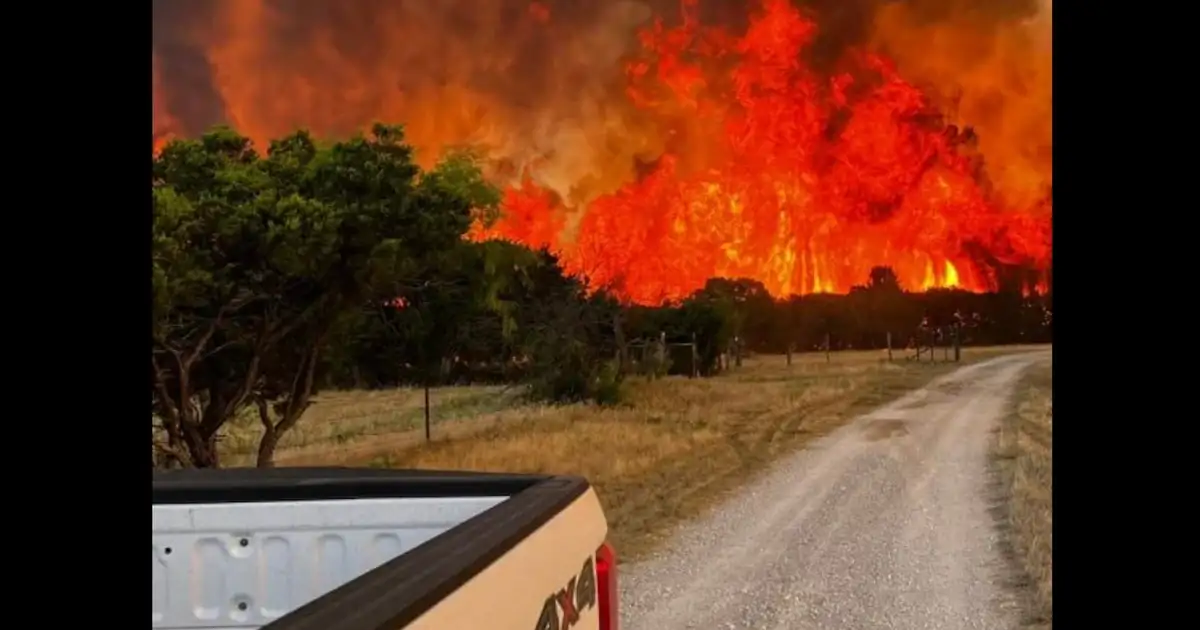

Texas Wildfires Rage Out of Control, Leaving Communities in Flames and Despair
Wildfires are consuming Texas neighborhoods in hours, exposing a failure to address climate change’s role in these disasters. These fires aren’t random—they’re a warning sign that our environment is spiraling into chaos, demanding urgent action.
The Facts You Need to Know
In 72 hours, wildfires have scorched over 50,000 acres across central and west Texas. The Canyon Creek Fire has destroyed more than 150 structures, with the toll rising. Extreme heat—up to 105°F—and gusts over 30 mph are fueling these blazes at a terrifying pace.

Red flag warnings signal conditions are primed for disaster. Towns like Junction, Fredericksburg, Odessa, and Midland are evacuating residents en masse. Shelters at capacity, with the San Antonio Convention Center serving as a refuge for many fleeing the flames.
Firefighting Efforts and Government Response
Over 1,200 firefighters from Texas and neighboring states are battling the fires with helicopters and air tankers. Rugged terrain and weather hamper containment efforts. Governor Greg Abbott has declared a state of emergency, mobilizing resources from FEMA and the U.S. Forest Service.
Authorities urge residents to stay vigilant—keep emergency kits ready, follow evacuation orders, and stay alert. Some evacuate, risking everything; others stay to fight, risking their lives. Heroism and desperation collide.
Historical Context and Broader Impact
Texas has become a tinderbox due to droughts, land mismanagement, and climate change. Past fires in 2011 and 2017 caused massive property loss and prompted reforms, but those measures are insufficient against today’s scale. Long-term solutions—controlled burns, smarter land policies, resilient infrastructure—are overdue.
This crisis is a wake-up call. Waiting for rain or cooler weather is no longer an option. Texas must act now to prevent future catastrophes.
The True Cost of the Firestorm
The destruction threatens Texas’s power grids, water supplies, and emergency services. Families lose everything in hours, leaving emotional scars. Rebuilding costs will run into billions, covering infrastructure and climate adaptation.
These fires are symptoms of a hotter, drier planet. They’re a warning for the entire country—climate change is here, and it’s deadly.
What’s Next and Who’s to Blame
Containment could take days or weeks, but high winds and dryness threaten to keep flames alive. Additional resources are on standby, but the escalating costs raise a stark question: who will foot the bill for this preventable disaster?
Systemic failures—chaotic land management, weak climate policies, and underfunded preparedness—are exposing leadership flaws at every level. This is a crisis of neglect.
The Villain and the Hero: Climate Change and Community Resilience
Climate change is the villain—its hotter, drier conditions make wildfires more frequent and intense. Land mismanagement, neglecting controlled burns, acts as an accomplice, turning landscapes into tinderboxes. These fires aren’t accidents; they’re the result of systemic negligence.
Heroes emerge: firefighters risking their lives, volunteers organizing aid, residents defending homes. Their resilience shows grit, but heroism alone won’t solve the problem. Without aggressive climate action and land reforms, Texas will keep burning—and so will the nation.
How many homes, lives, and ecosystems must be lost before we prioritize meaningful change?
Final Thought: The Firestorm as a National Wake-Up Call
This isn’t just a Texas story; it’s a reflection of our failure to confront climate change. The fires in Junction, Fredericksburg, Odessa, and Midland forecast what’s coming if we ignore science and responsibility. We’re living on borrowed time, with lives, homes, and ecosystems at risk.
Climate change isn’t coming—it’s here, burning across our backyard. How many more disasters before we wake up and act? The future depends on it.
Source: Google News