
In a move that sends shockwaves across the geopolitical gridiron, President Donald Trump has just executed a textbook power play, drastically scaling back crucial US military exercises with South Korea. This calculated maneuver comes mere days after Seoul delivered a stinging, two-word snub to Washington’s plea for support in the escalating Iran war, laying bare the transactional nature of alliances under this administration.
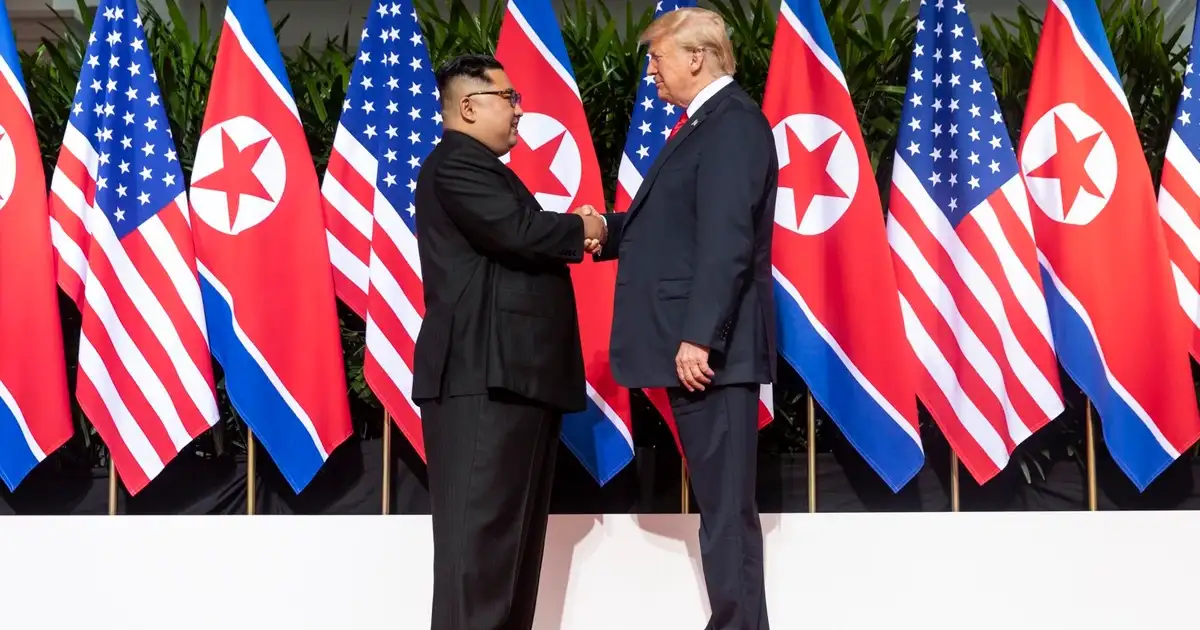
This tactical counterpunch landed hard, directly on the heels of Trump’s effusive praise for North Korean leader Kim Jong Un, whom he lauded as a “strong and very capable leader” at a Pennsylvania campaign rally on August 15, 2026. Within hours, the Pentagon confirmed the drastic cuts to the joint drills, a direct, undeniable order from the Commander-in-Chief himself. The message couldn’t be clearer: loyalty, in this White House, is not merely expected; it’s demanded, with immediate and tangible repercussions for any perceived deviation.

The timing is no coincidence; it’s a deliberate consequence. South Korea had unequivocally rejected a US request for assistance in a potential multinational push against Iran. Their curt “No thanks” wasn’t just a refusal; it was a direct shot across the bow, perceived by US officials as a blatant, unacceptable lack of allied solidarity. Washington’s response is a stark reminder: when you refuse to carry your weight on the global stage, don’t expect the heavy lifting to continue on your home turf.
The Alliance Playbook Rewritten: A Transactional Future?
The annual “Freedom Shield” exercises are far more than mere drills; they are the bedrock of deterrence in Asia, a powerful, unmistakable show of force involving tens of thousands of troops, advanced weaponry, and complex strategic coordination. For decades, they’ve been a non-negotiable cornerstone of regional security. Now, they will be significantly reduced in both scope and duration, focusing instead on smaller, localized training scenarios – a shadow of their former might. This isn’t just a scaling back; it’s a strategic downgrade, a deliberate weakening of a vital defense posture.
This isn’t merely a shift in military readiness; it’s a seismic tremor in how the US views its alliances, particularly in a volatile region. Trump is once again placing personal diplomacy with Kim Jong Un and his “America First” transactional foreign policy ahead of traditional, long-term defense strategies. The implications for regional stability are not just massive; they are potentially catastrophic, inviting miscalculation from adversaries and eroding trust among allies.
Trump administration officials aren’t just ‘spinning’ this; they’re orchestrating a deliberate narrative, brazenly asserting these cuts are a strategic masterstroke designed to keep Kim Jong Un at the negotiating table. They declare large-scale exercises “provocative” and “unnecessary” – a convenient smokescreen that perfectly aligns with Seoul’s perceived slight on the Iran issue. The underlying message is chillingly clear: you want US protection? You better back US interests, no questions asked. This isn’t partnership; it’s an ultimatum.
High Stakes in the Pacific Arena: The Ripple Effect
The South Korean government, for its part, is attempting to play it cool, a difficult feat when your security blanket is being publicly shredded. On August 16, the South Korean Foreign Ministry issued a carefully worded statement acknowledging the US decision, reaffirming their “unwavering commitment” to the alliance and promoting peace on the Korean peninsula. But behind the diplomatic boilerplate, one can almost hear the frantic phone calls and strategic reassessments. This isn’t simply a policy adjustment; it’s a profound challenge to their national security strategy.
Let’s be crystal clear: this isn’t just a ‘shake-up’; it’s a seismic event on the global stage. When the US pulls back on joint exercises, it doesn’t just send a signal – it blasts a siren. To Pyongyang, it screams that the alliance is fracturing, ready for exploitation. To every other ally, from Tokyo to Taipei, it’s a stark, undeniable message: your commitment to Washington is now explicitly conditional. What does this tell China, a burgeoning regional power, about the strength of US resolve? It invites them to test the new boundaries.
This move is a direct, punitive consequence of South Korea’s refusal to engage on Iran. The US is actively embroiled in an armed conflict with Iran, a conflict that began on February 28, 2026, and has seen the Strait of Hormuz transform into a volatile hot zone. This isn’t some distant, abstract conflict; it’s a critical global flashpoint with immense economic and strategic ramifications. When a key ally bails on a pivotal global issue, especially one where US blood is being shed, the repercussions are swift, brutal, and designed to send a message to all who dare to waver.
What message does this send to other nations, particularly those reliant on US security guarantees? Are US alliances now purely transactional, based solely on immediate reciprocal support, or can they withstand disagreements on specific foreign policy fronts? It looks unequivocally like the former. This is no longer about long-term strategic partnerships built on shared values; it’s about quid pro quo, a stark, unyielding equation where every favor is tallied and every perceived slight carries a price tag.
Loyalty Test on the Global Gridiron: The Cost of Disunity
Trump’s approach is a high-stakes gamble, a daring play on the global gridiron. He fundamentally believes that by reducing “provocative” exercises, he can somehow keep Kim Jong Un at the negotiating table, simultaneously extracting concessions from allies by forcing them to align with US foreign policy objectives across the board. This isn’t a nuanced diplomatic strategy; it’s a loyalty test, plain and simple, with national security hanging in the balance.
The danger is not merely clear; it’s glaring. A weakened US-South Korea alliance doesn’t just ’embolden’ Pyongyang; it hands them a strategic victory on a silver platter. It destabilizes an already hyper-tense region, a powder keg perpetually on the brink. North Korea’s nuclear program remains a potent, existential threat, with recent missile tests serving as stark reminders of their capabilities. These exercises are not just for show; they are absolutely essential for maintaining readiness, sharpening interoperability, and projecting a credible deterrent against a hostile, unpredictable regime. To diminish them is to invite aggression.
The administration’s stance suggests that if you don’t play ball on one field, you might get benched on another. South Korea’s “No thanks” on Iran triggered a direct, calculated response on their home turf, in the very heart of their defense strategy. That is a hard, brutal lesson for any ally contemplating an independent foreign policy move. It establishes a precedent that could unravel the entire fabric of US-led alliances globally.
This entire situation boils down to leverage. Trump is unapologetically using military support as a bargaining chip, a tool to force allies into line with his global battles. The question isn’t whether this strategy is bold; it’s whether it will strengthen America’s hand or irrevocably alienate crucial partners precisely when they are needed most. Will this transactional approach ultimately lead to a more compliant alliance network, or will it simply fragment US influence and leave a vacuum for rivals to exploit?
This latest maneuver confirms what many have long suspected: Trump is not afraid to rip up the traditional playbook. He is willing to risk foundational alliances, to trade long-term stability for immediate, perceived tactical advantages. The world watches, holding its breath, to see if this audacious strategy pays off or creates new, dangerous vulnerabilities that could haunt the US for decades to come. The clock is ticking, and the stakes couldn’t be higher.
Photo: Wikimedia Commons (query: Kim Jong Un trump)
Source: Google News