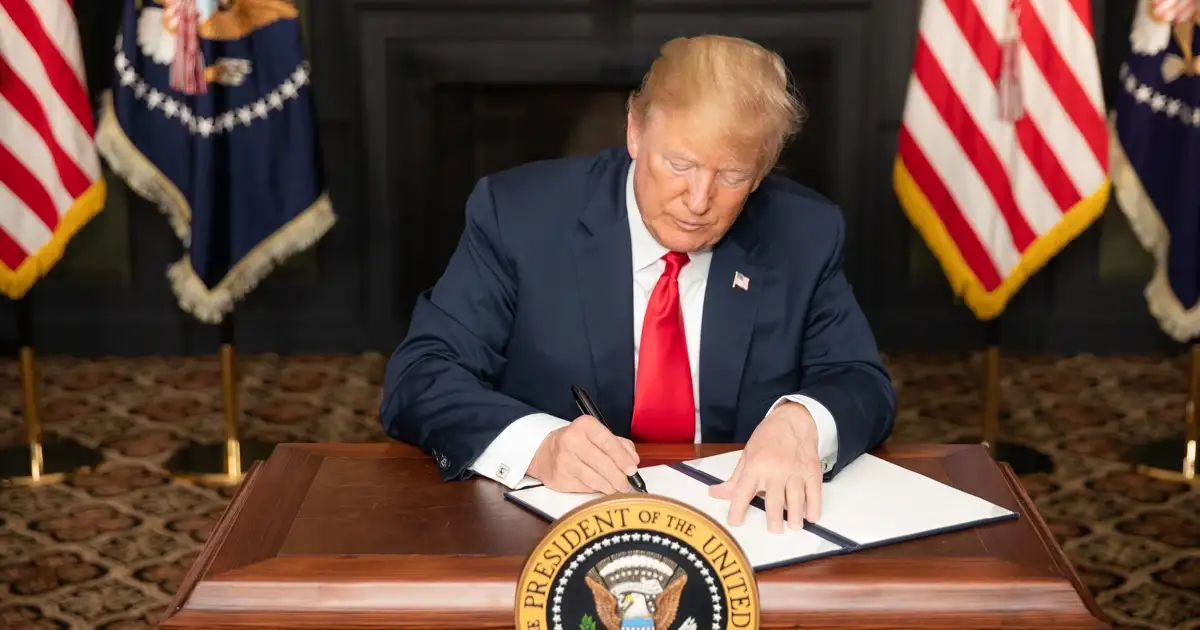

Former President Donald Trump, never one to shy from a high-stakes gamble, has once again dramatically inserted himself into the escalating confrontation with Iran. With a pronouncement that sent tremors through diplomatic circles, Trump declared military strikes against Tehran must continue “until I say it’s enough,” an audacious claim of influence over current policy and a chilling preview of his own potential return to power. He didn’t stop there, ominously revealing a “brutal attack” option held in reserve, waiting to be unleashed unless a new deal is brokered.
This isn’t merely bluster; it’s a high-stakes gamble with the very fabric of global stability. On July 14, 2026, Trump delivered his explicit threat, not from the Oval Office, but from a platform that amplified his enduring influence, sending an unmistakable message: negotiate or face the ultimate, undisclosed consequence. This isn’t just a political statement; it’s a geopolitical earthquake.

Trump’s incendiary warning arrives amidst a sharp escalation in military actions by the current administration. Just the day before, on July 13, 2026, the Pentagon confirmed a series of targeted strikes – surgical, decisive, and undeniably provocative. These hits pulverized Iranian-backed militia positions, spanning the volatile landscapes of eastern Syria and Iraq.
These strikes were no arbitrary act; they constituted a direct, forceful response to a disturbing pattern of recent attacks on American personnel and clear threats to US interests across the region. Adding to this volatile mix, on July 12, 2026, the USS Eisenhower carrier strike group didn’t just ‘flex its muscles’ – it projected raw naval power, conducting high-profile exercises in the Arabian Sea. This wasn’t merely a drill; it was an unequivocal show of force, strategically timed after a dangerously close encounter with Iranian Revolutionary Guard Corps (IRGC) vessels in the choke-point of global oil trade, the critical Strait of Hormuz.
The Brinkmanship Game: Who Pays?
Trump’s long-standing strategy is anything but subtle: apply maximum, unrelenting pressure. The singular goal, as he sees it, is to bludgeon Iran into a new, more favorable deal. His ardent supporters champion this as a display of necessary strength, arguing that only overwhelming, uncompromising force will ever drag Tehran to the negotiating table. They insist this “brutal attack” is merely a credible deterrent, a sword of Damocles, not an immediate blueprint for war.
Yet, the stakes are terrifyingly, undeniably high. Critics aren’t just wary; they see a perilous game of brinkmanship pushing the region to the precipice of a full-scale conflict. Could such explicit, public threats truly coerce Iran, or will they merely stiffen Tehran’s already defiant resolve? The fear is that this aggressive posturing won’t pave the way for diplomacy, but instead, slam the door shut.
Predictably, Iran has already fired back with venom. Tehran’s Foreign Ministry swiftly condemned Trump’s remarks, branding them “provocative” and “unacceptable.” Iranian state television, a reliable conduit for the regime’s defiance, amplified a senior official’s resolute message.
“Iran will not be intimidated by empty threats and will defend its sovereignty and people with all its might.”
— Statement broadcast on Iranian state media
This isn’t some abstract academic debate confined to think tanks; this confrontation’s brutal price tag hits everyone, everywhere. The markets reacted instantly: Brent crude oil futures didn’t just ‘jump,’ they spiked a stark 2.3%, hitting
Source: Google News