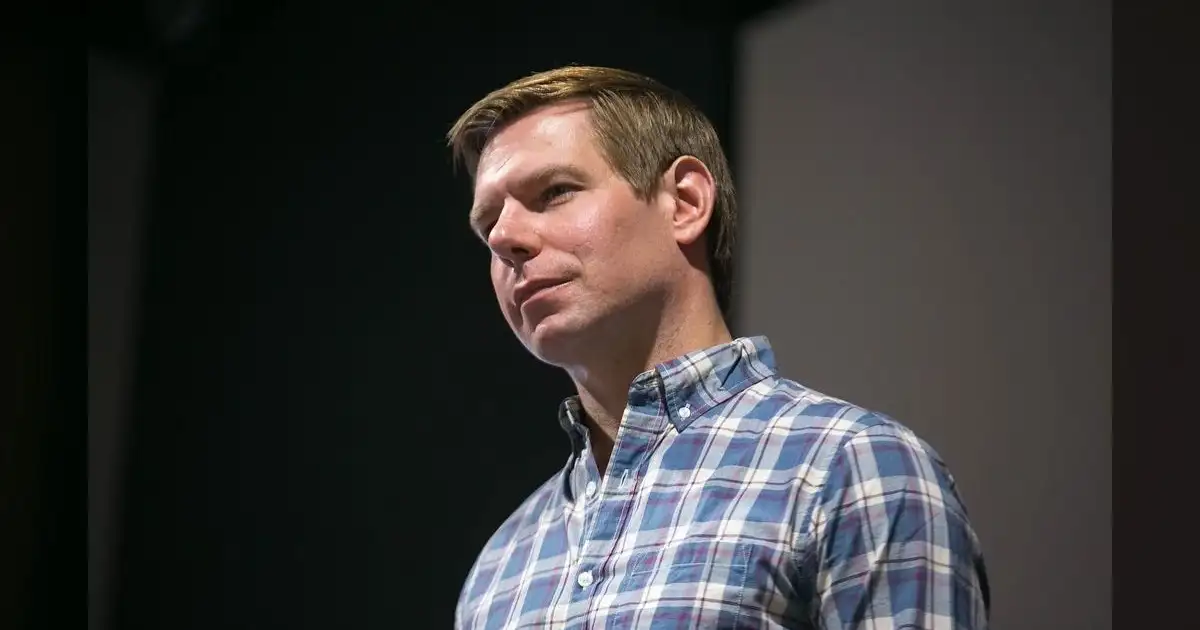

New, deeply unsettling allegations against Congressman Eric Swalwell have not merely ignited a political firestorm; they have ripped open fresh wounds in an already fractured American political landscape. These claims, originating from an alleged victim who details a “horrifying hotel room encounter” and amplified by reports of more women emerging with the stark, chilling phrase, “He didn’t stop,” threaten to destabilize an entire political ecosystem already teetering on the brink of profound division.
The gravity of these accusations immediately sent shockwaves through both traditional and digital spheres. Online platforms, from X to Reddit, are ablaze with reactions, dissecting every detail and implication. The very timing of these fresh accusations, emerging with such force, naturally prompts significant questions about their origin, purpose, and the broader political currents they expose.

Partisan Warfare Erupts Over Swalwell Allegations
The public reaction to these allegations has been nothing short of intense partisan trench warfare, a familiar yet increasingly corrosive pattern in contemporary American politics. On one side, right-wing commentators express a palpable satisfaction, framing these claims as long-overdue accountability for a prominent Democratic figure. Conversely, many on the left are quick to dismiss the claims, often labeling them as “Russian psyops,” “MAGA revenge porn,” or politically motivated fabrications designed to undermine a vocal critic.
The online discourse is particularly brutal and unforgiving. Posts such as “Spy lover now rapist? Lock him up!” garner thousands of likes and shares on X, explicitly linking the current allegations to Congressman Swalwell’s past controversies. His failed presidential run and previous associations, most notably with a suspected Chinese intelligence operative, Fang Fang, are frequently invoked.
This fusion of past and present controversies suggests a perceived “karmic justice” by some critics. Others simply see an opportunity to discredit a political opponent. Speculation about his political future, especially his rumored aspirations for the California governor’s race, runs rampant, adding another layer of intensity to the debate.
The question isn’t just about his immediate political survival. It’s about the very viability of his long-term ambitions.
This intense partisan reaction highlights a deep and pervasive cynicism about political motives. Sarcastic theories abound regarding the timing of these allegations. Are they “GOP plants” designed to derail a potential challenger? Or could they even be a “DNC purge,” an internal maneuver to clear the field?
Redditors in communities like r/politics often dismiss the claims as a “QAnon fever dream.” They frequently cite a perceived lack of prior whispers or credible leaks, despite Congressman Swalwell’s high public profile and frequent media appearances.
This immediate, almost reflexive, partisan filtering of information underscores the profound challenges in achieving any semblance of objective assessment in the current political climate.
The Geopolitical Dimension of Domestic Scandal
While these allegations are inherently domestic, their intense political combat carries significant international implications. America’s internal cohesion is not merely an internal matter; it directly impacts its global standing and its capacity to act effectively on the world stage. A nation consumed by relentless partisan infighting appears weakened, distracted, and unreliable abroad. This perception can embolden adversaries, sow seeds of doubt among allies, and complicate critical diplomatic efforts.
Congressman Swalwell’s past, particularly his association with Fang Fang, a suspected Chinese intelligence operative, provides a direct and tangible international dimension to his current predicament. This history makes him a particularly vulnerable target for foreign influence narratives. Such narratives, often amplified by state-sponsored actors, are meticulously crafted to sow discord, erode trust in democratic institutions, and undermine public confidence in political leaders.
The “Russian psyop” accusation, though unverified, itself points to this acute concern. Foreign adversaries, particularly those engaged in information warfare, excel at exploiting existing societal divisions and political vulnerabilities to destabilize target nations from within.
These new allegations, regardless of their ultimate veracity, provide ample fodder for such campaigns. They create an environment ripe for distrust and suspicion, both domestically and internationally.
“Internal political instability always sends signals abroad,” stated Dr. Lena Petrova, a geopolitical strategist speaking to Reuters. “When prominent figures face such accusations, it not only distracts from policy priorities but can be weaponized by those seeking to undermine American leadership and democratic resilience.”
This weaponization extends far beyond direct foreign interference. It fundamentally shapes how other nations perceive U.S. governance and its commitment to democratic principles. If American politicians are seen as easily compromised, constantly embroiled in scandal, or unable to address internal issues with a modicum of unity, it erodes confidence in the nation’s “soft power.”
This erosion impacts diplomatic negotiations, weakens the fabric of alliances. It makes it significantly harder for the United States to project a united front on pressing global challenges, from climate change to geopolitical rivalries.
The internal chaos becomes an external liability, diminishing America’s moral authority and strategic influence.
The Echo Chamber Effect and Media Scrutiny
The online reaction to the Swalwell allegations also starkly reveals a troubling and pervasive trend: the filtering of information through increasingly rigid partisan lenses. On one side, Fox News-adjacent commentators demand immediate resignation and accountability, often presenting the claims as undeniable truth.
On the other, liberal commentators are quick to dismiss the allegations outright. They frequently cite the anonymous nature of the sources or the history of political attacks against Swalwell as reasons for skepticism.
This creates a powerful and self-reinforcing echo chamber effect, where individuals are primarily exposed to information that confirms their existing biases. This phenomenon makes objective assessment incredibly difficult, if not impossible, for a significant portion of the public.
Mainstream media organizations face an exceptionally difficult task in this environment. They must report on serious allegations with due diligence and journalistic integrity. Yet, they must do so without inadvertently fueling partisan fires or legitimizing unsubstantiated claims.
The absence of “new developments” or widespread corroboration in traditional news outlets can be interpreted in wildly divergent ways. Some segments of the public view it as a lack of credible evidence, suggesting the claims are baseless.
Others, however, perceive it as a deliberate cover-up, a failure to investigate properly, or even a conspiracy by the liberal media to protect a Democratic politician. This dynamic further complicates America’s image internationally.
A free and fair press is universally recognized as a cornerstone of democracy. When public trust in media is eroded, when news is seen not as information but as partisan propaganda, it fundamentally weakens democratic institutions from within. This vulnerability is a gift to authoritarian regimes, which frequently highlight such divisions and perceived media failures to critique and undermine the legitimacy of Western democracies. They point to the chaos and distrust as evidence of inherent flaws in democratic systems, bolstering their own narratives of stability and controlled information.
These allegations are not merely about the fate of one congressman. They reflect a broader societal struggle for truth, accountability, and the integrity of the political process in an age of pervasive political manipulation. They illuminate just how deeply polarized American society has become, a polarization that carries consequences far beyond the corridors of Washington D.C.
What, then, does this mean for America’s standing in the long term? How do these relentless internal battles impact crucial foreign policy decisions, national security, and the perception of American leadership?
The answer is stark and increasingly undeniable: a nation so profoundly divided at home struggles profoundly to lead abroad. The current political storm over these allegations serves as a potent and sobering reminder of this critical reality, urging a deeper reflection on the foundations of democratic discourse and national unity.
For further analysis on the intersection of domestic politics and global perception, explore our deep dive into how internal conflicts affect international relations on DailyNewsEdit.
Source: Google News