
Erika Kirk’s eleventh-hour pull from a TPUSA event, featuring none other than Vice President JD Vance, wasn’t merely a cancellation; it was a brazen masterclass in political theater, meticulously designed to weaponize vague “threats” for maximum outrage and zero accountability. This wasn’t a logistical hiccup; it was a calculated maneuver on a grand stage.
The conservative media firebrand abruptly backed out of the Turning Point USA gathering, scheduled for mid-April 2026. A TPUSA Vice President swiftly confirmed her withdrawal, citing nebulous “credible threats.” This left thousands of attendees and organizers scrambling, with Vice President Vance left to address a crowd that had eagerly anticipated Kirk’s provocative presence. The air crackled not just with disappointment, but with a palpable sense of manufactured drama.

The Conveniently Vague “Threats” and the Echo Chamber
Here’s the unvarnished rundown: On April 13, 2026, whispers began to leak that Kirk would be a no-show. By April 14, TPUSA made it official, issuing a statement that was as chillingly vague as it was strategically timed. An unnamed Vice President declared:
“Due to credible threats received against Ms. Kirk, we unfortunately had to make the difficult decision to cancel her appearance at our event. The safety of our speakers is paramount.”
Vice President JD Vance, stepping onto the stage alone, offered a brief, equally unspecific comment, carefully crafted to amplify the narrative without divulging a single fact:
“We’re certainly disappointed that Erika couldn’t be with us tonight. She’s a strong voice for conservative principles, and it’s a shame when anyone feels unsafe speaking their mind in this country.”
Notice the deliberate evasion. No specifics. No details. Just the chilling implication of shadowy forces silencing a conservative voice. The glaring problem, the elephant in the room that no one dares acknowledge, is that absolutely no one is talking about what these “threats” actually entailed. Law enforcement has maintained an deafening silence. Kirk herself, a figure rarely shy about public pronouncements, has offered no statement, no clarification, no shred of evidence. This isn’t an oversight; it is, unequivocally, a choice.
Manufacturing Martyrdom: A Playbook for Power
The online world, particularly on platforms like X and Reddit, saw through this thin veil of victimhood with immediate, cynical clarity. “Classic grift stunt,” one X user fired off, encapsulating the widespread skepticism. Many others dismissed it as “vaporware,” pointing to the complete and utter lack of verifiable details. This isn’t about genuine concern for safety; it’s a cold, hard calculation designed to manufacture a victim narrative, to cast Kirk and, by extension, the entire conservative movement, as persecuted heroes.
The timing here isn’t just everything; it’s a masterstroke. This “threat” drama unfolds barely months after the shocking and tragic assassination of Charlie Kirk in late 2025. Suddenly, every vague threat, every unsubstantiated whisper against a conservative figure, becomes potent ammunition. It doesn’t just explain Kirk’s absence; it fuels the “persecuted conservative” narrative to a fever pitch. It rallies the base, galvanizes the faithful, and, perhaps most cynically, it opens wallets with remarkable efficiency.
This political theater is hardly a novel invention. Political figures across the spectrum have always grappled with genuine security risks. Organizations like the Anti-Defamation League (ADL) and the Southern Poverty Law Center (SPLC) meticulously track rising threats across the entire political landscape. But when a high-profile cancellation occurs with such absolute, unyielding zero transparency, it compels us to ask a far more pointed question: Who, precisely, benefits from this calculated ambiguity? Who profits from the fear?
The Steep Cost of Vague Victimhood and Eroding Trust
Turning Point USA, a conservative non-profit that thrives on high-profile events, is a formidable force. They draw legions of young conservatives, acting as a crucial pipeline for the America First movement. A last-minute cancellation of this magnitude is, on the surface, a logistical nightmare. It incurs significant financial losses in sunk security arrangements and venue costs. It undeniably impacts their reputation for flawless execution. Yet, it also generates a specific, potent kind of buzz – a buzz that, for certain factions, is far more valuable than any lost revenue.
The cynical take is not merely plausible; it is glaringly obvious: this “threat” serves a singular, powerful purpose. It doesn’t just provide a convenient excuse for Kirk’s absence. It transforms her into a martyr. It paints political opponents as violent, unhinged intimidators. It provides an immediate, potent boost to fundraising efforts. It amps up youth recruitment by presenting a battle-scarred movement, seemingly under siege, fighting against overwhelming odds. It’s a powerful, if ethically dubious, recruitment tool.
Consider, for a moment, the deafening silence from Vice President Vance’s Secret Service detail. If a genuine, credible threat existed against someone scheduled to appear alongside the Vice President of the United States, that would not merely be a local security concern; it would be an urgent national security issue, triggering immediate, visible protocols and public statements from federal agencies. Yet, we hear nothing. Not a peep. This glaring omission, this complete lack of official corroboration, speaks volumes. It screams volumes, in fact, about the true nature of these alleged threats.
Empty Stages, Full Coffers: The Weaponization of Fear
The real issue at stake here isn’t whether threats exist in the fraught political arena; they absolutely do, and we must take them seriously. The issue is the cynical, dangerous weaponization of unspecified threats. It creates a suffocating “chilling effect” where genuine concerns for safety become indistinguishable from, and ultimately lost in, the cacophony of manufactured drama. It allows for audacious political maneuvering without the inconvenient burden of concrete evidence or accountability.
This incident fits a well-worn pattern. Conservatives frequently claim they are being “silenced” or “canceled,” even as their platforms expand exponentially, their events draw record crowds, and their media personalities thrive with unprecedented reach. This latest episode with Erika Kirk is not an anomaly; it is another meticulously placed brick in that towering, self-serving wall of convenient victimhood, built to shield from scrutiny and amplify grievance.
The public, frankly, deserves transparency. If there were real threats, details should emerge. Law enforcement should confirm their involvement and any ongoing investigations. Without it, this looks less like a legitimate security concern and more like a carefully orchestrated performance, a theatrical production designed to generate sympathy and outrage without any actual, verifiable risk to the principal actor. It’s a dangerous game, eroding public trust one vague accusation at a time.
The Real Political Play: Cynicism as Strategy
The utter lack of specific details makes it not just easy, but imperative, for critics to dismiss these claims entirely. They see it as a “psyop for victim narrative,” as one Reddit thread astutely observed, cutting straight to the heart of the matter. They question why, if these threats were genuinely serious, they remain shrouded in such impenetrable secrecy. This fuels a corrosive cynicism, not just about Erika Kirk or TPUSA, but about the very fabric of political discourse itself.
TPUSA faces a profound challenge. They must balance legitimate speaker safety with event accessibility and, crucially, public trust. But when the stated reason for a high-profile cancellation is so deliberately vague, it doesn’t just undermine trust; it shatters it. It makes people wonder if the “threats” are simply a convenient, politically expedient excuse for other, less flattering issues, such as potential low turnout, internal disagreements, or a simple desire to dominate the news cycle.
The message sent to young, aspiring activists is profoundly complicated, if not outright manipulative. Are they entering a genuinely dangerous battlefield, where their voices are truly under threat? Or are they being sold a manufactured drama, a carefully constructed narrative of persecution designed to enlist them in a cynical political game? The answer, in this chilling case, leans heavily towards the latter. The narrative of persecution is an incredibly powerful tool, especially when it costs nothing but credibility to deploy.
Erika Kirk’s no-show wasn’t about her safety. It was about leveraging fear and ambiguity in a hyper-polarized political landscape to score cheap points, rally the base, and solidify a victimhood complex that serves powerful interests. This isn’t leadership. This isn’t principled action. This is pure, unadulterated theater, and the audience deserves to know they’re being played.
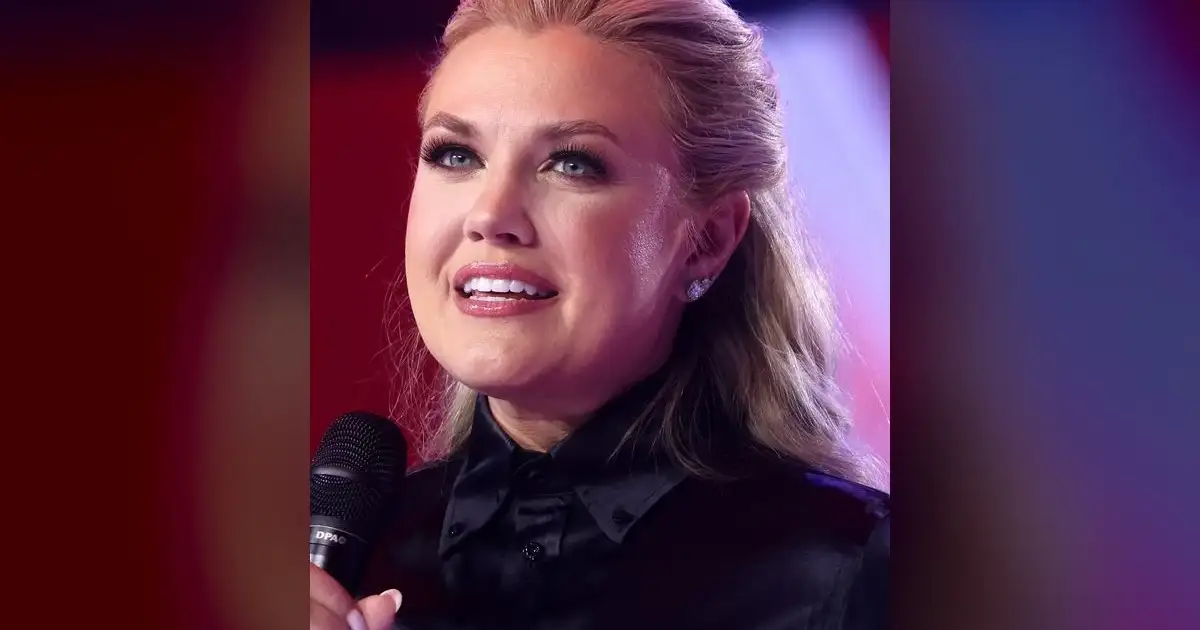
Photo: Photo by Gage Skidmore on Openverse (wikimedia) (https://commons.wikimedia.org/w/index.php?curid=182986843)
Source: Google News