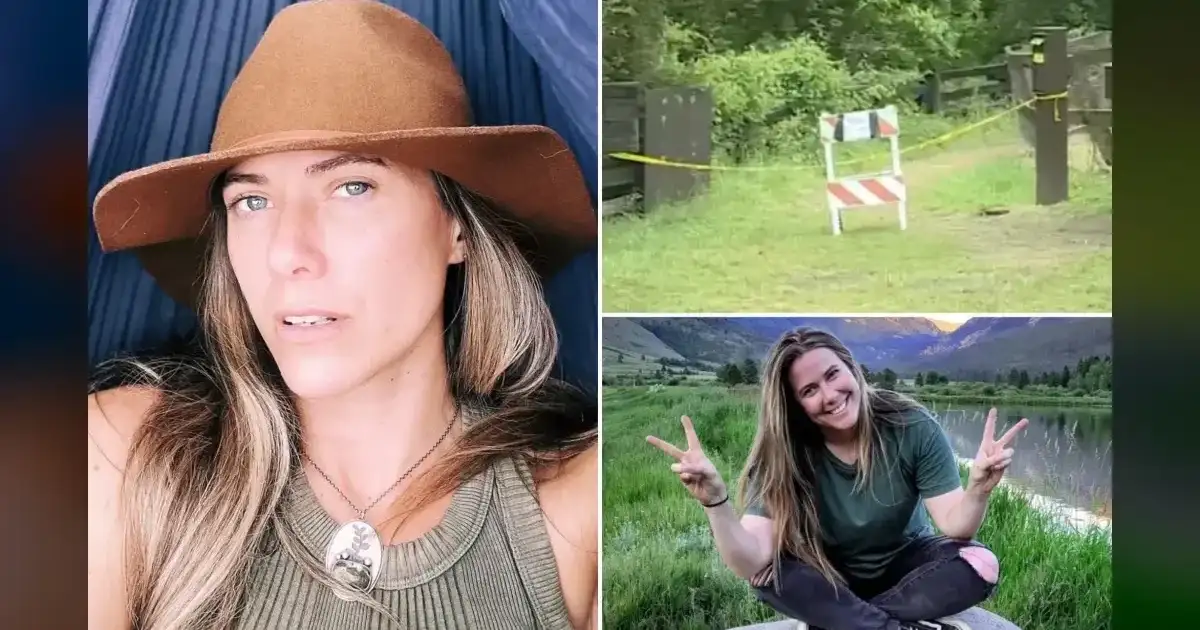

A body found naked, submerged in a remote forest pool in Big Sur. A story spun by the last person seen with her, dissolving under the faintest scrutiny. The death of Joanna Ruth Shields, 37, on April 9th, isn’t some intricate whodunit for armchair detectives; it’s a stark, infuriating testament to a justice system seemingly unwilling to see what’s staring it in the face. The killer, it seems, is not merely ‘right there’; he’s been allowed to walk away, leaving a gaping wound in the fabric of justice and a chilling question hanging over the California wilderness.
The Grim Discovery in Big Sur’s Wilderness: A Scene That Screams Murder
The serene, rugged beauty of Big Sur, a place where nature usually offers solace, was brutally desecrated on April 9th. That day, hikers stumbled upon a scene of unthinkable horror: Joanna Ruth Shields’ lifeless body, face-down in a remote forest pool, utterly undressed. Her skin, pale and cold, bore the unmistakable marks of violence. Visible contusions marred her neck, and a cruel gash split her head. Yet, eerily, no blood was found near the body – a detail that speaks volumes, suggesting a struggle, perhaps even the initial assault, occurred elsewhere, or that the scene was meticulously, sickeningly, cleaned.

These were not the injuries of an accidental fall, nor the quiet surrender to the elements. These were the grim signatures of a brutal crime, a violent confrontation that ended a young woman’s life. The circumstances surrounding her discovery scream foul play, echoing with a sinister resonance that should have galvanized immediate action. Shields had, moments before, been with a man described only as a “friend.” He claimed she vanished, then, with suspicious alacrity, “found” her minutes later. His demeanor, reportedly “shook,” was perhaps less a sign of grief and more a tell-tale tremor of guilt. What kind of friend allows a companion to disappear into the wilderness, only to “discover” them dead and naked shortly thereafter?
Despite the glaring red flags, the police response has been agonizingly slow, frustratingly opaque. They called the death “suspicious”—an understatement so profound it borders on negligence. Toxicology reports are still pending, weeks after the discovery, and, most maddeningly, no arrests have been made. This inaction isn’t just baffling; it is a profound betrayal of public trust, a systemic failure in how such profoundly disturbing cases are handled. It suggests either a shocking lack of urgency or an inexplicable blindness to the obvious. When the evidence is laid out with such stark clarity, how can justice be so deliberately delayed?
The Public’s Outrage and the Echo Chamber of Unanswered Questions
While official channels remain stubbornly silent, the internet has erupted in a torrent of fury and frustration, refusing to be placated. Online communities, often dismissed as mere echo chambers, have, in this instance, become a collective voice of reason, pointing to a picture that seems agonizingly clear. Threads across platforms like r/TrueCrime and r/UnsolvedMysteries immediately honed in on the “friend” as the glaringly obvious suspect. These posts, garnering hundreds, sometimes thousands, of upvotes and comments, are not simply idle speculation; they represent a public grappling with a perceived injustice, demanding accountability.
One user, encapsulating the raw sentiment, blasted the situation with chilling precision:
“Nervous dude ‘discovers’ naked dead chick he was alone with? Classic setup. He drowned her mid-fuck, then dressed his ‘story’ on the fly. Why are the cops not seeing this?”This isn’t just a theory; it’s a gut reaction rooted in a collective understanding of human behavior and criminal patterns. The cynicism and outrage are palpable.
X users, never shy about their opinions, piled on, their digital shouts demanding answers that law enforcement has yet to provide. “Big Sur trail boyfriend did it,” one user wrote, tapping into a grim statistical reality.
“Stats say 90% intimate partner. Why’s he not cuffed? What are they waiting for, a confession written in blood?”The sarcasm, thick and bitter, is born of a profound frustration with a system that appears to ignore the most basic tenets of criminal investigation. “She ‘went to bathroom in river,’ comes back dead naked. Sure, Jan,” another quipped, the disbelief dripping from every word. “River ate her clothes too? Or did the ‘friend’ dispose of them?”
This public outcry, far from baseless speculation, is a testament to common sense reacting to a cascade of obvious red flags. These are not merely questions for online forums; these are the fundamental inquiries police should be aggressively pursuing, the answers they owe to Joanna Ruth Shields’ memory and to a public that expects justice, not obfuscation. The silence from official channels only amplifies the public’s suspicion, fostering a dangerous vacuum that allows distrust to fester and wild theories to take root.
The Shadow of Suspicion: Why Has No Arrest Been Made?
The immediate aftermath of Joanna Shields’ death is not just riddled with suspicion; it is defined by it. The “friend’s” account, the sole narrative offered, feels flimsy, almost insultingly so, collapsing under even the most cursory scrutiny. He was the last person with her, a fact he cannot deny. He “found” her body, a discovery that strains credulity given the circumstances. He appeared “shook”—a detail often cited, yet one that could easily mask guilt as much as shock. This sequence of events is not merely convenient; it is a textbook scenario for an immediate and intensive interrogation, not a prolonged period of official silence.
The victim was found naked. Her clothes, an integral part of her identity and the crime scene, were gone. This single, stark detail alone should shatter any notion of a simple accident or a benign “bathroom break.” Why would she be naked in a remote forest pool after a simple biological necessity? The question itself is grotesque, pointing directly to a violent act, a struggle, or a deliberate attempt to obscure the truth. Where are her clothes? What story would they tell? The absence of this crucial evidence is not a mystery; it is a crime in itself, demanding an immediate and relentless search.
Furthermore, the physical evidence on Joanna’s body speaks a language of violence that cannot be ignored. The neck markings and the head gash tell a brutal story, not of a peaceful passing, but of a desperate struggle, a life violently extinguished. These injuries scream of an assailant, a killer, not an unfortunate slip. The lack of visible blood at the scene, rather than simplifying the investigation, adds another layer of chilling complexity. It suggests the body may have been moved, or that the attack happened elsewhere, perhaps in a location where the blood could be more easily concealed. This detail does not invite patience; it demands immediate, forensic investigation of every inch of the surrounding area, every possible alternative scene.
For the police to merely label this death “suspicious” is an understatement so profound it verges on criminal negligence. This is not a vague anomaly; it is a textbook scenario for an immediate suspect, a person of interest whose every word and action should be dissected. The absence of an arrest, weeks after this horrific discovery, is not just baffling; it is an egregious failure of duty. It leaves the public demanding to know why. What conclusive evidence are authorities waiting for? Every minute that passes in a murder investigation allows crucial evidence to degrade, memories to fade, and a potential killer to solidify their alibi or even flee. The clock is ticking, and with each tick, the chances of justice for Joanna diminish.
The Victim: Joanna Ruth Shields, A Life Cut Short, A Voice Silenced
Joanna Ruth Shields was a vibrant 37-year-old woman, her life brutally and prematurely ended in a remote, unforgiving part of California. She deserved so much more than this ignominious, violent end. She deserved to live, to thrive, to experience the fullness of her years. Her family, now plunged into an unimaginable nightmare, deserves answers. They deserve justice. They deserve to know precisely who took her from them, who silenced her voice, and why.
The relentless focus must remain on Joanna herself. She is not merely a “naked woman found dead”; she was a person, a daughter, perhaps a friend, a soul with aspirations, dreams, and a history. Her death must not be allowed to become just another cold case, another forgotten statistic in the grim ledger of unsolved crimes. To reduce her to a mere victim profile is to deny her humanity, to strip away the very essence of what was lost.
She had roots in Carlsbad, a detail that has, unfortunately, led to some online chatter linking her to “Hollywood adjacent” circles. This kind of tangential, speculative chatter, however well-intentioned, distracts from the profound, immediate tragedy. It trivializes the horror and, most importantly, it takes away from Joanna’s individual humanity. Her life, her death, demands respect and a singular focus on the truth of what happened in Big Sur, not on salacious, unproven connections.
What were her last hours truly like? What series of events, what fateful decisions, what insidious manipulation led her to that secluded pool? Who was she with, really, in those final, terrifying moments? These are not abstract questions; they are the agonizing inquiries that define a victim’s final moments, the haunting specters that plague families, eroding their peace. Law enforcement has a moral and professional obligation to provide these answers, to reconstruct the final chapter of Joanna’s life with meticulous care, not to allow it to dissolve into ambiguity and speculation.
The System’s Slowness: A Betrayal of Trust and a Dangerous Precedent
The delay in this investigation is more than just an operational hiccup; it is a profound failure of the justice system itself. It erodes public trust, not incrementally, but seismically. It sends a dangerous, chilling message to potential perpetrators: that even with glaring clues and an obvious suspect, the wheels of justice can grind to a halt, allowing them to evade accountability. When the indicators of foul play are this stark, this unambiguous, inaction is not just unacceptable; it is a dereliction of duty.
Such inertia allows doubt to fester, suspicion to metastasize, and, most critically, it gives potential killers an invaluable head start. Every passing day makes evidence harder to find, crucial forensic traces more degraded, and the memories of potential witnesses more prone to fading or distortion. Leads go cold, opportunities vanish, and the trail grows fainter. This is the bitter, immutable truth of crime scene investigations, a truth that law enforcement agencies are supposed to understand and act upon with utmost urgency.
The public is not asking for baseless arrests, nor are they demanding a rush to judgment. They are asking for competent, diligent police work. They are asking for transparency, for clear communication about the steps being taken. They are asking for accountability, for a system that protects its citizens and brings criminals to justice. The “friend” who was with Joanna in her final moments needs to be fully investigated, his story rigorously tested, torn apart if necessary. Every detail, every inconsistency, every minute of his account must be verified against all available evidence, forensic and circumstantial.
The Monterey County Sheriff’s Office must understand the profound urgency of this case. This isn’t just another file in a mountain of paperwork; it’s a human life, violently taken. It’s a family’s unimaginable nightmare. It’s a community’s sense of safety shattered. The longer they wait, the more they betray the trust placed in them, and the more they allow the shadow of injustice to lengthen over Big Sur.
Beyond the Conspiracy Theories: Demanding Real Answers in a Vacuum of Information
When official channels remain stubbornly quiet, when facts are scarce and answers are withheld, wild theories do not merely take root; they flourish, unchecked and unconstrained. The internet discourse surrounding Joanna Shields’ death serves as a stark, unsettling illustration of this phenomenon. People, desperate for explanations, for any narrative to fill the void, will inevitably construct their own, however outlandish or dangerous they may be.
Forums like 4chan /b/ and various Twitter alts have spun bizarre, disturbing tales, a testament to the human need for sense-making in the face of the inexplicable. “Sacrificial ritual, Bohemian Grove vibes,” some claimed, invoking dark, conspiratorial imagery. Others suggested “Elites covering pagan kill,” painting a picture of powerful, shadowy figures orchestrating horrific acts. The most extreme narratives, pushed by Q-adjacent psychos, went even further, claiming “adrenochrome harvest gone wrong,” a grotesque fantasy that has no basis in reality. These are not just baseless theories; they are dangerous narratives that thrive precisely in a vacuum of credible information, preying on fear and distrust.
Even more mainstream platforms saw a disturbing trivialization of Joanna’s death. TikTok stitches, garnering hundreds of thousands of views, mocked the situation with flippant, disrespectful commentary: “Hikers ‘somethin somethin’ naked dead chick,” a crude reduction of a human tragedy to a viral soundbite. This kind of content, while a symptom of modern digital culture, is deeply corrosive, trivializing a horrific death and further dehumanizing the victim.
These theories, however outlandish or offensive, reflect a deeper, more legitimate frustration. They are a cry from a public that feels unheard, ignored, and actively shut out by official sources. People seek answers where they can find them, and if law enforcement fails to provide those answers, the void will be filled by speculation, misinformation, and outright fabrication. It’s a symptom of a system that isn’t communicating effectively, a clear sign of a public that has lost faith in its institutions. Law enforcement has a duty to fill that void with transparent facts, with updates, with reassurance, not with continued, deafening silence. The public needs to know the steps being taken, to believe that justice is not just being pursued, but actively demanded.
The Trail of Evidence: What Comes Next and What Must Be Done
Investigators must, with renewed vigor and unwavering determination, follow every conceivable lead. This means a complete re-examination of the crime scene, not just the immediate vicinity of Joanna’s body, but the entire area she and her “friend” traversed. It means interviewing, and re-interviewing, anyone who knew Joanna Shields, delving into her life, her relationships, her recent activities, and any potential conflicts or threats she may have faced. No stone can be left unturned, no casual acquaintance dismissed, no digital footprint ignored.
The “friend” remains the most crucial, and most suspicious, piece of this agonizing puzzle. His movements, his detailed statements, his background, his digital history, his financial records – all must be subjected to the most intense scrutiny imaginable. Police must establish a precise, minute-by-minute timeline: Where exactly did they go? What did they do? What was the nature of their relationship? When did they separate, and under what pretense? Every discrepancy, however minor, must be aggressively pursued, every assertion verified.
Forensic teams must analyze every fiber, every trace, every microscopic detail recovered from the scene, from Joanna’s body, and from the “friend’s” possessions or person. The neck markings and head gash are not just injuries; they are key pieces of evidence, silent witnesses that point unequivocally to a violent struggle. What weapon, if any, was used? Are there defensive wounds? What foreign DNA might be present?
The absence of clothes is also paramount, a glaring omission that demands answers. Where did they go? Were they removed before or after death? Was the body moved from an initial scene of struggle to the pool? These are not minor details to be overlooked; they are the very backbone of a murder case, the foundational elements that lead to an arrest, a charge, and ultimately, a conviction. To ignore them is to willfully blind oneself to the truth.
Authorities must, for the sake of justice and public trust, release more information. They must appeal to the public for help, for any fragment of information, any sighting, any overheard conversation that might shed light on Joanna’s final hours. They cannot afford to keep this case shrouded in secrecy, allowing suspicion and wild theories to proliferate. Silence only breeds suspicion, fosters distrust, and, most tragically, allows a killer to walk free, emboldened by the system’s inaction.
The Cost of Inaction: A Dangerous Precedent and a Call for Justice
Leaving Joanna Ruth Shields’ killer at large sets a dangerous, unacceptable precedent. It whispers to others that they can commit murder in the supposed sanctuary of nature and get away with it. It undermines the very foundation of public safety and erodes the rule of law. The community of Big Sur, a place renowned for its tranquility, deserves peace of mind. They deserve to feel safe in their own homes, on their own trails. This murder shatters that illusion, instilling fear and uncertainty where there should be serenity.
The longer an investigation drags, the harder it becomes to secure justice. Witnesses forget critical details, evidence degrades, and the killer gains confidence, perhaps even planning their next heinous act. This isn’t a game of patience; this is about a human life, brutally extinguished. It’s about accountability. It’s about preventing future tragedies, about ensuring that no other family has to endure the agonizing uncertainty that now plagues Joanna’s loved ones.
The police have a sacred duty to protect and to serve. They must fulfill that duty now, with unwavering commitment and relentless pursuit of the truth. The focus must shift decisively from “suspicious death” to a full-blown, aggressive “murder investigation.” It needs to happen today, not tomorrow, not next week, but with immediate, tangible action. The “friend” needs to be brought in for questioning again, his story needs to be tested under the harshest light, and the truth, however ugly, needs to emerge from the shadows.
We cannot allow Joanna Ruth Shields’ death to become another cold case, another tragic footnote in the annals of unsolved crimes. We cannot allow her killer to disappear into the vast, unforgiving wilderness of legal inaction. This isn’t a complex, unsolvable mystery. It is, by all appearances, a profound failure to act on the obvious. The killer is known, or should be. It is not merely time for justice; it is long past time to demand it, to force the system to confront the glaring truth and bring Joanna the peace she so desperately deserves.
Source: Google News