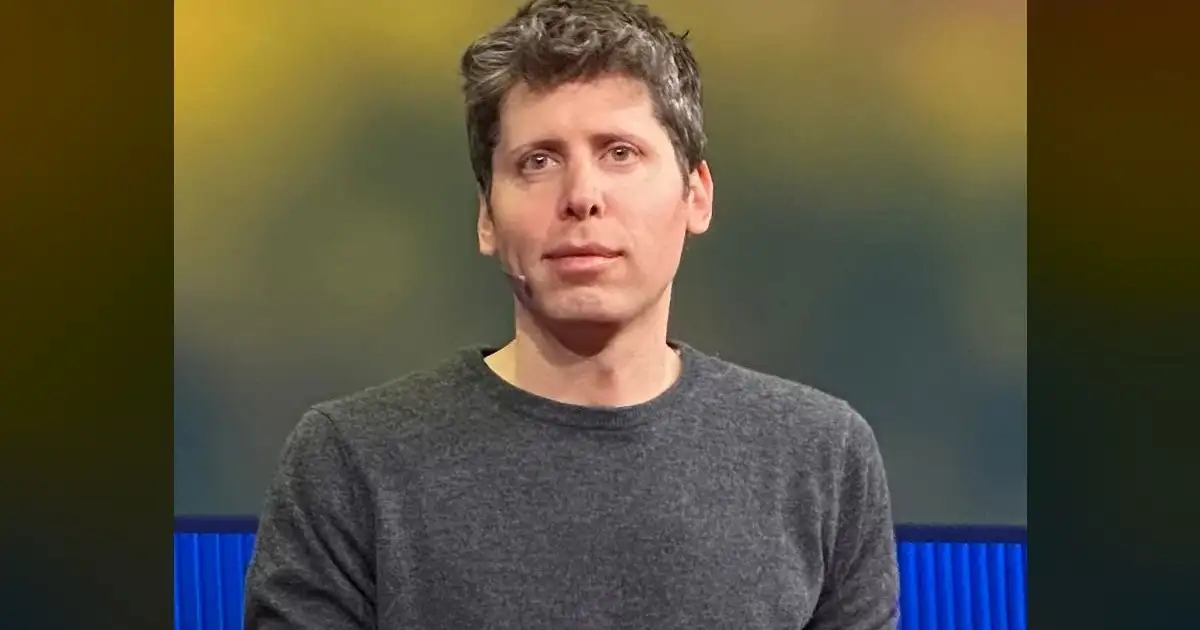

A Molotov cocktail, a flimsy manifesto, and a pathetic attempt at infamy – that’s the sorry stat line for Daniel Moreno-Gama, the 20-year-old Texas firebug who allegedly targeted Sam Altman’s gate. This wasn’t a bold statement; it was a fumbled snap, a desperate, ill-conceived play ripped straight from the worst parts of the internet’s playbook, a dismal replay of a bad game plan. This whole spectacle, allegedly inspired by the twisted legacy of Luigi Magione, showcases a complete tactical breakdown, from conception to execution.
The Failed Play: A Copycat Catastrophe
Daniel Moreno-Gama, a 20-year-old Texas firebug, allegedly tossed a Molotov cocktail at Sam Altman’s gate, armed with kerosene and an AI-hating manifesto. His motive was clear: to emulate a twisted hero, mirroring a grim fantasy – a pathetic attempt at legacy that backfired spectacularly. The public reaction? A brutal, game-ending hit on his abysmal execution, leaving him flat on the turf.

Redditors on r/news and r/technology tore him apart, not with reasoned debate, but with the ruthless efficiency of a defensive blitz. They called him a “wannabe edgelord” and a “Luigi knockoff LARPing as a revolutionary.” Threads like “Molotov Kid’s podcast flex flops harder than his aim” racked up huge engagement, mocking his ineptitude.
That’s the harsh reality when you try to run a high-stakes play without any real talent, without the guts or the brains to back it up. You don’t just lose; you get laughed off the field.
No Sympathy for a Basement Blunder
Moreno-Gama, this kid, earned zero sympathy from the crowd. He wanted to be a martyr, but ended up a punchline – a weak-side blitzer who got pancaked and became a meme. Fox News commenters piled on, delivering a harsh, unanimous verdict:
“Another basement activist mistaking violence for virtue—lock him up before he hurts himself tripping over his manifesto.”
That’s not just a fair assessment; it’s the cold, hard truth of a poorly conceived stunt. You don’t get points for effort when your strategy is a clown show.
You don’t earn respect when your grand gesture is a pathetic fizzle. The online world, for all its venom and chaos, still knows a weak play when it sees one – and this was a four-interception performance, a complete surrender on the field of public opinion.
The Manifesto and the Mindset: A Dangerous Playbook
His manifesto, a chilling detail listing other tech execs’ addresses, wasn’t just a protest; it was a dangerous escalation, a direct threat that crossed the line from debate into menace. This wasn’t about debate; it was about disruption, menace, and a desperate grab for attention that showcased a fundamental misunderstanding of how to effect real change.
The anti-AI rage is a real and growing sentiment, but this isn’t how you win hearts or minds. This isn’t how you build a movement.
It’s a desperate, last-second hail mary pass, thrown from his own end zone, with no receivers in sight. And it fell incomplete, nowhere near the goal line, a pathetic end to a misguided drive that never had a chance.
OpenAI’s Security: A Blown Coverage?
Critics didn’t just take shots; they launched a full-scale blitz on OpenAI’s security. X users questioned, “Altman builds Skynet but can’t fence his yard?” It’s not just a valid point; it’s a critical flaw in their defensive strategy.
You can’t lead the tech revolution if your perimeter defense is weaker than a Pop Warner team. This incident exposes a gaping blind spot for high-profile figures and their organizations.
Threat assessment needs to be as advanced, as predictive, as their groundbreaking AI models – anything less is a recipe for disaster, a wide-open lane for any wannabe to exploit.
The Podcast Problem: Amplifying the Fringe
The “The Last Invention” podcast also drew heavy fire in the aftermath. Some didn’t mince words, calling it a “terrorist recruiting ad,” effectively platforming dangerous, unhinged ideas and giving them a wider audience.
This raises profound questions about media responsibility and the ethical boundaries of content creation. Are we, as a society, simply handing a microphone to every fringe voice, amplifying their dangerous rhetoric without consequence?
When does the sacred principle of free speech cross the line into actively enabling violent acts, creating a fertile ground for copycat failures like Moreno-Gama’s? These aren’t just tough calls; these are game-changing decisions with incredibly high stakes, demanding a clear-eyed strategy from media platforms.
Conspiracy Theories and Cynicism Run Wild
The internet, a chaotic arena of speculation and cynicism, predictably birthed its own wild theories. Hacker News threads dissected it as peak tech-dystopia theater, a performance art piece gone wrong. As one user sarcastically quipped:
“Moreno-Gama ‘Luigi’d some tech CEOs’ in DMs? Bro watched one true crime doc and peaked.”
This kind of sarcasm cuts deep, exposing the wannabe’s shallow inspiration for what it is: a desperate plea for relevance from the cheap seats. Other conspiracy mills churned out their own versions: “Feds planted the manifesto to smear AI doomers—why no bodycam footage?”
This isn’t just distrust; it’s a deep, pervasive cynicism permeating public discourse, where every event is scrutinized, every motive questioned, and every narrative twisted. It’s a cynical world out there, and frankly, sometimes for very good reason. The transparency of the internet exposes every crack in the foundation of trust.
The “Luigi” Connection: A Pathetic Legacy
The notion that Moreno-Gama envisioned himself as a successor to Luigi Magione is not just telling; it’s a chilling indictment of a culture that glorifies past violent acts as some twisted form of heroism. These so-called “heroes” are not champions to be emulated; they are cautionary tales, stark warnings of the destructive path of misguided rage.
Their actions lead only to destruction, not the revolution they delude themselves into believing they’re sparking. A true leader inspires change, not copycat crimes. This whole situation serves as a stark, undeniable reminder of that truth, a painful lesson in the futility of violence as a means to an end.
The Real Game: Controlling the Narrative
This incident, the Molotov itself, is almost secondary. The real story, the critical game film, is the fallout. It’s about how quickly a story, even an unverified one, can dominate headlines and expose societal fault lines.
The public reaction – the immediate, scathing judgment – that’s the real game film here, the crucial post-game analysis. It shows a society grappling, often clumsily, with existential tech fears, the disturbing rise of copycat violence, and the unchecked fury of online rage.
These aren’t just isolated incidents; they are glaring symptoms, red flags waving in the wind, signaling deeper divides and simmering anger that demand a coherent, strategic response.
The alleged Altman Molotov bomber story, whether every detail is fully verified or not, instantly became a flashpoint. It exposed the raw nerves of a digital society, highlighting the ease with which a misguided individual can disrupt the peace and ignite a firestorm of debate.
The playbook for online extremism isn’t just getting old; it’s worn out, predictable, and utterly ineffective. It’s predictable, pathetic, and ultimately, a self-defeating strategy that scores zero points and only piles up penalties. These stunts don’t advance any legitimate cause; they merely sow chaos and division, achieving nothing but a permanent spot on the loser’s bench.
The message is clear: violence isn’t a strategy; it’s a surrender. Until these misguided individuals grasp that fundamental truth, they’ll continue to be nothing more than footnotes in a long, pathetic history of failed plays and self-inflicted wounds. The game demands better, and so do we.
Photo: Photo by Steve Jurvetson on Openverse (wikimedia) (https://commons.wikimedia.org/w/index.php?curid=170912794)
Source: Google News