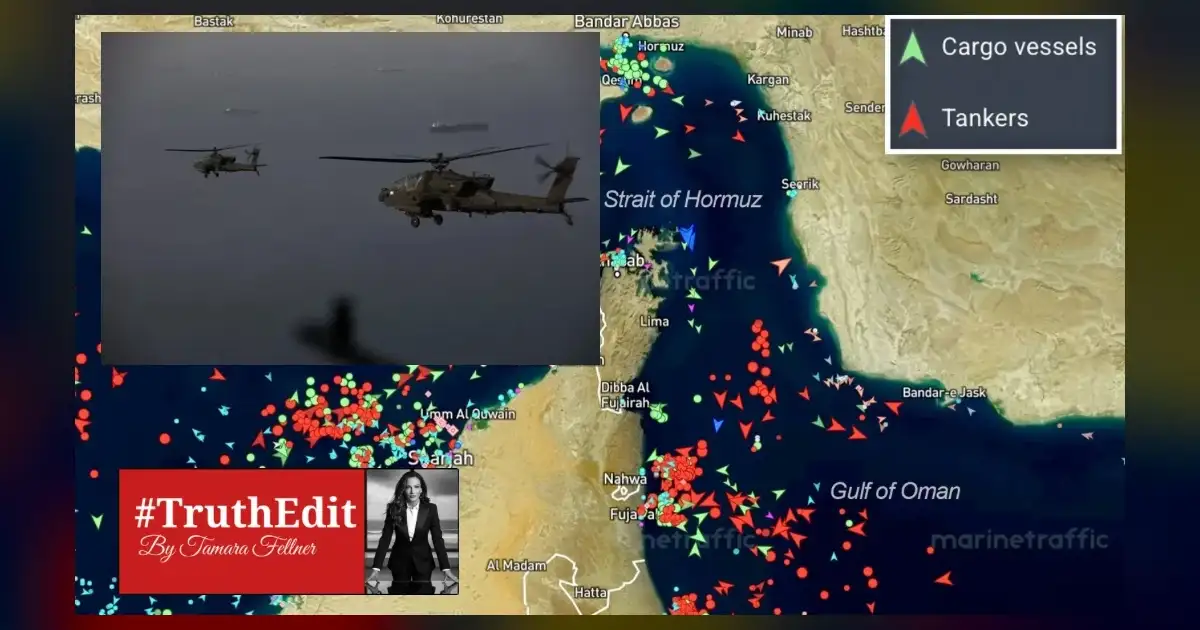

The volatile waters of the Persian Gulf once again churn with alarm as Iran, in a brazen and calculated move, reportedly fired upon a commercial tanker near Oman, threatening to once again close the crucial Strait of Hormuz. This audacious act plunges an already tense region into a dangerous new phase, pushing geopolitical friction to an alarming peak and sending immediate ripples through global energy markets.
Reports from the United Kingdom Maritime Trade Operations (UKMTO) confirmed the harrowing incident, stating that gunboats from the Islamic Revolutionary Guard Corps (IRGC) “blazed away” at a commercial tanker, though specific details on the vessel’s flag or cargo remain under wraps. While initial assessments indicated the crew was safe and no significant damage or injuries were immediately reported, the psychological impact of such an unprovoked assault cannot be understated. This follows a chorus of renewed warnings from Iranian officials, who have consistently asserted Tehran’s unilateral right to control maritime traffic through this vital artery, a stance that directly impacts global oil supplies and injects immediate economic uncertainty into an already fragile global economy.

Tehran’s Audacious Power Play
This latest incident in the Strait of Hormuz is far from an isolated event or a mere accident. It is, unequivocally, a calculated escalation by Tehran, meticulously designed to demonstrate its formidable leverage amidst the ongoing US-Iran War 2026. The Strait, a geographical marvel and a geopolitical choke point, becomes an economic weapon in Iran’s hands, a lever against international pressure and sanctions.
Iranian officials, particularly commanders from the formidable Islamic Revolutionary Guard Corps (IRGC), have been unambiguous in their warnings. Rear Admiral Alireza Tangsiri, the IRGC Navy Commander, articulated this position with stark clarity on April 16, 2026:
“We have repeatedly warned that any hostile presence or actions by foreign navies in the Persian Gulf will be met with a firm and decisive response. Our control over the Strait of Hormuz is absolute, and we will not hesitate to protect our national interests and maritime security.” — Rear Admiral Alireza Tangsiri, IRGC Navy Commander (April 16, 2026)
Satellite imagery, corroborated by independent analysis, reveals a significant increase in IRGC naval patrols, not only within the Strait itself but also extending into the broader Gulf of Oman. This heightened activity is a clear and undeniable show of force, a direct challenge to the principle of freedom of navigation and a deliberate act to intimidate international shipping.
This aggressive posture directly contradicts earlier boasts by President Donald Trump that the Strait was “fully open” and secure. The rapid re-closure, or at least the credible threat of it, starkly highlights the fragility of such claims and unequivocally underscores Iran’s enduring capacity to dictate terms in this critical maritime corridor.
The Global Economic Fallout: A Ripple Effect
The ramifications of such an action are immediate, profound, and global. The Strait of Hormuz is not merely a waterway; it is the world’s most critical oil transit choke point. Approximately 21 million barrels per day (bpd) of crude oil, condensates, and refined petroleum products pass through its narrow confines, accounting for roughly 21% of global petroleum consumption. Any disruption, however brief, sends seismic shockwaves through energy markets, supply chains, and consumer confidence worldwide.
Following this incident, global oil prices, specifically Brent crude futures, registered an immediate and notable increase. Analysts from major financial institutions, as reported by CNBC, swiftly attributed this surge to renewed geopolitical anxieties and the heightened risk premium now attached to Middle Eastern oil.
While the initial uptick might seem marginal, a significant or prolonged disruption could easily propel prices well over $100 a barrel, translating directly into higher gasoline prices at the pump for ordinary citizens and increased operational costs for industries reliant on oil. Shipping companies are already bracing for soaring insurance premiums; war risk insurance, a critical component of maritime logistics, can surge by hundreds of percentage points in such volatile conditions, adding millions of dollars to shipping costs that are invariably passed directly to consumers.
The physical geography of the Strait exacerbates its vulnerability. At its narrowest point, it spans a mere 21 nautical miles, with the actual shipping lane for large tankers reduced to just two miles wide in each direction. This constricted passage, a mere maritime bottleneck, renders it an incredibly vulnerable and strategically perfect target for disruption, allowing a relatively small naval force to exert outsized influence over global commerce.
Who Bears the Burden of Instability?
While geopolitical strategists debate the finer points of international law and military posturing, it is invariably ordinary citizens who bear the brunt of such escalations. Higher gasoline prices erode household budgets, while increased costs for goods transported by sea, from electronics to everyday commodities, directly impact daily life. This is the tangible, immediate economic consequence of regional instability, felt in every grocery store and gas station globally.
Regional allies, particularly major oil exporters like Saudi Arabia and the United Arab Emirates, are understandably deeply concerned. Their economic lifelines are inextricably tied to the unfettered flow of oil through the Strait. They fear not only the immediate economic disruption but also the terrifying specter of a broader regional conflict engulfing their nations.
The U.S. Navy’s Fifth Fleet, maintaining a robust and visible presence in the region, conducts routine patrols aimed at ensuring freedom of navigation. The U.S. Central Command (CENTCOM) has issued urgent advisories to commercial shipping, urging heightened vigilance in an area now demonstrably fraught with peril.
“The U.S. Navy and our partners remain committed to ensuring freedom of navigation and the free flow of commerce in the Arabian Gulf, the Strait of Hormuz, and the Gulf of Oman. We call on all parties to adhere to international maritime law and de-escalate tensions.” — U.S. Navy Fifth Fleet Spokesperson (April 17, 2026)
This incident throws into sharp relief the ongoing, active military conflict. The United States and Israel launched significant military strikes against Iran on February 28, 2026, marking a dramatic escalation.
Since then, the Strait of Hormuz has been a major flashpoint, a pressure cooker of regional tensions. This recent firing on a commercial vessel is not merely a provocative act; it is a direct, aggressive response and a further, perilous escalation in an already hot war.
How Close to All-Out War? A Dangerous Calculus
The immediate and pressing question gripping policymakers and citizens alike is: how close does this bring us to a direct, full-scale military confrontation? What specific act would truly trigger it? While Iranian rhetoric is undeniably intense, a direct military response from the U.S. typically hinges on unambiguous aggression that crosses established “red lines.” Acts such as a direct, unprovoked attack on a U.S. naval vessel or an attempted blockade against Iran that severely chokes its economy are widely considered such triggers.
Iran’s own “red lines” are equally clear: any attempt to strangulate its economy or any perceived existential threat to its security. Dr. Hassan Rouhani, the former Iranian President, articulated this position with unwavering resolve on April 17, 2026:
“The Strait of Hormuz is Iran’s lifeline. Any attempt to choke our economy or threaten our security will be met with reciprocal action. The world must understand the consequences of pushing Iran into a corner.” — Dr. Hassan Rouhani, Former Iranian President (April 17, 2026)
For the United States, safeguarding freedom of navigation remains a core, non-negotiable principle of international law and a vital national interest. Therefore, any direct attack on a U.S. naval vessel or a significant international commercial vessel resulting in severe damage or loss of life would almost certainly trigger a swift and severe military response.
The current situation, characterized by heightened warnings, increased patrols, and provocative but ostensibly non-lethal acts, remains tense but has not yet devolved into full-scale combat within the Strait itself. Yet, the margin for error is razor-thin, and miscalculation could have catastrophic consequences.
Perhaps most disconcerting is the public reaction, which reveals a deep vein of cynicism. Many observers, weary of endless cycles of escalation, view this incident not as a genuine defensive measure but as a recycled tactic, even a “false flag psyop” designed to manipulate public opinion. This highlights a profound distrust in official narratives and a palpable weariness with the seemingly endless “escalation” narratives that have dominated the region for decades.
A Cynical Reality: The Strait as a Strategic Weapon
This latest incident unequivocally underscores a brutal and cynical reality: Iran is expertly wielding the Strait of Hormuz as an economic weapon, leveraging this vital waterway against international pressure and global stability. This strategy is not about genuine defense; it is a calculated gambit to force concessions, to remind the world of its strategic importance, and to directly target global oil consumers as collateral in a high-stakes geopolitical game. It is a stark reminder that in this volatile region, economic power is often indistinguishable from military might.
The human cost for the communities along this perpetually volatile waterway, whose daily lives are caught in the crossfire of this relentless geopolitical game, remains tragically overlooked. For them, stability and predictability are not distant dreams but increasingly unattainable luxuries.
This is about power, about money, and about reminding the world precisely who holds the keys to the global oil tap. In an already hot war, Tehran’s latest move is a dangerous, calculated gamble. The question now is not merely if, but when, this high-stakes game will inevitably spill over into a full-blown inferno.
Source: Google News