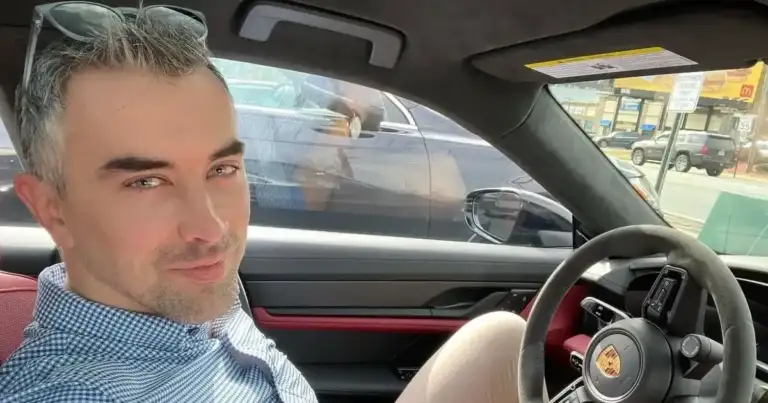

The digital arena, it seems, has claimed another casualty. Two years after his tragic passing, police are now investigating the relentless cyberbullying that reportedly plagued “Storage Wars” star Darrell Sheets. This isn’t just a grim footnote to a reality television career; it’s a chilling indictment of our collective capacity for anonymous cruelty and the brutal, often fatal, cost of public life in the internet age.
Sheets, affectionately known to millions as “The Gambler” for his audacious bidding strategies, died on April 22, 2024. His absence left a palpable void for fans of the A&E hit series. Yet, the delayed revelation of an ongoing police inquiry into online harassment casts a far darker shadow over his legacy, forcing us to confront the unseen wounds inflicted by a ravenous public and an unregulated digital sphere.

The Merciless Grind of Reality TV Stardom
During its zenith, “Storage Wars” transformed Darrell Sheets from a regional auction hunter into a bona fide household name. His gruff charm, the twinkle in his eye as he sized up a unit, and his instinct for a hidden treasure made for undeniably compelling television. But the reality TV machine, much like a hungry beast, often devours its darlings, leaving behind only the bones of their former selves.
Sheets officially retired from the show in 2023, a mere year before his death. His subsequent retreat from the public eye is a depressingly familiar trajectory for those catapulted to fleeting fame by the whims of popular culture. The klieg lights, once so blindingly bright, dim with alarming speed, often leaving stars adrift in a sea of forgotten notoriety, grappling with the echoes of their televised personas.
Post-show, whispers of his struggles were not just common; they were amplified by the very platforms that once celebrated him. Online forums and social media threads became a public confessional, then a public flogging. Comments branding him a “washed-up has-been” were not merely critical; they were designed to sting, to diminish. This relentless, often vitriolic, assessment underscores the public’s insatiable appetite for celebrity, coupled with an unforgiving nature and a fickle loyalty that evaporates the moment the cameras stop rolling. It’s a particularly cruel form of cultural cannibalism, where yesterday’s hero is today’s punchline.
The Digital Gauntlet: Cyberbullying’s Insidious Reach
That the police investigation centers on cyberbullying is a stark, almost predictable, tragedy. It highlights a pervasive, insidious problem that has metastasized across our digital landscape. Online platforms, ostensibly designed for connection, have devolved into anonymous battlegrounds where tormentors, cloaked in the veil of anonymity, wage relentless and deeply personal attacks. These aren’t mere disagreements; they are targeted campaigns of psychological attrition.
The discourse surrounding Sheets’ death, even before this investigation, was rife with a cynical, almost gleeful, cruelty. Some online commentators, with a chilling lack of empathy, suggested he was “doxxing randos and crying felony,” while others dismissed any hint of distress as a “classic narcissist pivot.” Such callous pronouncements, often delivered from the safety of a keyboard, reveal a profound detachment from the human cost of online aggression. The emotional and psychological impact of such a relentless barrage is not merely undeniable; it is devastating.
Cyberbullying doesn’t just chip away at mental well-being; it shatters it. It erodes self-worth, isolates individuals, and can push them to the brink. For public figures, the constant, inescapable barrage is magnified to an unbearable degree. Every perceived misstep, every personal struggle, every human flaw becomes grist for the online mill, fodder for the insatiable appetite of digital mobs baying for blood.
“The internet, for all its revolutionary promise, has inadvertently cultivated a culture of performative outrage and unbridled cruelty. The line between legitimate criticism and outright harassment isn’t just blurred; it’s often obliterated by a collective amnesia that forgets these are real lives, not just characters on a screen. This digital Wild West fosters a dangerous, almost intoxicating, sense of impunity,” observed a leading digital ethicist in a recent essay on online conduct.
This belated investigation forces a critical, urgent question upon us: Who, precisely, is truly accountable for the venom spewed online? Is it solely the individual users, the architects of the platforms that host such aggression, or a broader cultural malaise that has normalized, even celebrated, such barbarity?
A Belated Reckoning for a Brutal Industry?
The timing of this police investigation is nothing short of striking. It emerges a full two years after Sheets’ passing, begging a torrent of immediate questions. Why now? What dormant thread was pulled? What new evidence has surfaced to trigger this renewed, and arguably belated, focus?
Public reaction, predictably, has been largely muted, tinged with a familiar cynicism. Many online voices, quick to dismiss the cyberbullying angle, suggest it’s nothing more than “PR spin to dodge the real story.” Others, with a conspiratorial wink, point to “addiction whispers or debts” as the true, unacknowledged issues behind his decline. This skepticism, while harsh, is not entirely unfounded. The entertainment industry has a long, ignominious history of controlling narratives, particularly in the wake of tragedy. Post-mortem tributes often serve to gloss over harsh realities, sanitizing legacies for public consumption. The timing of this news, then, feels less like a genuine breakthrough in justice and more like a belated, perhaps desperate, attempt at damage control and a carefully curated shaping of a legacy.
A&E, the network that profited handsomely from “Storage Wars” and the lives of its stars, holds a significant, if often unacknowledged, stake in this unfolding drama. When those lives unravel, when the shine wears off, the network’s ethical responsibility is often conveniently overlooked. This investigation, however, could force a long-overdue examination of their moral obligations, their duty of care, and the support systems—or glaring lack thereof—provided to the talent upon whom their entire empire is built.
The Unseen Scars of Reality Stardom
Sheets’ story serves as a chilling, unequivocal reminder that reality TV fame offers not a shield, but a magnifying glass, making individuals exponentially more vulnerable. The constant, invasive exposure invites not just scrutiny, but an almost pathological level of judgment and unhinged, often unprovoked, attacks. It’s a Faustian bargain, trading privacy for fleeting notoriety.
We, the voracious public, consume these shows with an almost gluttonous appetite, yet how many truly pause to consider the profound psychological toll? Stars are not merely observed; they are dissected, their personas reduced to caricatures, their private lives transmuted into public spectacle. The once-clear line between entertainment and outright exploitation doesn’t just blur; it dissolves entirely, leaving behind a toxic residue of human wreckage.
Darrell Sheets was far more than just “The Gambler.” He was a complex individual navigating the treacherous currents of sudden fame, public scrutiny, and a precipitous decline. His story is not an isolated incident; it highlights a systemic issue embedded deep within the fabric of modern celebrity culture. The industry profits handsomely from human vulnerability, while society, with a collective shrug, often turns a blind eye to the devastating aftermath.
This police investigation, while a necessary first step, must transcend the mere identification of a few anonymous trolls. It must ignite a far wider, more uncomfortable conversation about the true responsibility networks and platforms bear. How do we, as a society, protect individuals from the online savagery that has become an endemic feature of our digital existence? How do we legislate empathy in a space that seems to breed its opposite?
Darrell Sheets’ final chapter is a grim, poignant postscript to a life lived, and ultimately undone, in the public eye. It forces us to confront the most uncomfortable of truths: the cost of reality TV fame can be tragically, irrevocably high, and the digital arena, for all its glittering promise, remains a dangerous, largely unregulated, and often deadly wild west.
Source: Google News