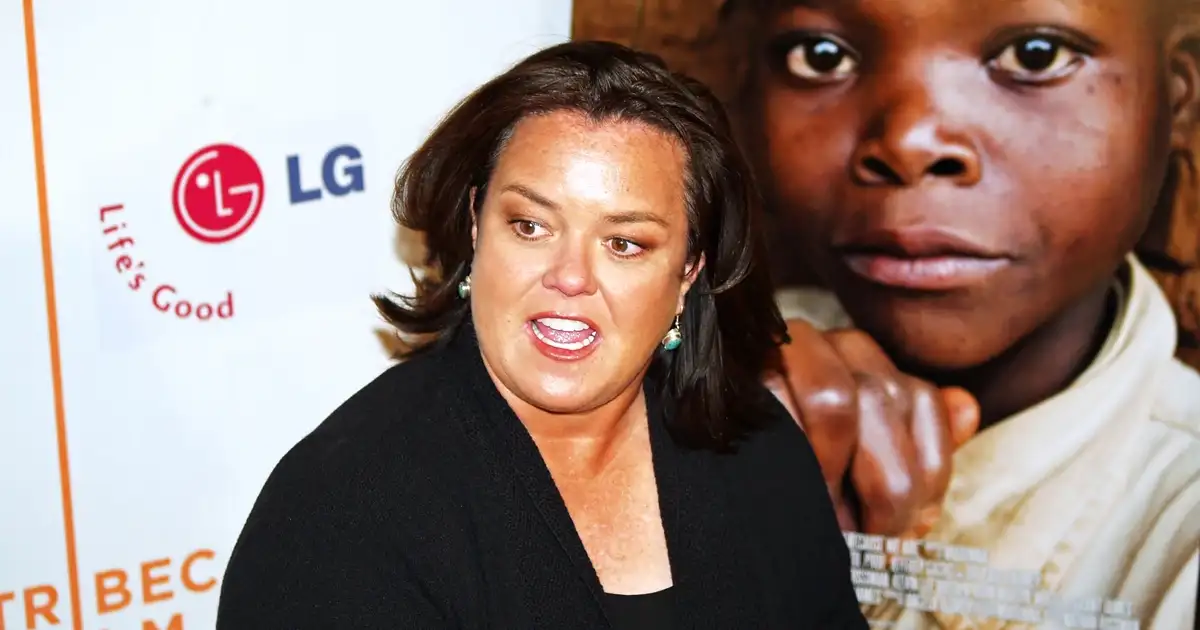

Rosie O’Donnell’s latest foray into the murky waters of “fake assassinations” isn’t merely a gaffe; it’s a meticulously calculated maneuver. This isn’t about uncovering truth; it’s a cynical, almost desperate, grab for the spotlight in an attention economy that rewards outrage above all else. For those of us who have watched the political landscape warp and twist over decades, O’Donnell’s recent comments reveal a familiar, if disheartening, pattern.
The veteran comedian, a figure long accustomed to both controversy and public adoration, recently stirred a hornet’s nest with her allusions to “staged events” and pointed questions about the authenticity of high-profile security incidents. O’Donnell made these remarks on the “Unfiltered Voices” podcast on April 29, 2026, and the internet, predictably, erupted.

While she carefully avoided the exact phrase “fake assassinations,” her skepticism was palpable, her insinuation unmistakable. O’Donnell stated, “It’s all part of the show, isn’t it? The drama, the fear… keeps everyone distracted from what’s really happening.” This wasn’t a spontaneous thought; it was a carefully delivered line designed to ignite a firestorm, and it instantly went viral.
The “Unfiltered Voices” podcast episode exploded across social media platforms. Hashtags like #RosieOdonnell and #CelebrityPolitics trended on X on April 30, 2026, dominating conversations from Washington D.C. to Hollywood. The podcast’s download numbers surged by an estimated 300% in 24 hours – a measurable, undeniable spike in visibility that any public figure, especially one whose mainstream career has quieted, would covet.
The Celebrity Outrage Machine: A Well-Oiled System
Critics across the political spectrum rightly slammed O’Donnell’s statements as irresponsible, dangerous, and a transparent attempt to remain relevant. Conservative media figures and political analysts were quick to dissect her motives, seeing through the veneer of concern to the underlying hunger for attention.
“Rosie O’Donnell’s latest conspiracy-mongering isn’t about truth; it’s about clicks. Another celebrity desperate to stay in the headlines by peddling nonsense.”
— Ben Shapiro on X, April 30, 2026
This isn’t merely about Rosie O’Donnell; it’s about a broader, more insidious trend that has infected our public discourse. Celebrities are increasingly leveraging their immense platforms for political commentary, often blurring the critical lines between genuine activism and the reckless dissemination of unverified, often harmful, claims. They have learned that controversy, not substance, is the most reliable currency in the digital age.
Data from leading media analysis firms confirms this disturbing pattern. There has been a significant, almost exponential, increase in political commentary from celebrities since 2016. Crucially, this surge often correlates directly with periods of lower career visibility for these figures. When the movie deals dry up, or the talk show ratings dip, the political hot-takes suddenly become more frequent, more provocative. They don’t just chase the spotlight; they actively manufacture it when their primary acts fade.
The “Relevance Economy” and Social Media’s Unforgiving Role
Social media platforms are not just a stage; they are the engine of this “relevance economy,” a relentless beast that demands constant feeding. X, Instagram, and TikTok provide direct, unfiltered access to audiences, allowing celebrities to bypass traditional media scrutiny and engage directly in controversial political discourse. No longer do they need to earn a segment on a late-night show; they can simply tweet a provocative thought and watch the engagement metrics climb.
This direct engagement generates viral attention, which algorithms then aggressively amplify. Polarizing content, designed to elicit strong emotional responses, is prioritized, creating a self-reinforcing feedback loop that lavishly rewards attention-seeking behavior. Controversy, in this ecosystem, isn’t a byproduct; it’s a highly sought-after commodity.
Rosie O’Donnell, to her credit, has a long, well-documented history of political commentary. She has been an outspoken, often vitriolic, critic of Donald Trump for years, and her public feuds have consistently garnered media attention. This latest stunt, however, isn’t a new chapter; it’s merely a continuation, a more desperate echo, of a well-worn pattern. The advent of social media has simply amplified the reach of such statements, accelerating polarization and making accusations of attention-seeking commonplace. This discussion echoes past debates about celebrity involvement in conspiracy theories, from the JFK assassination to 9/11, but with an unprecedented velocity and reach.
The Erosion of Public Trust: A Catastrophic Cost
The average American, navigating an already fractured information landscape, must pay close attention to this trend. These celebrity comments, regardless of their intent – though intent here seems undeniably self-serving – contribute directly to a climate of profound doubt. They cast suspicion on widely reported events, question established facts, and undermine the credibility of security incidents. This isn’t harmless entertainment; it’s a corrosive agent in the body politic.
This relentless questioning erodes public trust in legitimate news organizations, weakens faith in government institutions, and, perhaps most dangerously, damages democratic processes themselves. When objective facts become negotiable, when every major event is viewed through a lens of suspicion, society pays an incalculable price. How can a populace make informed decisions, or even agree on basic realities, when influential figures actively sow seeds of doubt?
Dr. Evelyn Reed, a respected political commentator, articulated this danger with chilling clarity.
“Whether intentional or not, comments like O’Donnell’s contribute to a climate where facts are negotiable. This isn’t just about one celebrity; it’s about the broader challenge to information integrity in our society. It’s a direct assault on the shared reality necessary for a functioning democracy.”
— Dr. Evelyn Reed, interviewed by CNN, April 30, 2026
When the public struggles to discern truth from falsehood, civic engagement suffers, and the very foundations of public safety can be undermined. It fosters a pervasive cynicism about political events, turning every crisis into a potential conspiracy. Trust, once squandered, is not merely hard to regain; it often proves impossible, leaving a legacy of division and suspicion.
Beyond the Clicks: A Deeper, More Disturbing Dive
Is this phenomenon limited to Rosie O’Donnell? Absolutely not. This is a widespread, almost universally adopted tactic within a certain segment of the celebrity class, driven by an insatiable hunger for attention and influence. These figures aren’t naive; they are astute players who understand precisely how to manipulate the outrage economy for maximum personal gain.
They know that controversy generates engagement, that engagement fuels algorithms, and that algorithms keep their names in headlines, maintaining their public profiles and, often, their bank accounts. They leverage their platforms not for genuine political discourse, but for personal brand management, cloaked in the guise of activism. The rise of Trump’s presidency normalized a certain aggressive, boundary-pushing rhetoric, and celebrities have eagerly stepped into this new normal, making outlandish claims to stay relevant in an increasingly crowded media space.
The historical precedent is clear. Public figures have always lent their voices to alternative narratives, from fringe theories about the JFK assassination to the most outlandish claims surrounding 9/11. What social media has done is make this amplification faster, wider, and far more pervasive, turning niche theories into mainstream talking points overnight. This isn’t about legitimate political engagement; it’s about monetizing public anxiety, feeding the beast of constant online chatter, and ensuring their own continued visibility.
The Cynical Calculus of Fame: A Dangerous Game
The public is left with a steady diet of doubt, suspicion, and manufactured outrage. Every event, every incident, every tragedy becomes suspect, ripe for dissection through a conspiratorial lens. This benefits no one except those craving attention, those willing to sow distrust for personal gain. These celebrities profit handsomely from the chaos they help create, gaining visibility, seeing their social media numbers climb, and securing new opportunities. Meanwhile, the average American loses faith in the very systems that govern their lives, in the institutions designed to inform and protect them.
This isn’t activism; it’s a cynical calculus of fame, a transaction where political division and societal fragmentation are the unwitting collateral. It exploits our deepest anxieties, undermines our shared reality, and corrodes the bonds of trust that hold a society together. It is a dangerous game, one played by a privileged few, and the American public is ultimately paying the steepest price. When the next genuine crisis arrives, will anyone believe it? That is the chilling question these celebrity provocateurs refuse to answer.
Photo: Gage Skidmore
Source: Google News