
Forget the political polls, the policy debates, or even the latest judicial maneuverings. The biggest play in the political arena this week wasn’t a legislative victory or a campaign ad; it was President Donald Trump’s audacious claim that his wife, Melania, “hates” his signature “Y.M.C.A.” rally dance, even “begging” him to stop grooving to what he provocatively labeled “the gay national anthem.” This isn’t just a glimpse behind the gilded curtains of Mar-a-Lago; it’s a calculated, high-stakes gambit, designed to dominate the news cycle and energize his base, pure and simple.
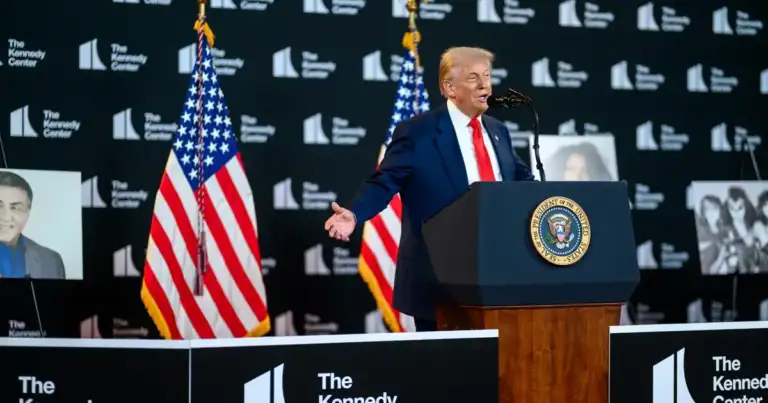
The field of play was a rally in Green Bay, Wisconsin, on April 30, 2026, where President Trump unleashed this verbal grenade. By May 1, 2026, the comments had detonated across every news platform, and the shrapnel is still being meticulously analyzed by every political strategist and pundit worth their salt.

But make no mistake: despite Melania’s alleged pleas, President Trump unequivocally declared he’s not hanging up his dancing shoes. He feeds on the crowd’s roar, a master showman calibrating every move for maximum impact. This isn’t merely a “rare peek” behind the curtain; it is, without question, another masterclass in the art of political theater, executed with surgical precision.
The Playbook: Calculated Chaos or Off-Script Blitz?
When President Trump steps to the microphone, every word is a potential weapon, every anecdote a strategic maneuver. To suggest this was an accidental slip is to fundamentally misunderstand the man and his political machine.
Was this a genuine, unvarnished glimpse into his domestic life? Or a meticulously crafted play, designed to hit specific targets? For his loyal base, the answer is irrelevant; they instantly recognized it as classic Trumpian humor, a direct hit.
They don’t just view it; they celebrate it as a playful, yet pointed, jab at his wife, a move that paradoxically reinforces his ‘man of the people’ image. It’s a calculated connection with the audience, a demonstration of an ‘authenticity’ that his supporters crave and his opponents can only envy. And the “gay national anthem” line? While undeniably culturally loaded and a guaranteed lightning rod for critics, it’s perceived by his base not just as amusing, but as a defiant, truth-telling moment, a direct challenge to perceived political correctness.
The digital battleground immediately lit up. Online, the MAGA diehards didn’t just approve; they declared it
“based owning-the-libs gold.”Their analysis?
“He’s trolling libs by dancing to gay song while crushing Dems on trans sports.”
Clips of his now-infamous “Villages shimmy” saturated social media, emblazoned with captions like
“Presidential AF, haters seethe.”For this segment of his base, Melania’s “elegant” pleas aren’t a sign of marital discord; they are irrefutable proof of an “unscripted alpha,” a leader who operates on instinct, not dictated by pollsters or political handlers.
This isn’t mere banter; it’s a strategic maneuver designed to humanize him, forging an unbreakable bond with his base. By sharing a seemingly innocuous domestic anecdote, he appears more relatable, more authentic – precisely the unscripted rally style his supporters crave. Crucially, it achieves another key objective: it keeps the opposition perpetually off-balance, scrambling to react to his latest verbal grenade, always playing defense while Trump dictates the offensive playbook.
Melania’s Role: Reluctant Partner or Strategic Silence?
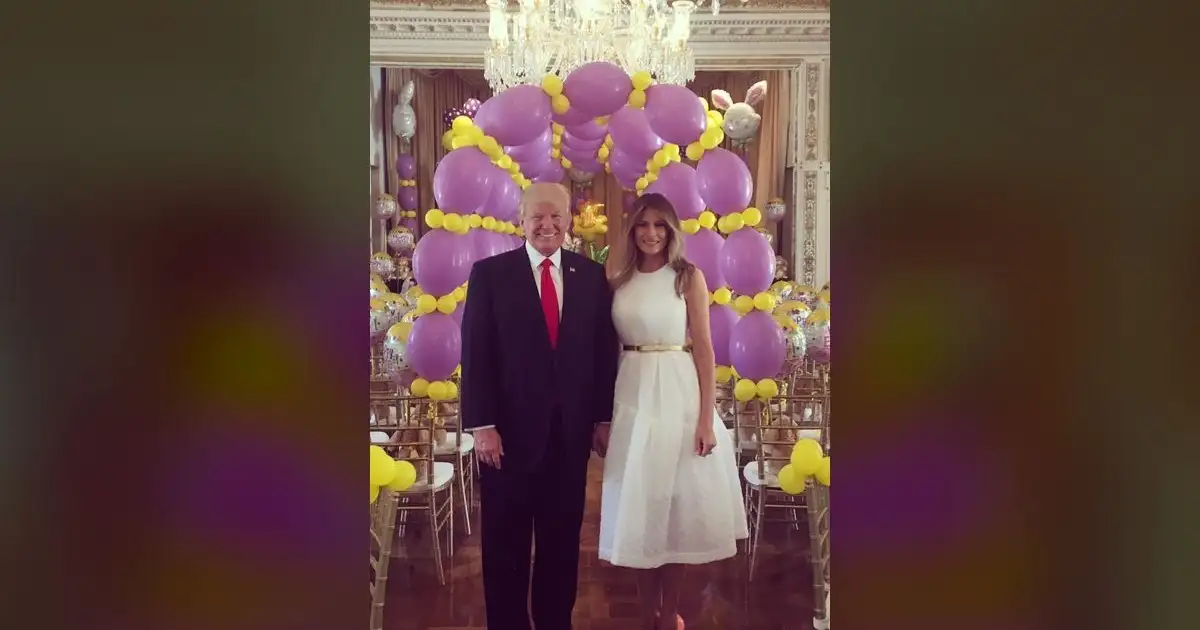
President Trump’s claims, whether entirely factual or strategically embellished, undeniably offer a calculated glimpse into Melania’s private opinions. She has long cultivated an image as a reserved, private figure, a stark contrast to her husband’s bombastic public persona. This revelation, therefore, is designed to subtly paint her as possessing a more discerning, perhaps even critical, view of her husband’s signature rally antics.
From a strategic standpoint, this narrative can add a layer of relatability to Melania, reinforcing her carefully constructed image as a more private, dignified figure amidst the political maelstrom. It’s a move that could, for certain demographics, garner a surprising degree of sympathy for the First Lady.
Yet, the counter-offensive was swift and brutal. The “backlash tsunami” from the ‘normies’ and the political left didn’t just dismiss it; they lambasted it as
“cringe elder abuse.”Their scathing assessment:
“Grandpa Trump humping air to disco at a retirement zoo? Melania’s fake hate is the only real part—she’s checked out since 2016.”This isn’t just criticism; it’s a direct assault on the perceived authenticity of the entire narrative.
On the more cynical corners of the internet, particularly Reddit’s r/politics, the prevailing sentiment isn’t just skepticism; it’s outright derision, floating “sarcastic theories” that dissect the move like a failed play. They suggest it’s
“staged PR to humanize Trump—Melania’s ‘hate’ scripted like her Be Best tweets.”The pointed question echoes:
“Why else revive YMCA in 2024? Distraction from Epstein files or whatever.”
The cynicism is palpable, a direct challenge to the very authenticity of Melania’s alleged “dislike,” framing it as yet another calculated performance.
The “Gay National Anthem” Firestorm
But let’s pivot to the most volatile aspect of this entire spectacle: President Trump’s casual, yet incendiary, labeling of “Y.M.C.A.” as “the gay national anthem.” This comment isn’t just a flashpoint; it’s a live wire, guaranteed to spark controversy.
As expected, reactions from the LGBTQ+ community and its allies are not merely ‘mixed’; they are a polarized spectrum, ranging from outright offense to grudging acceptance. Many unequivocally find the label offensive, viewing it as a reductive and trivializing appropriation.
For a significant portion, this isn’t just a misstep; it’s a direct trivialization of LGBTQ+ identity, reducing a complex community to a single, decades-old pop song. Others condemn it as a glaringly dated stereotype. Yet, reflecting the fractured political landscape, a segment of conservative LGBTQ+ individuals will undoubtedly dismiss the outrage, aligning instead with President Trump’s signature irreverent, take-no-prisoners style.
This cultural reference is no mere gaffe; it’s a calculated risk, a rhetorical gambit that cuts both ways. For critics, it undeniably reinforces negative stereotypes, deepening existing divides. But for the President’s loyalists, it’s perceived as a playful, perhaps even audacious, nod to a song deeply embedded in cultural memory, a move they argue is devoid of malicious intent and instead, a defiant embrace of ‘common sense’ humor.
Make no mistake: every campaign strategist worth their exorbitant retainer is meticulously dissecting how such charged cultural references resonate across the electoral map. They are specifically targeting key voter groups – from the crucial demographic of suburban women to the increasingly influential LGBTQ+ voters – to gauge the fallout. While no immediate, seismic polling shifts have been definitively attributed to this comment, it is not merely ‘a data point’; it’s a critical variable being fed into every predictive model, a potential game-changer that could swing crucial margins.
The Political Impact: Who Wins This Play?
Political commentators, myself included, are dissecting these remarks from every conceivable angle, searching for the underlying strategy. One dominant theory asserts it’s a deliberate attempt to humanize President Trump, crafting an image designed to make him appear more relatable, more ‘one of us.’ Sharing a domestic anecdote, however embellished, is a classic tactic to soften a hard-edged image; even if the effect is incremental, it’s a net gain on the political scoreboard.
But the more astute analysts recognize it as a finely tuned appeal, a dog whistle to specific, crucial segments of his base. These cultural references don’t just ‘resonate strongly’ with conservative viewpoints; they ignite them, reinforcing his carefully cultivated image as a leader who speaks his mind, uncensored, unbowed by political correctness – a true outsider challenging the establishment.
To suggest, as some naive observers might, that this
Source: Google News