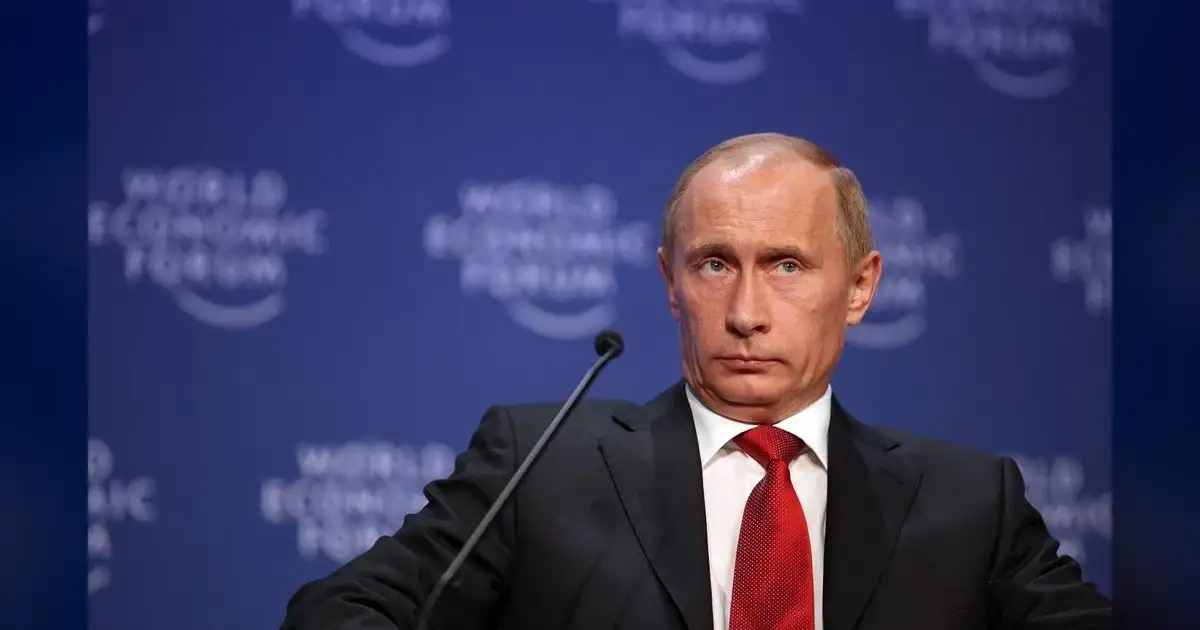

Forget the tanks and the choreographed military might. The real spectacle at Moscow’s Victory Day parade on May 9th, 2026, wasn’t in the sky, but etched onto Vladimir Putin’s face. His appearance was less presidential, more a swollen, pasty indicator of the increasingly loud whispers about his health – whispers that now threaten to become shouts across the global stage.
As President Putin presided over Russia’s annual display of power, his public image became a lightning rod for intense scrutiny, igniting a fresh wave of speculation among international media and political analysts alike. This wasn’t just another parade; it was a public health audit of an autocrat.

The Swollen Face: A Mirror to a Paranoid State?
From the Red Square tribune, close-up shots of Putin’s address revealed a face described not merely as “visibly aged,” but distinctly “swollen” – almost unnaturally so. This wasn’t the face of a vigorous leader; it was the visage of a man under immense, perhaps physical, strain. The shift immediately reignited the long-simmering debate about his physical well-being, now with an added urgency.
Many analysts aren’t just connecting these physical changes to simple fatigue. They see them as a stark reflection of his increasingly isolated and, frankly, paranoid demeanor. Whispers of a growing distrust within his inner circle aren’t just idle gossip; they paint a picture of a leader whose grip on reality, and perhaps his health, is slipping. This isn’t just about looking tired; it’s about projecting a dangerous vulnerability onto a global stage already teetering on the brink.
Kremlin’s Silence: The Loudest Tell?
Anonymously, external medical professionals have been quick to offer their interpretations. A “puffy” or “swollen” face isn’t just cosmetic; it screams of potential steroid use, fluid retention, or more sinister underlying health issues. The possibilities aren’t just medical curiosities; they are geopolitical flashpoints.
And the Kremlin? Predictably, they’ve maintained their characteristic, infuriating silence. Their policy of dismissing all health speculation as “Western propaganda” isn’t a strategy of denial; it’s a deliberate amplification chamber for every rumor. In the absence of truth, speculation breeds like a virus.
For political analysts, Putin’s health isn’t merely a personal matter; it’s the ultimate linchpin for Russia’s future. A visible physical decline isn’t just a sign of aging; it’s a glaring signal of weakness. Such a signal could, and likely would, embolden internal power struggles within the Kremlin’s shadowy corridors.
More critically, a shift in leadership, or even a perceived decline in cognitive function, would fundamentally alter decision-making at the highest levels. The implications for international relations, particularly concerning the brutal, ongoing conflict in Ukraine and Russia’s volatile dance with NATO, are not just massive – they are existential.
The Annual ‘Is Putin Dying?’ Circus
Let’s be clear: the global obsession with Putin’s health is hardly a novel phenomenon. It’s been a morbidly recurring theme throughout his decades-long tenure, intensifying with particular fervor since the early 2020s. Every twitch, every cough, every perceived stumble becomes a global headline.
Past reports, often leaking from intelligence sources or unnamed specialists, have whispered everything from Parkinson’s disease to various forms of aggressive cancer. Others have pointed to long-term steroid use, perhaps for chronic back pain – a known culprit for the very facial swelling we witnessed. The man has been seen gripping tables during meetings, limping, and coughing at inopportune moments. Each incident, a fresh log on the speculative fire.
Yet, through it all, the Kremlin’s propaganda machine churns out the same tired narrative: Putin, the robust, bare-chested alpha, forever in peak physical condition. This relentless cycle of intense scrutiny met with stone-faced denial isn’t just a pattern; it’s the very playbook of authoritarian leadership. It deliberately creates a vacuum, sucking in every rumor and analysis, leaving the world to guess at the mortality of a man who wields nuclear codes.
Social Media’s Verdict: Jaded, But Not Wrong
The internet, ever the cynical beast, has already weighed in. On platforms like Reddit, the reaction isn’t just skepticism; it’s a weary, eye-rolling resignation. “We’ve been hearing this for five years,” one user lamented, summing up the collective fatigue. Another cut straight to the bone: “Who cares if he looks sick—he’s still destroying Ukraine.” The public, it seems, is utterly exhausted by the annual “Is Putin dying?” content cycle, which reliably generates clicks but never, ever, yields a definitive answer.
Skeptics, of course, are quick to dismiss the observations as overblown. “It’s just normal aging,” they’ll shrug, “or a demanding schedule. Maybe unflattering camera angles, bad lighting.” But this dismissiveness often misses the point. The viral quip, “Botox is Sanctions,” while mocking the tabloid-grade analysis, inadvertently highlights a deeper truth: Western media, consciously or not, often manufactures hope, clinging to the idea that Putin’s mortality might somehow magically solve the intractable geopolitical problems he created.
Beyond the Punditry: What Does it Actually Mean?
Let’s be brutally honest: direct, verifiable medical data on Putin’s health remains as elusive as truth in the Kremlin. Yet, the spikes in public perception and media scrutiny during periods of intense geopolitical activity, or after significant public appearances like the Victory Day parade, are undeniable. These aren’t just moments for gossip; they are barometers of global anxiety.
The “so what” factor here isn’t just immense; it’s terrifying. This isn’t some minor leader; this is the man at the helm of a nuclear-armed state, mired in the most devastating European conflict since WWII. His health isn’t a private matter; it is the most significant geopolitical concern for literally everyone outside Russia’s borders.
Any perceived decline in his physical or mental state doesn’t just create uncertainty; it unleashes a torrent of instability. It casts a chilling shadow over Russia’s foreign policy, potentially emboldening rivals or sparking dangerous miscalculations. This isn’t just instability; it’s a potential catalyst for profound, irreversible global consequences.
The world dissects every flicker of Putin’s public image, and for good reason: the face of power, especially in an autocracy, is never just skin deep. It’s a canvas for global anxiety, a harbinger of potential chaos. And right now, that canvas looks deeply, dangerously unwell.
What happens when the mask finally slips? How will the world react when the whispers turn to screams?
Source: Google News