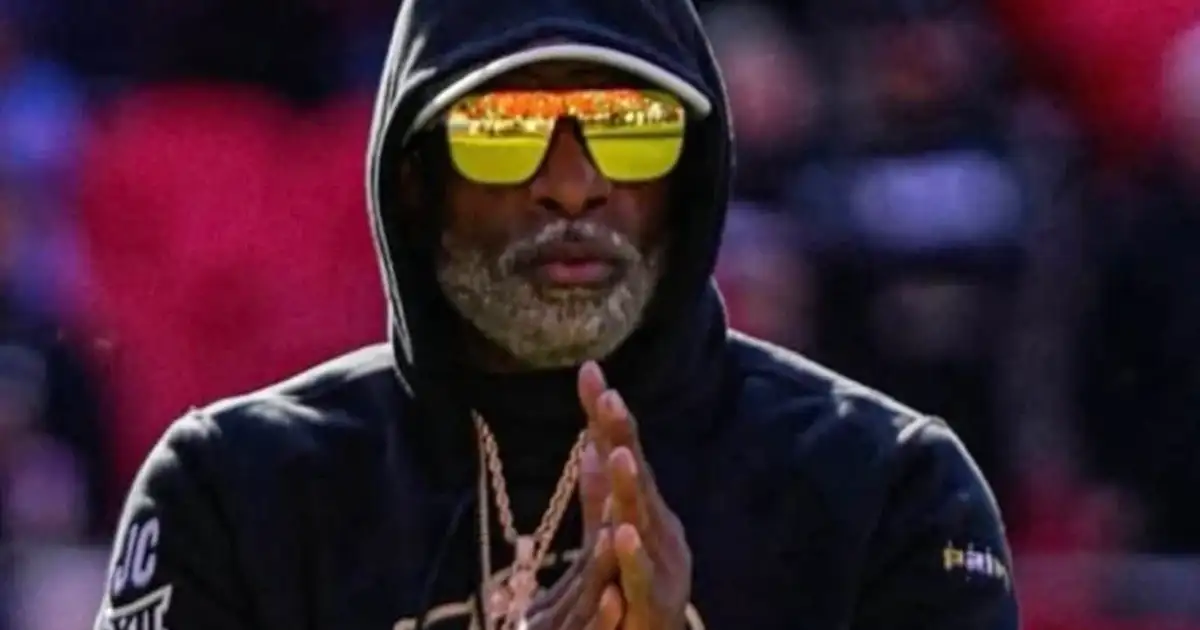

Let’s cut through the noise and get straight to the truth: Deion Sanders didn’t just miss a tackle; he blew the entire defensive scheme on leadership. His outright refusal to condemn his son’s sexist taunt against a female reporter, cloaked in a flimsy “old school” excuse, is a catastrophic failure.
This wasn’t just a bad play; it was a catastrophic breakdown, a disastrous showing for a coach who constantly preaches discipline and accountability. The University of Colorado football program now faces a firestorm, and it’s entirely self-inflicted.

The Sideline Slur Heard Round the League
The trouble started on May 13, 2026, a date that will now live in infamy for the Colorado program. During a routine media session at the University of Colorado Boulder, quarterback Shedeur Sanders aimed a sexually suggestive and demeaning comment at reporter Sarah Jenkins.
Jenkins, a respected journalist for The Athletic, was simply doing her job when she became the target of this unprovoked verbal assault. Multiple media members bore witness to the offensive remark, confirming its egregious nature.
The remark immediately poisoned the atmosphere, creating palpable discomfort. This wasn’t some whispered aside or a private joke. It was a blatant act of disrespect, delivered right out in the open, undermining the professionalism of the entire media environment.
Coach Prime’s Shocking Defense: A Leadership Abdication
Just 24 hours later, Coach Deion Sanders stepped to the podium, ostensibly to address the controversy. Reporters, anticipating a swift and decisive condemnation, asked him directly about his son’s actions.
What followed was a masterclass in leadership abdication, a total collapse of professional responsibility that left the sports world stunned.
Sanders didn’t just dig in; he entrenched himself in a position of blatant disregard. He flatly refused to call out Shedeur’s egregious behavior, instead waving it off with the dismissive, tone-deaf lament, “People don’t respect the old school anymore.”
“Kids are kids, and sometimes they say things,” Deion Sanders stated, attempting to brush aside a serious offense. “We handle our business in-house.”
No apology materialized. Not from the player, not from the coach, not from the entire program. This wasn’t “handling business in-house”; this was a public endorsement of misogyny, a blatant condoning of disrespect that reverberated far beyond the walls of the press conference room.
The Fallout: A Blown Coverage of Accountability
The reaction was swift and unforgiving. The sports world, rightly, isn’t letting this slide. The backlash has been immediate and severe, with female journalists, the very professionals Sanders claims to respect, leading the charge in exposing the stark hypocrisy.
The Association for Women in Sports Media (AWSM) hit hard, pulling no punches. They issued a powerful, unequivocal statement, condemning both Shedeur’s taunt and Sanders’ pathetic, enabling response.
AWSM called it “unacceptable and detrimental to the professional environment female journalists work tirelessly to maintain,” highlighting the broader implications for an industry already battling sexism.
The University of Colorado’s response was a predictable, spineless press release – brief, generic, and utterly devoid of conviction. It did absolutely nothing to quell the righteous outrage. This incident transcends a single player or one reporter; it rips open a festering wound, exposing a deeper, systemic problem within the program’s culture and, by extension, within college athletics.
“Old School” or Just Old-Fashioned Prejudice?
Deion Sanders loves to invoke the mythical “old school,” using it as a convenient shield, a catch-all for behavior that should have been relegated to the dusty archives of history. But let’s dissect this ‘old school’ defense.
Does it imply that female reporters should simply endure sexually suggestive taunts as part of the job? Does it mean star athletes are granted a free pass for blatant sexism, their talent outweighing basic human decency?
If this is the ‘old school’ Sanders champions, then it’s not just outdated; it’s fundamentally broken and needs to be retired immediately.
The game of football has evolved dramatically, both on the field and in the locker room. Professionalism in media relations, indeed in all human interactions, must evolve alongside it.
This isn’t about fostering grit or “tough football”; it’s about the absolute bedrock of human decency and creating a safe, respectful workspace for everyone involved in the sport.
Sanders’ comments don’t just suggest; they explicitly declare his belief that his star quarterback son is above accountability. That’s not just a dangerous precedent; it’s a poison pill for any semblance of a healthy, respectful team environment, a direct affront to the very values a collegiate program is supposed to instill.
The Damaging Message Sent
What chilling message does this leadership vacuum transmit to impressionable young athletes considering the Colorado program? What does it scream to every female reporter striving to do her job professionally?
It unequivocally tells them that star power trumps integrity, that some coaches will shield their prized assets from consequences, no matter how egregious the offense. It broadcasts that blatant disrespect is not only tolerated but actively defended under the hollow banner of “old school” values.
This isn’t a minor misstep; it’s a profound leadership failure, plain and simple. Deion Sanders meticulously crafted his “Prime Time” brand on flash, confidence, and a relentless pursuit of excellence.
Now, that carefully constructed brand looks irrevocably tarnished, stained by his own hand. His refusal to condemn his son isn’t merely a lapse in judgment; it’s a severe moral failing that utterly undermines any legitimate claim to being a mentor or a leader of young men.
Coaches are not just strategists; they are custodians of character, responsible for their players’ conduct and, more importantly, for the very culture of their program. Deion Sanders, with a single, dismissive press conference, just publicly endorsed a culture of misogyny and disrespect. He did it in the harsh glare of the spotlight, for all the world to see.
The Steep Cost of Silence
This incident will not simply fade away. It will follow the Colorado program like a shadow, impacting recruiting efforts, influencing how media views the team, and potentially deterring top talent.
What elite athlete, truly committed to a professional career, wants to be associated with a program that tolerates sexism and shields its players from accountability?
No major university wants that stain on its reputation either. The silence from Sanders is deafening, speaking volumes about his priorities. It shows a clear, undeniable lack of respect for women in sports, a crucial demographic that makes up a significant portion of the sports media landscape and fanbase.
The “kids are kids” line is not just a cop-out; it’s an insult to intelligence. These aren’t just kids; they are high-profile athletes, representatives of a major university, and role models, whether they like it or not. Their actions have consequences, and in this case, their coach’s actions have even bigger, more far-reaching ones.
Rebuilding Trust: An Uphill Battle
How does the University of Colorado recover from this self-inflicted wound? It starts with genuine accountability, not platitudes. It requires a clear, unequivocal condemnation of sexist behavior from the top down.
It demands a sincere, public apology to Sarah Jenkins and, by extension, to all women in sports media who face similar challenges.
Deion Sanders needs to understand this isn’t about protecting his son’s image; it’s about upholding professional standards, demonstrating integrity, and showing fundamental respect for the people who cover the game. His “old school” defense doesn’t make him look like a principled leader; it makes him look out of touch, an enabler, and frankly, a liability to his institution. That’s not a legacy any coach, especially one as celebrated as “Prime Time,” should ever want.
The ball is squarely in Sanders’ court, but this isn’t a game of strategy; it’s a test of character. He needs to make a better play, and quickly.
The future of his program, the reputation of the University of Colorado, and his own legacy as a leader now hang precariously in the balance. Will Coach Prime finally step up and demonstrate the accountability he demands from his players, or will he continue to hide behind flimsy, self-serving excuses, proving once and for all that his “old school” is simply old-fashioned prejudice? The clock is ticking.
Source: Google News