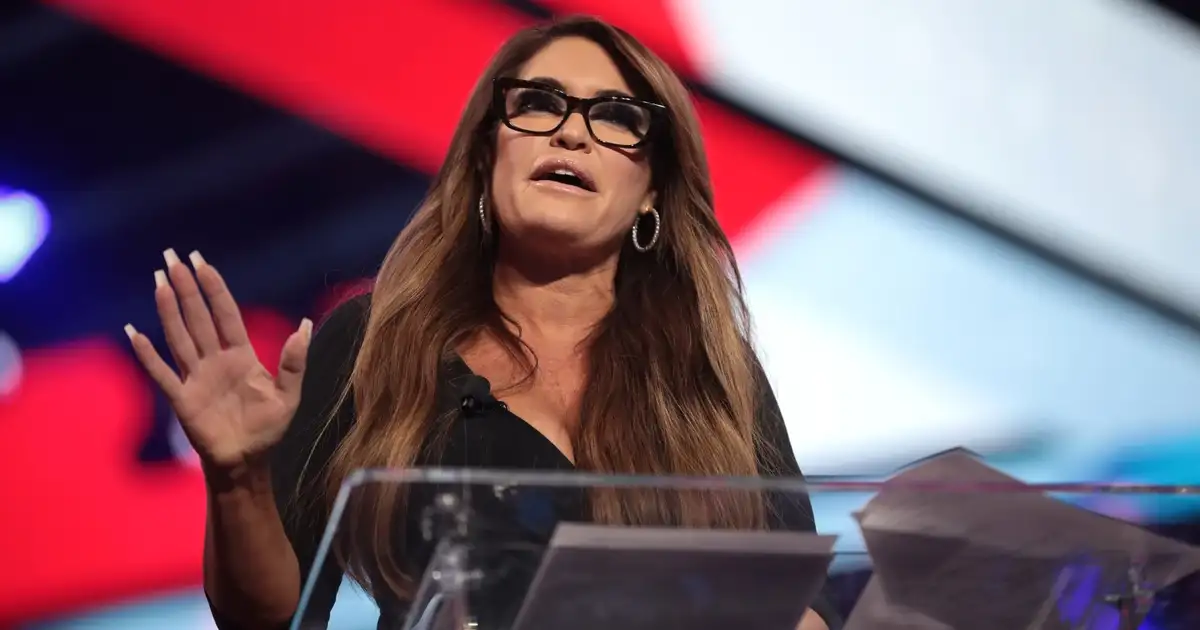

Kimberly Guilfoyle, a senior advisor and influential envoy for President Donald Trump, didn’t just open a McDonald’s in Greece; she orchestrated a diplomatic spectacle that became an instant global punchline. In a country whose culinary traditions are celebrated as a cornerstone of Western civilization, this wasn’t merely a cultural misstep—it was an act of profound, almost theatrical, tone-deafness, savagely roasted by a nation that truly understands food.
The incident wasn’t a quiet affair. It sparked immediate, widespread, and blistering mockery across social media and international news outlets. Guilfoyle’s grand announcement, delivered with all the gravitas of a major state visit, was treated as a parody of diplomacy itself, screaming “cultural cringe” from Athens to Washington. It laid bare a fundamental misunderstanding of soft power and, perhaps, of basic respect.

America’s New “Soft Power”: A Burger and a Photo Op
Guilfoyle’s decision to frame a fast-food chain opening as a triumph of “American culture” and an export of “delicious food” to a nation of culinary giants landed with the subtlety of a dropped anvil. This wasn’t just perceived as deeply tone-deaf; it was an insult disguised as an investment opportunity. To suggest that McDonald’s represents a cultural triumph in Greece, a land that has gifted the world feta, olives, moussaka, souvlaki, and the health-promoting Mediterranean diet, is not merely ignorant—it’s an affront to millennia of gastronomic heritage.
Greece, after all, is a nation whose very identity is intertwined with its food. Its cuisine is not just sustenance; it’s history, family, and philosophy. To introduce a mass-produced burger and fries as a cultural offering is akin to presenting a plastic souvenir to a connoisseur of ancient artifacts. It’s a gesture that speaks volumes about the giver, and none of it good.
The public reaction was swift, brutal, and entirely predictable. Online forums and social media platforms exploded with incredulity. “Is this satire?” many asked, echoing a sentiment that permeated the international commentary. Others questioned, “How is this exciting for Greece? What exactly is the diplomatic gain here?” The entire affair felt less like statecraft and more like a corporate ribbon-cutting, with Guilfoyle appearing less as a presidential envoy and more as a high-priced franchise PR representative. It was a stark, embarrassing reminder of how thin the line between political influence and commercial promotion has become in the Trump era.
“Is this satire? Are we truly expected to believe this is a diplomatic achievement?”
“Greece, the cradle of Western civilization and gastronomy, now gets… a McDonald’s? How is this exciting for us?”
“This isn’t American culture. This is corporate America using political influence for free advertising.”
The Trump-World Aesthetic Abroad: Spectacle Over Substance
This episode perfectly encapsulates the Trump administration’s approach to global relations: a relentless pursuit of brand recognition and flashy photo opportunities, where substance consistently takes a backseat to spectacle. It’s an aesthetic that prioritizes immediate, superficial impact over nuanced, long-term diplomatic engagement. Critics weren’t just angry at the fast-food giant; they were laughing at the entire, ill-conceived aesthetic. Fast food, it seemed, had become the new, rather unappetizing, symbol of American soft power, replacing traditional diplomatic engagement with the glitz of luxury mall optics.
An ambassador or high-level envoy sounding indistinguishable from a marketing executive is not just a “strange look”; it fundamentally cheapens the office they hold and, by extension, America’s image on the world stage. It suggests that the highest levels of U.S. foreign policy are indistinguishable from a corporate promotional tour. The sarcasm surrounding the event was thick, with many pointing out the obvious, uncomfortable contradiction: “American investment,” under this administration, increasingly translates into burgers, branding, and photo ops dressed up as vital statecraft, rather than genuine cultural exchange, educational partnerships, or strategic economic development.
A Calculated Provocation or Blind Ignorance? The Damage is Real.
One must ask: was this merely an accidental gaffe, a simple oversight? Or was everything about it meticulously engineered for maximum attention? Given the Trump administration’s track record, a calculated provocation seems entirely plausible. The very nature of Guilfoyle’s appointment, the “Grand Announcement” energy surrounding a mundane commercial opening, and the absurdly overblown language used for a simple mall McDonald’s all point to a deliberate strategy. This wasn’t about fostering genuine goodwill; it was about generating headlines, turning a banal commercial event into a faux-nationalist moment. This isn’t about understanding the intricacies of soft power; it’s about recognizing the easily digestible, burger-flavored content that plays well to a specific domestic audience.
Was this a calculated move, designed to resonate with a base that conflates American consumerism with American strength? Or was it simply a profound, almost willful, misunderstanding of Greek culture and global perceptions? Either way, the damage to America’s image is undeniable and deeply concerning. It starkly highlights a pervasive disconnect within Washington’s elite, a failure to grasp how their actions are perceived overseas. This administration, time and again, pushes an agenda that falls flat, or worse, offends, on the international stage. The McDonald’s incident is not an anomaly; it is a prime, pungent example of that recurring failure.
The Steep Cost of Cringe Diplomacy: Eroding Trust and Respect
Every nation, without exception, values its culture, its history, and its unique contributions to the global tapestry. Greece, with its ancient history, philosophical foundations, and rich culinary tradition, is perhaps more fiercely proud of its heritage than most. To present fast food as a cultural gift, as a beacon of progress or “deliciousness,” is not merely insulting; it is a direct slap in the face to a proud people. It implies a condescending view, suggesting that what Greece truly needs is a taste of American mass production, rather than respect for its own exquisite traditions.
The long-term cost of such “cringe diplomacy” is significant and far-reaching. It erodes trust, fosters resentment, and makes American diplomacy appear clumsy, arrogant, and profoundly out of touch. Other nations, allies and adversaries alike, watch these spectacles unfold. They draw their own conclusions about U.S. priorities, about the caliber of its diplomatic corps, and about the nature of its global leadership. This isn’t just about a burger joint; it’s about the fundamental principles of respect, understanding, and effective communication on the world stage—principles with which this administration seems to struggle profoundly.
The perception cemented by such events is that the U.S. is exporting its least refined cultural exports, actively feeding into stereotypes that fuel anti-American sentiment. It undermines the serious, painstaking efforts of career diplomats who strive daily to build genuine relationships and project a more nuanced, respectful image of America. When a nation’s highest envoys prioritize corporate branding over cultural sensitivity, the foundation of international goodwill begins to crumble.
Who Profits From This Spectacle? Not America.
The only clear, undeniable winner in this entire charade is, predictably, McDonald’s. They received priceless, global publicity. They secured a high-profile ribbon-cutting by a senior political figure, an endorsement that most corporations can only dream of. This kind of political-commercial synergy is a goldmine for a global brand, especially one constantly battling perceptions of unhealthy eating and cultural homogenization.
But what, precisely, does the American taxpayer gain from such an exercise? What does U.S. foreign policy achieve, beyond a fresh wave of international ridicule and a further dent in its credibility? Very little, if anything. This isn’t building bridges; it’s burning them with a side of fries. It’s a stark illustration of the blurring lines between commerce and diplomacy, raising uncomfortable questions about the true role of an ambassador or a presidential envoy. Is their primary function to promote cherished American values, or to act as glorified sales representatives for American corporations? In this cringe-worthy instance, the answer seems unequivocally to be the latter.
This is the cynical truth that too often defines Washington’s approach to global engagement. Political appointments, particularly those made outside the traditional diplomatic corps, frequently serve corporate interests, personal branding, or domestic political posturing, all while the everyday taxpayer foots the bill for these ill-conceived stunts. The public trust, both at home and abroad, erodes with every tone-deaf, cringe-worthy moment, making genuine diplomacy an even more arduous uphill battle.
A Pattern of Misplaced Priorities: The Erosion of Diplomatic Norms
This McDonald’s debacle is not an isolated event; it fits a deeply concerning pattern. The Trump administration has consistently prioritized spectacle over substance, elevated loyalists and political donors over experienced, culturally sensitive diplomats, and embraced a transactional view of international relations. This approach has profound and damaging consequences. Traditional diplomacy relies on nuance, cultural sensitivity, and a deep, empathetic understanding of local customs, values, and historical context. This McDonald’s opening displayed none of that; it was loud, brash, utterly tone-deaf, and ultimately, counterproductive.
The global perception of American leadership suffers immeasurably. Allies question U.S. judgment and commitment to shared values. Adversaries find new, potent ammunition for their anti-American narratives, painting the U.S. as a culturally insensitive behemoth, all because of a photo op and a burger. The Greeks, with their millennia of ancient wisdom and their profound understanding of true culture, saw right through the superficiality of the gesture. They recognized an empty, self-serving stunt when they saw one, and they were not afraid to call it out for the world to hear.
This incident serves as a stark, unforgettable reminder: real diplomacy builds genuine relationships, fosters mutual respect, and engages with the world on its own terms. It absolutely does not involve pushing fast food on nations with superior cuisine and a rich, unparalleled cultural heritage. This administration, and any future one, needs a serious, fundamental reality check on how it chooses to represent America abroad, lest “Make America Great Again” becomes synonymous with “Make America Cringe Again.”
Source: Google News