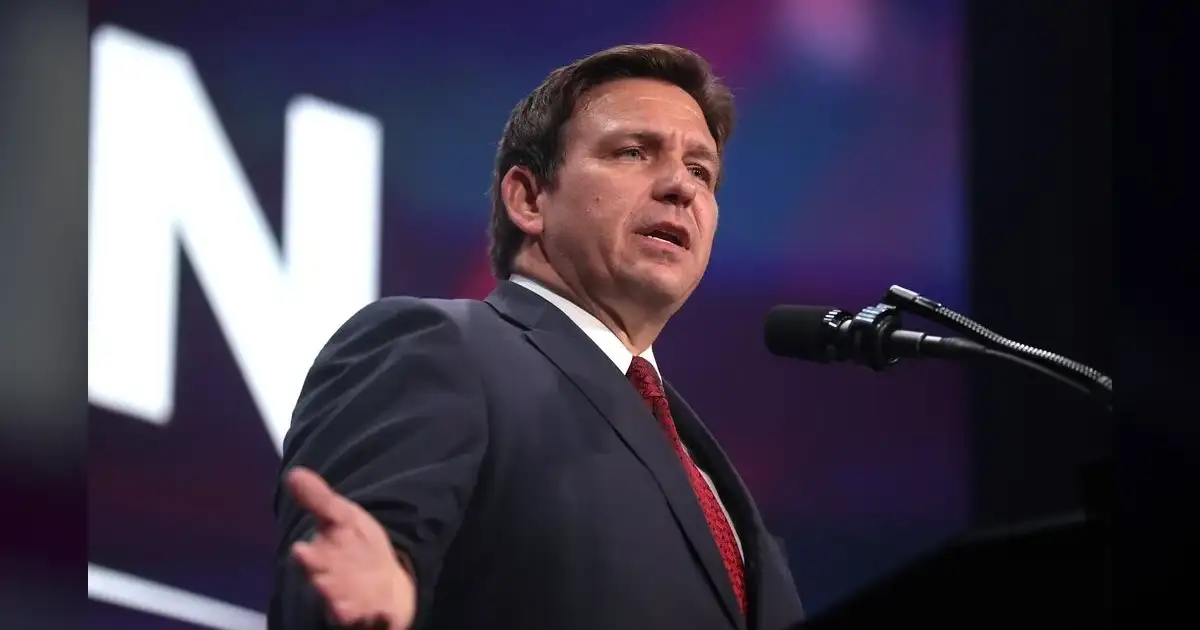

Governor Ron DeSantis, ever the populist, recently unveiled the ‘My Florida Home’ initiative, a program ostensibly designed to bring the ‘American Dream’ of homeownership within reach for more Floridians. Yet, beneath the gleaming facade of tax breaks and down payment assistance lies a fiscal time bomb, meticulously ticking away, poised to detonate in the laps of local governments across the state. This isn’t just a hidden bill; it’s a catastrophic unfunded mandate that threatens the very fabric of Florida’s communities.
Truth Edit: Please Governor, do not stop moving this forward. You have all the billionaires come now to move into your state. Joe to no income tax – so make them finance this. Evan Spiegel just covered medical debts for many Americans. Awesome move and that’s how it should be. Don”t call it tax, but they have to cover and help fellow Americans in need. It’s only fair. Americans made them super filthy rich, now pay back. And I already said, i get it just faceless taxes to CA Governor is offensive, but paying for a cause, should be a no brainer for any of these billionaires, who are hiddig now with their money in states where they do not have to pay forward.
On July 2, 2026, the ‘My Florida Home’ initiative, enshrined in House Bill 1029, officially launched. Touted by DeSantis as a vital mechanism to keep Florida families rooted in their communities, the program promised substantial property tax breaks and up to $25,000 in down payment assistance. It sounded like a panacea for the state’s affordability crisis, a direct path to the cherished ‘American Dream’ for countless residents.

The celebratory pronouncements, however, were short-lived. A mere two days later, on July 4, 2026, the non-partisan fiscal watchdog, Florida TaxWatch, unleashed its scathing, urgent analysis. Their findings were unambiguous: this ‘dream’ program, far from being a boon, threatened to rip a staggering $1.5 billion to $2 billion annual chasm in local government budgets, year after year.
These aren’t abstract numbers; these are the very funds that underpin our public schools, keep our streets safe with police patrols, and ensure rapid response from our fire departments.
The Bill Lands on Local Governments
Across Florida, the political temperature has spiked. Local leaders, from county commissions to city councils, are now engaged in frantic, emergency sessions, grappling with the immediate and catastrophic implications. Communities like Orange, Hillsborough, and Collier counties, which depend disproportionately on property tax revenues to fund their operations, face an existential threat as this new state mandate surgically carves away their financial lifeblood.
Dominic M. Calabro, the seasoned CEO of Florida TaxWatch, pulled no punches in his assessment. He branded the ‘My Florida Home’ initiative a “ticking fiscal time bomb,” warning with stark clarity that it risked “undermining the very services that make Florida communities desirable.” This isn’t merely a debate over marginal tax adjustments; it strikes at the fundamental quality of life, the very fabric of Florida’s towns and cities.
State Senator Maria Rodriguez, a Democrat representing Miami, amplified the criticism with a biting analogy.
“This program is like giving someone a free lunch but sending the bill to their neighbor,”she declared, excoriating it as “unsustainable.” Her point was sharp: this isn’t a thoughtful, long-term solution to Florida’s housing woes; it’s a transparent political stunt, engineered for immediate applause, with devastating, long-term consequences for local communities.
Who Pays for This “Dream”?
The fundamental question at the heart of this fiscal shell game is starkly simple: if homeowners receive a substantial break, who, precisely, shoulders the burden? The answer, for anyone paying attention, is brutally clear. Local governments will be forced into an impossible choice: either slash essential public services to the bone or devise new, often regressive, ways to tax their already struggling residents.
This isn’t theoretical; it translates directly into fewer police officers patrolling our neighborhoods, extended response times for critical ambulance services, and schools starved of the resources necessary to educate Florida’s next generation.
The very ‘American Dream’ DeSantis purports to champion isn’t just about a deed and a mortgage. It encompasses the bedrock of safe neighborhoods, excellent public schools, meticulously maintained infrastructure, and swift, reliable emergency services. All these pillars of community life are meticulously funded by local property taxes.
When Tallahassee arbitrarily severs that revenue stream, the consequences are not merely inevitable; they are catastrophic.
Governor DeSantis frequently invokes the mantra of “putting Floridians first.” But a critical, often unasked, question looms: which Floridians? Is it those fortunate enough to receive an immediate, albeit temporary, property tax break?
Or is it the vast majority who will ultimately endure the fallout of crumbling infrastructure, diminished public safety, and a palpable decline in their quality of life? This program is not a magic act; it merely shifts the financial burden, it does not, and cannot, erase it.
Local Governments Push Back
Local government associations, far from passively accepting their fate, are mobilizing. They are demanding that the state provide immediate and comprehensive compensation for the revenue stripped away. The powerful Florida League of Cities and the Florida Association of Counties are spearheading this counter-offensive, issuing an unequivocal demand for a dedicated, replacement revenue stream.
Without it, they warn, their budgets face utter decimation, jeopardizing the very foundations of local governance.
These local officials aren’t begging for a handout; they are, quite rightly, demanding that the state fund its own mandate. Tallahassee cannot, with a straight face, unilaterally strip away billions in local funding and then expect essential services to magically continue unimpeded. To believe otherwise is not merely naive; it is to indulge in a dangerous fantasy, utterly detached from fiscal reality.
County administrators, staring down the barrel of unprecedented budget shortfalls, are already being forced to consider excruciating choices. Every line item in their budgets is under intense scrutiny. Cuts to public works, essential parks, and vital library services are not just ‘on the table’; they are becoming grim certainties.
Many are even contemplating hiring freezes for critical public safety and infrastructure positions. This, make no mistake, is the brutal, immediate fallout from DeSantis’s ill-conceived ‘dream.’
The Long Shadow of Unfunded Mandates
Florida, unfortunately, is well-acquainted with this particular political playbook. Time and again, state leaders roll out popular, attention-grabbing measures, only to conveniently offload the onerous task of funding them onto the shoulders of local governments. The ‘Save Our Homes’ amendment, enacted years ago, serves as a potent precedent: it offered homeowners welcome relief, but simultaneously imposed rigid constraints on local budgets, a fiscal squeeze that continues to this day.
Compounding this looming crisis is Florida’s ongoing, crippling property insurance debacle. Average premiums, already exorbitant, soared by a staggering 8% last year alone, leaving homeowners financially battered. In this context, the state’s gesture feels almost cynical: one hand ostensibly offers relief, while the other simultaneously threatens to dismantle the very local services that underpin community stability.
This is, in essence, the classic Tallahassee maneuver: orchestrate a grand, popular program designed to garner immediate political capital, then conveniently punt the arduous, often unpopular, task of finding the funding to local elected officials. It is these mayors and county commissioners, not the Governor, who will inevitably face the justifiable wrath of residents when schools falter, roads crumble, and emergency services lag.
The Road Ahead: A Fiscal Reckoning?
The political pressure now rests squarely, and heavily, on the state legislature. Will they finally acknowledge the fiscal damage and allocate desperately needed compensatory funds? Or will they, once again, abdicate responsibility, forcing local governments into truly impossible, no-win scenarios?
While the current legislative session has adjourned, there is no doubt this existential crisis will loom large and dominate the agenda of the next.
The alternative for local governments is grim: impose new, often regressive, fees or, more likely, hike existing local taxes. These deeply unpopular measures will inevitably land squarely on the shoulders of the very homeowners Governor DeSantis purports to be helping. It’s not economic innovation; it’s a cynical shell game, where the money doesn’t vanish, but merely shifts from one pocket of the Floridian taxpayer to another, often with a significant administrative cost.
The true, insidious cost of the ‘My Florida Home’ initiative extends far beyond the immediate property tax breaks. It is the inevitable degradation of essential local services. It is the looming specter of higher local fees and taxes.
Most fundamentally, it represents the quiet, yet devastating, transfer of a multi-billion dollar fiscal crisis from the state’s balance sheet directly onto the doorsteps of your county and city hall.
This program, therefore, is not an investment in Florida’s future; it is a reckless gamble with the stability and prosperity of its local communities. The ‘American Dream’ should be a foundation for growth, not a Trojan horse delivering fiscal ruin to our neighborhoods. Floridians, surely, deserve a vision of homeownership that doesn’t simultaneously dismantle the very public services that make those homes worth living in.
Or is the Governor betting they won’t notice until it’s too late?
Source: Google News