
The Fourth of July, a day meant for fireworks and freedom, exploded into a nightmare on the Coney Island boardwalk, sending four innocent children to the hospital with bullet wounds. This wasn’t merely a tragic incident; it was a brazen declaration by unchecked violence that no public space, no cherished holiday, and certainly no child, is sacred in America’s relentless gun crisis.
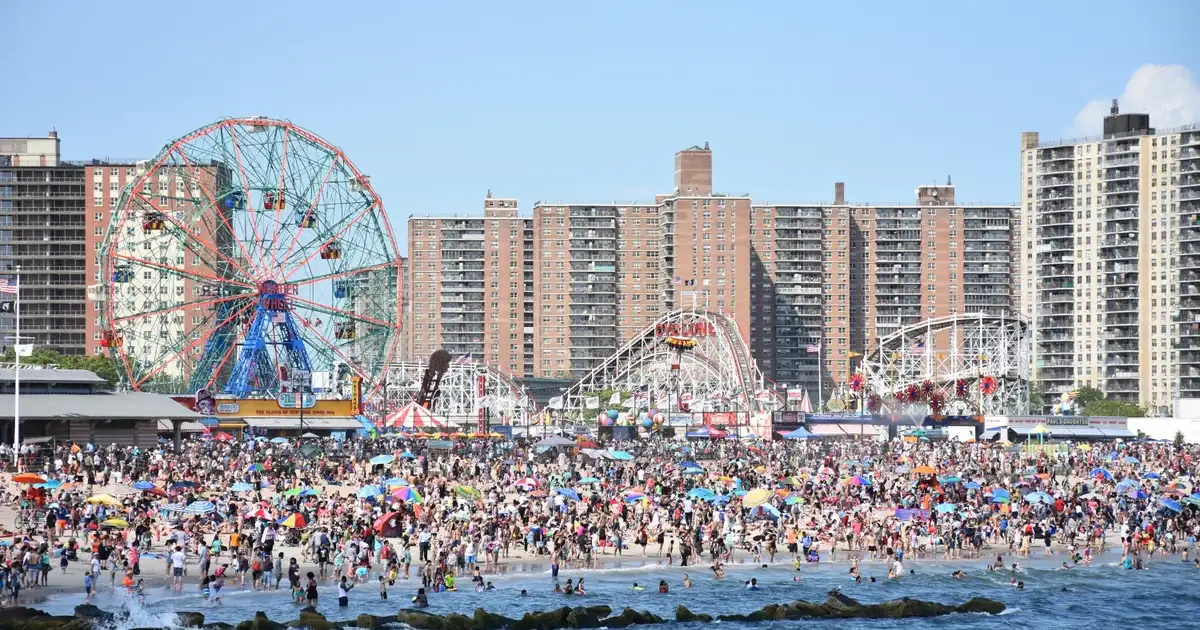
The horror unfolded on Thursday, July 4, 2026, around 9:30 PM EDT. As families, their faces still alight from the dazzling fireworks display, began to disperse from the iconic Coney Island boardwalk, chaos erupted. A trivial dispute between two adult groups escalated with terrifying speed, culminating in a fusillade of gunfire near Surf Avenue and West 10th Street. Six individuals, ranging in age from a mere 7 years old to 35, were caught in the crossfire and rushed to local hospitals. Miraculously, all victims sustained non-life-threatening injuries, predominantly graze wounds, and are now stable at Coney Island Hospital and Maimonides Medical Center. But the physical wounds, however superficial, belie the deep, festering trauma inflicted on a community and its collective sense of security.

A Holiday Tarnished, A Trust Betrayed
America celebrates its independence with pomp and circumstance, but for families in Coney Island, that freedom now rings hollow, overshadowed by an insidious fear. Parents brought their children for the simple joy of fireworks and the salty air of the beach, not for the terror of a shooting and the sterile chill of an emergency room. This incident isn’t just a local tragedy; it’s a brutal gut-punch to the very heart of what a national holiday, a moment of unity and celebration, should represent.
Lest we dismiss this as an anomaly, let’s be clear: this isn’t an isolated event. Holiday weekends, particularly the Fourth of July, have become grim markers on the calendar, consistently witnessing spikes in gun violence across the nation. A day meant for patriotic pride and communal gathering has devolved into a period of heightened anxiety, where the joyous shouts of children are increasingly drowned out by the crackle of gunfire. Our most vulnerable citizens, our children, are routinely caught in the crossfire of senseless adult conflicts, their innocence shattered by the pervasive culture of violence.
The tragedy demands a crucial, uncomfortable question: Is Coney Island still safe for families, or has gun violence irrevocably scarred NYC’s iconic summer destination? The answer, for too many New Yorkers, for too many parents now gripped by dread, feels like an undeniable, chilling “no.” The very concept of public safety, the implicit contract between citizens and their city, is not merely eroding; it’s being actively shredded by bullets on our streets.
“To have our children, our families, experience such senseless and cowardly violence on a day meant for unity and celebration is unacceptable,” Mayor Eric Adams stated on July 5th. “We will not rest until those responsible are brought to justice.”
Such eloquent words, Mayor Adams. But what about action that actually delivers results beyond photo opportunities and press conferences? The citizens of New York are not interested in rhetoric; they are exhausted by it. They demand to know why a place like Coney Island, teeming with children, became a shooting gallery. They want to know why, despite all the tough talk and grand pronouncements, their children are still not safe, even during a holiday celebration.
The Aftermath: Fear on the Boardwalk Lingers
The scene described by witnesses paints a truly terrifying picture of widespread panic and desperate flight. “It was chaos,” recounted Maria Rodriguez, a long-time Coney Island resident and witness, her voice still trembling days later. “My little girl was so scared. This is supposed to be a happy place, full of laughter and fun, not a war zone where you have to duck for cover.”
That fear is not some abstract concept; it is a visceral, debilitating reality. It is the psychological trauma that will linger long after the physical wounds have closed. Children who witnessed this horrific event will carry those terrifying images, those sounds, and that primal fear with them, potentially for the rest of their lives. Families will undoubtedly think twice, and then a third time, before venturing into any crowded public space again. The joy of a summer outing replaced by the constant vigilance of a battlefield.
This isn’t just about bullet wounds, however shallow. It’s about a community’s fundamental sense of security being shattered beyond recognition. It’s about the invisible, festering scars left on every child who heard those shots, every parent who clutched their child tighter, every vendor who watched their livelihood threatened. It’s about the profound, corrosive erosion of trust in public spaces, turning playgrounds into potential danger zones and celebrations into potential tragedies.
The NYPD is reviewing surveillance footage, painstakingly sifting through the digital debris of a shattered night. Yet, days later, no arrests have been made. This agonizing lack of accountability leaves a community reeling, their cries for justice echoing unanswered. The prolonged wait for any semblance of justice only compounds the pain, allowing fear and anger to fester.
Policing a Powder Keg: Reactive Measures Fall Short
NYPD Commissioner Edward Caban, facing immense public pressure, acknowledged the daunting challenge. “Our officers responded immediately, but the damage was already done,” he conceded, a statement that rings with the bitter truth of reactive policing. The department is now under immense pressure to somehow reassure a public whose faith has been severely shaken.
An increased police presence is, predictably, being promised for Coney Island. Uniformed and plainclothes officers will now patrol the boardwalk, a visible show of force. But let’s call this what it is: a knee-jerk reaction, a desperate band-aid slapped onto a gaping, hemorrhaging wound. This is what authorities do after the fact, after the bullets have flown and the children have been traumatized. It’s a response to a crisis, not a prevention of one.
The real issue, the foundational failure, lies in preventing these incidents from happening in the first place. New York City, despite its stringent gun laws, remains tragically porous to the relentless flow of illegal firearms. This grim reality transforms every large gathering, every public celebration, into a potential flashpoint. Law enforcement, no matter how dedicated, is perpetually playing catch-up, forever chasing the ghost of violence after it has already claimed its victims.
Community initiatives are also being fast-tracked by the Mayor’s Office of Neighborhood Safety and Engagement (MONSE). Youth programs and conflict resolution workshops sound commendable on paper, a noble pursuit of long-term societal change. But these are long-term solutions, strategic investments in a better future, for an immediate, violent, existential problem. They offer little solace to the parents whose children were shot last Thursday, or to those who now fear stepping onto the boardwalk this weekend.
Politics and Empty Promises: The Leadership Vacuum
Politicians, with their well-rehearsed condemnations, love to decry gun violence. They issue statements, hold somber press conferences, and predictably call for “stronger state and federal gun control measures.” Yet, with sickening regularity, the violence persists, mocking their platitudes.
The chasm between political rhetoric and the brutal, street-level reality is not just infuriating; it’s a profound betrayal. Mayor Adams’s repeated commitment to combating gun violence feels utterly hollow when children are shot at a holiday celebration, in a supposedly safe public space. Talk, as the saying goes, is cheap. Lives, however, are not.
Critics are not merely “right to point out” the lack of effective crime prevention strategies; they are obligated to scream it from the rooftops. The city talks tough, projecting an image of control and competence, but consistently fails to deliver on the most fundamental promise of governance: protecting its citizens. This incident at Coney Island is not an isolated failure; it is irrefutable proof of a systemic, catastrophic failure of leadership to protect its most vulnerable citizens, its children, from preventable violence.
The incessant focus on “root causes,” while important in a broader societal context, often serves as a convenient distraction from the immediate, desperate need for security. While long-term solutions are undeniably vital for a healthier future, families need to feel safe today. They need to trust that a public park, a boardwalk, a school, isn’t a danger zone. They need their leaders to prioritize their present safety, not just pontificate about a distant, ideal future.
The Real Cost to Coney Island: Beyond the Bullet Wounds
Beyond the horrific human toll, the trauma, and the shattered sense of security, there is an undeniable economic cost. Coney Island, a vibrant, historic destination, relies heavily on summer tourism to sustain its local businesses and community. Local entrepreneurs and tourism officials are not just “worried”; they are facing down a potentially devastating summer season. This brazen shooting, broadcast across every news channel, could very well deter countless visitors, particularly families, from setting foot on the boardwalk.
Who, in their right mind, wants to bring their children to a place where gunfire erupts during a holiday celebration? The incident casts a long, menacing shadow over the entire summer season, threatening to cripple the very engine of the local economy. It impacts jobs, local revenue, and, perhaps most tragically, the very spirit and identity of an area that thrives on joy and communal gathering.
This isn’t just about one night of violence, however shocking. It’s about the long-term perception of safety, the indelible stain on Coney Island’s reputation. When an iconic destination, synonymous with innocent fun, becomes synonymous with danger, everyone loses. The local economy will suffer, businesses will shutter, and the vibrant culture of Coney Island will be slowly, painfully choked.
The constant, pervasive threat of gun violence is an insidious tax on every community it touches. It costs lives, peace of mind, and economic vitality. Coney Island, a symbol of resilient New York, is now paying a steep, unjust price for a problem that its leadership has demonstrably failed to solve, or even adequately contain.
Beyond the Wounds: A Call for Accountability
The physical wounds inflicted on those six individuals, including four children, at Coney Island may eventually heal. But the emotional, psychological, and societal scars will remain, a grim testament to a nation’s collective failure. This incident is far more than a statistic; it is a stark, brutal reminder of America’s unique, self-inflicted problem with firearms, a problem that metastasizes unchecked, consuming our public spaces and our children’s futures.
It forces us, once again, to confront the pervasive, insidious nature of gun violence. It demonstrates, with horrifying clarity, how easily public spaces, once bastions of joy, can transform into nightmares. It highlights, with sickening precision, our collective, unforgivable failure to protect our most vulnerable citizens.
We cannot allow this to become normalized. We cannot accept that celebrating a national holiday means risking our lives, or worse, the lives of our children. The time for empty promises, for hollow rhetoric, for reactive band-aids, is over. The time for genuine, courageous, and effective solutions, backed by unwavering political will, is not merely now; it is long past due. How many more children must fall before we finally demand real change?
Source: Google News