
President Trump re-imposed a full economic blockade on Iran and demanded a 20 percent tariff on all Strait of Hormuz exports. This aggressive move sent oil prices skyrocketing and triggered a U.S. strike on Yemen’s Sana’a International Airport.
On July 11, 2026, the White House announced the blockade and the unprecedented tariff. The stated goal is to choke off Iran’s finances. It also aims to compel new nuclear and security talks.

Within hours, Brent crude futures surged over 8%. Prices broke the $125 per barrel mark. West Texas Intermediate (WTI) futures also topped $120.
The Enforcement Challenge: Who Pays, Who Doesn’t?
The immediate question becomes clear: how will this tariff actually be enforced? And what happens if countries or shipping companies refuse to pay? The U.S. Fifth Fleet, stationed in Bahrain, has been tasked with enforcement.
This could mean U.S. naval vessels hailing commercial ships. They might demand payment documentation. Refusal could lead to interdiction, creating direct naval confrontations in the vital waterway.
This situation presents a dangerous choice for shipping companies. Paying the tariff means significantly higher operational costs.
Refusing might lead to vessels being barred from U.S. ports. They could also face secondary sanctions.
Iran has already called the U.S. actions “maritime banditry.” Foreign Minister Hossein Amir-Abdollahian warned of “severe consequences.”
Iran views any attempt to block its own oil exports as an act of war. This could lead to Tehran entirely closing the Strait of Hormuz. Such a move would trigger a global economic crisis.
Global Condemnation and Economic Fallout
The global reaction has been swift and largely critical. European allies voiced “grave concern” over the unilateral U.S. actions. French President Emmanuel Macron and German Chancellor Olaf Scholz urged de-escalation.
“We urge all parties to exercise maximum restraint,” Macron stated on July 13. “Unilateral actions that destabilize global energy markets and escalate regional tensions serve no one’s interests. Dialogue, not confrontation, is the path forward.”
China, a major importer of Middle Eastern oil, condemned the tariff as “unacceptable.” Russia’s Foreign Ministry warned the region is on the “brink of a major conflict.”
Even oil-exporting allies like Saudi Arabia are privately concerned. The 20% tariff will significantly impact their export revenues.
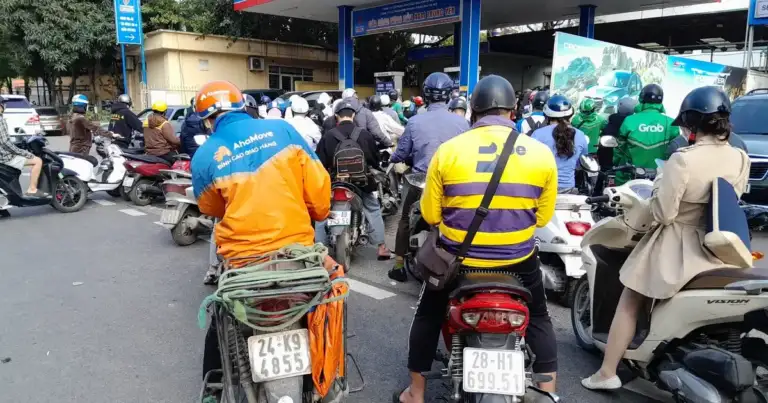
The economic impact on ordinary people is immediate. Higher oil prices mean more expensive gasoline. Heating and cooling costs will rise.
Consumers will pay more for goods. Shipping and transportation expenses will increase across the board.
Yemen Strike: A Coordinated Escalation
Adding to the tension, U.S. forces struck Sana’a International Airport in Yemen on July 12, 2026. The Pentagon claimed targets were Houthi missile and drone facilities. These facilities allegedly threatened international shipping in the Bab al-Mandab Strait.
This strike is directly linked to the broader U.S. strategy. It aims to secure maritime routes. It responds to the Iran blockade and Hormuz tariff.
Houthi officials claim civilian areas were hit. The Pentagon denies this.
The timing is crucial. It signals a coordinated strategy.
The U.S. is projecting power across critical choke points. This protects the new tariff system.
The Strait of Hormuz is incredibly vital. Roughly 20-21 million barrels of oil per day transit through it.
This is one-third of the world’s seaborne oil. It represents 20% of total global petroleum consumption.
A 20% tariff on this volume is staggering. It amounts to billions of dollars annually.
Global energy markets will bear these new costs. Insurance premiums for vessels in the Persian Gulf have already doubled or tripled.
An Unprecedented Precedent
The U.S. has a long history of sanctions against Iran. However, demanding a direct tariff on shipping through an international strait is unprecedented. It challenges established maritime law.
The U.S. argues it is a fee for increased naval protection. This sets a dangerous new precedent.
International legal challenges are inevitable. Many nations will likely challenge the tariff’s legality. They will appeal to the International Maritime Organization (IMO).
The International Court of Justice could also become involved. They will argue it violates free navigation principles.
The risk of a broader military confrontation has dramatically increased. The region is vital to global energy supplies. Further economic instability and supply chain disruptions are now very real threats.
The unilateral imposition of a tariff on an international waterway could inspire similar demands elsewhere. This threatens the core principles of global trade.
Some oil can be rerouted via pipelines. Saudi Arabia’s East-West pipeline is one example.
But the vast majority of Gulf oil depends on Hormuz. Alternatives are logistically challenging.
They involve significantly higher costs. This further impacts global energy prices.
The Path Forward: Confrontation or Capitulation?
The world is watching to see how this tariff will be enforced. Will ships comply, or will defiance lead to naval standoffs?
The situation is highly volatile. It presents a stark choice: confrontation or capitulation.
The consequences will reshape global energy markets and international law for decades to come.
Source: Google News