
The images are searing, indelible: once-safe roads in Valencia and Catalonia transformed into inescapable death traps, where Spanish wildfire victims were tragically burned alive in their cars.
This is not merely a grim statistic; it is a visceral, undeniable consequence of a climate crisis that has moved beyond abstract warnings.

It now directly claims lives in the most terrifying, immediate fashion. The sheer horror of these moments underscores a terrifying new reality for Southern Europe.
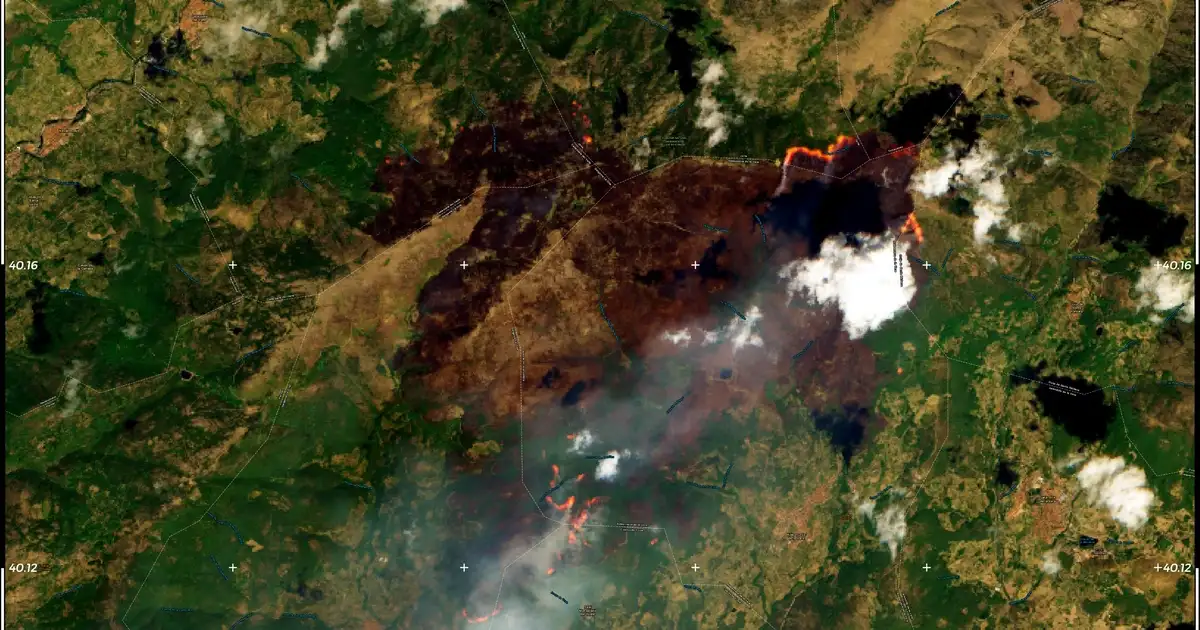
These devastating events unfolded with brutal speed over the past 72 hours, as an intense, prolonged heatwave fueled an inferno across the region. Temperatures soared, exceeding a scorching 40°C (104°F) for days on end, desiccating landscapes and creating tinderbox conditions ripe for catastrophe.
On July 9, 2026, a fierce blaze near the town of Llíria in Valencia rapidly intensified, cutting off escape routes and trapping fleeing residents.
Emergency services confirmed at least three individuals died in their vehicles there, their final moments a desperate, futile struggle against an insurmountable wall of fire.
By July 10, 2026, similar tragedies struck Catalonia, with two more perishing near the pristine national park of Aigüestortes i Estany de Sant Maurici.
The total confirmed deaths from being trapped in cars now stands at a horrific five across both regions, highlighting the fires’ unprecedented speed and ferocity.
Europe’s Burning Question: Preparedness Under Fire
The immediate, agonizing question echoing across the continent is this: Is Spain, and indeed, is Europe as a whole, adequately prepared for the escalating frequency and ferocity of these “mega-fires” — phenomena now inextricably linked to climate change?
The unfolding tragedy, with its horrific human toll, offers a stark and profoundly unsettling answer: demonstrably, unequivocally, not enough.
Spain, along with other Mediterranean nations, has experienced a disturbing surge in wildfires over the past two decades. Data from the European Forest Fire Information System (EFFIS) reveals that the average area burned annually has risen by over 30% compared to the early 2000s.
This isn’t just an increase in acreage; it represents a fundamental shift in the nature of these blazes, demanding a radical re-evaluation of existing infrastructure and emergency protocols. The current tragedy serves as a brutal indictment of the systemic failures to adapt.
Firefighters on the ground describe conditions as “unprecedented,” battling fire fronts that advance at speeds making traditional evacuation impossible.
Roads, designed as arteries of escape, became lethal bottlenecks, trapping those seeking safety.
This is the brutal reality of “sixth-generation” fires: characterized by extreme intensity, rapid spread, and the ability to create their own weather systems, including pyrocumulus clouds and fire tornadoes. They overwhelm conventional suppression methods, rendering even heroic efforts tragically insufficient.
“The speed and intensity of these fires are unlike anything we’ve seen before,” stated Juan Manuel García, Fire Chief for the Valencia Region, on July 9, 2026. “The wind shifts are creating unpredictable fronts that can cut off roads in minutes. Our crews are doing heroic work, but these conditions are extreme, pushing us beyond our limits and forcing impossible choices.”
The human cost extends far beyond the immediate fatalities.
The official death toll from the wildfires has tragically risen to 12, with over 25,000 people having been evacuated, many losing everything.
Entire communities face complete devastation, their homes and livelihoods reduced to ash. The grief and anger among victims’ families are palpable, their raw questions about why safer routes were not provided, or why warnings weren’t more effective, demanding urgent and honest answers.
Beyond this, the psychological toll on first responders, who witness such devastation firsthand, and on survivors grappling with trauma and displacement, will linger for years, if not decades.
The Echoes of Climate Inaction: A Continent Adrift?
These catastrophic events are not isolated incidents, nor can they be dismissed as mere acts of nature. They are a direct, scientifically predicted consequence of a warming planet, where human-induced climate change has amplified the frequency and intensity of extreme weather phenomena.
Southern Europe, with its vulnerable Mediterranean climate, has unequivocally become a frontline in this escalating battle against a rapidly changing environment.
Dr. Elena Ramirez, a distinguished Climate Scientist at the University of Barcelona, articulated this with stark clarity on July 10, 2026. “What we are witnessing in Spain is a direct consequence of global warming,” she asserted.
“These extreme heatwaves and droughts create perfect conditions for fires that are larger, faster, and much more dangerous than anything in living memory. We must adapt our infrastructure and societies to this new reality, but more importantly, we must urgently and drastically mitigate the greenhouse gas emissions driving this catastrophe.” Her words serve as a powerful, unambiguous call to action.
The economic impact of these blazes is also staggering, with preliminary estimates suggesting over 30,000 hectares (74,000 acres) have burned. This translates into tens, if not hundreds, of millions of euros in immediate economic losses.
Key sectors such as agriculture, forestry, and tourism are suffering immense, potentially irreversible damage. Beyond the immediate destruction, the long-term ecological recovery, including soil erosion, biodiversity loss, and ecosystem degradation, will incur even greater costs, stretching over generations.
Whole landscapes will need to be reforested and rehabilitated, a monumental task requiring unprecedented investment.
In response to the crisis, Spain has formally requested international aid, with neighboring Portugal and France promptly dispatching critical resources, including firefighting aircraft and ground crews. While this demonstrates the vital role of the European Union’s civil protection mechanism in coordinating cross-border assistance, it simultaneously highlights a profound vulnerability.
When multiple member states—such as Greece, Italy, and Portugal, which are also battling significant blazes this summer—are simultaneously overwhelmed, the collective resources of the EU are strained to their breaking point. This scenario points to a desperate need for greater autonomous capabilities within each nation, alongside a more robust, long-term, and truly collaborative European strategy for climate resilience.
Beyond Reactive Measures: Forging a Proactive Future
The current approach, focused primarily on reactive firefighting, is clearly and catastrophically insufficient. Experts across the globe are demanding a fundamental paradigm shift: a move from merely battling fires to proactively managing landscapes and mitigating risks.
This essential shift entails comprehensive land management strategies, including controlled burns, strategic forest thinning, and the creation of fire-resistant buffer zones around vulnerable communities. Yet, these crucial preventative measures are too often underfunded, face significant political hurdles, and encounter public resistance due to their perceived short-term inconveniences or costs.
Spanish Prime Minister Pedro Sánchez offered his condolences on July 10, 2026, and vowed a thorough investigation into the events. “This crisis reminds us of the urgent need for collective action against climate change,” Sánchez stated.
But such pronouncements, while necessary, must translate into concrete, sustained action. The narrative of “unforeseen circumstances” rings hollow when climate scientists and fire ecologists have sounded increasingly dire warnings for decades, providing clear roadmaps for prevention and adaptation that have largely gone unheeded.
The tragedy of families incinerated in their cars demands more than platitudes or promises of future investigations.
It demands an immediate, complete overhaul of emergency preparedness systems and a serious, sustained investment in climate adaptation.
An honest, unflinching reckoning with the human cost of prolonged climate inaction is also required. It calls for a societal commitment to prioritize resilience over short-term economic gains, and for political leaders to demonstrate genuine courage in implementing difficult but necessary policies.
Europe must wake up to this searing reality.
The wildfires are not just destroying forests and landscapes; they are destroying lives, livelihoods, and exposing critical, systemic vulnerabilities in our emergency response and societal planning.
The time for a new, proactive strategy, one that embraces both aggressive mitigation and comprehensive adaptation, is not merely now — it is already perilously late.
The legacy of those lost in their cars must serve as an urgent, enduring catalyst for change.
Photo: Wikimedia Commons (query: Southern Europe burned)
Source: Google News