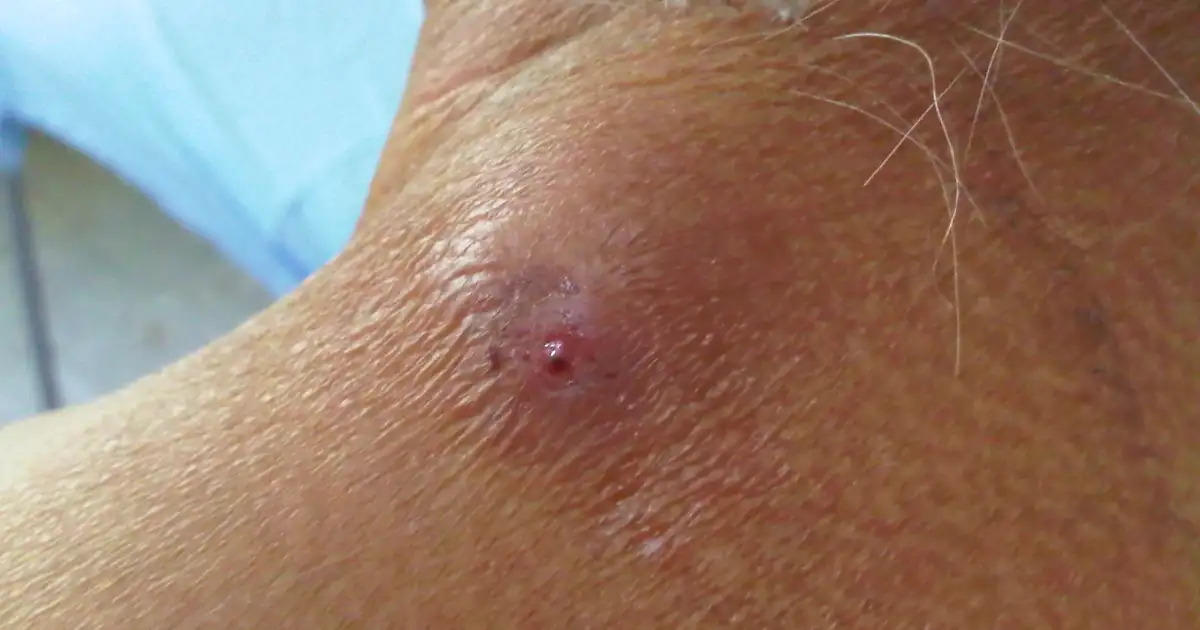

Let’s talk about something truly unsettling. A flesh-eating parasite, the kind that makes your skin crawl, has reportedly been detected on U.S. soil for the first time in six decades. This isn’t some obscure bug; it’s an organism with the horrifying capability to literally devour victims alive.
It’s a stark reminder that while we’re busy debating the latest wellness trends, ancient, brutal threats lurk. They don’t care about your smoothie cleanse.

The Return of a Nightmare
For 60 years, this particular horror was confined to medical textbooks and distant locales. Now, it’s here, and the implications are chilling. This isn’t just a rash; it’s a parasitic infection causing rapid, severe tissue destruction.
Imagine the worst-case scenario: an infection that eats away at flesh. It leads to disfigurement, organ damage, and a gruesome end if unchecked.
Its resurfacing after so long raises immediate questions. What has changed in our environment, travel patterns, or public health defenses to allow its re-entry?
Experts are (predictably) scrambling to identify the exact strain and potential vectors. But let’s be blunt: this isn’t a “wait and see” situation. This is a threat that demands immediate, aggressive action. The lack of public awareness, or perhaps the deliberate slow-walking of information, is precisely what allows such dangers to take root.
Who’s At Risk, and What’s Being Done?
While specifics are emerging, parasitic infections often thrive where sanitation is compromised. Contact with contaminated water or soil is a common factor.
For women, especially those in vulnerable populations or with compromised immune systems, risks could be acute. Diagnosis is notoriously difficult, as early symptoms mimic common conditions.
This insidious nature means definitive identification often comes too late. The parasite may have already wreaked significant, irreversible havoc. How many cases go undetected or misdiagnosed?
The immediate challenge lies in rapid detection and containment. But history tells us that public health systems, especially in sprawling nations like the U.S., are often reactive rather than proactive. We wait for outbreaks to become undeniable before we throw significant resources at them. This parasite doesn’t wait. It moves. It consumes. And every delay gives it more time to establish itself.
“The return of this parasite isn’t just a medical anomaly; it’s a glaring symptom of a larger systemic issue. We’re often told to trust the system, but when the system moves at a glacial pace against a threat that moves like wildfire, trust wears thin.”
— Lexi Ducan, WomanEdit Senior Health Analyst
The Red Marker Verdict: Convenient Distractions and Public Health Blind Spots
Let’s be clear: detecting a flesh-eating parasite after 60 years isn’t just “news.” It’s a flashing red light. But what’s the real story beneath the surface?
Is this a novel re-emergence, or have we simply been under-diagnosing cases for years? Has it only now reached a critical mass that can’t be ignored?
The “first time in 60 years” narrative, while alarming, can frame it as an isolated incident. This distracts from eroding public health infrastructure or ignored environmental shifts.
The uncomfortable truth: rare, horrific diseases capture headlines. The systemic issues allowing them to propagate rarely get scrutiny.
These issues include underfunded research, slow bureaucratic responses, and a public health attention deficit. We’ll likely see pronouncements and new funding.
But will it genuinely tackle root causes? Or is this another situation where fear is leveraged, attention diverted, and vulnerabilities remain?
My verdict? This parasitic reappearance is less about a single bug’s comeback. It’s more about how woefully unprepared we are for threats truly at our doorstep.
Don’t expect a seamless, rapid response. Expect talk, finger-pointing, and a slow grind of resources.
These resources will likely arrive long after the initial shock has worn off. The parasite doesn’t care about your press conference; it cares about its next host. That, ultimately, is the brutal reality we face.
Photo: Wikimedia Commons (query: flesh-eating parasite)
Source: Google News