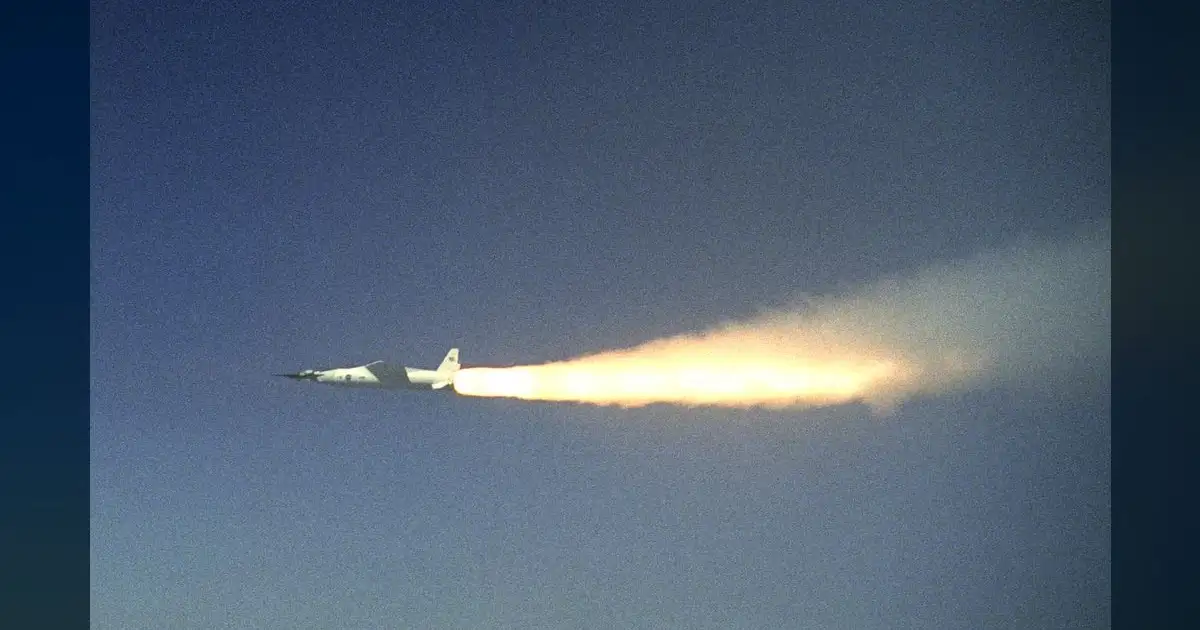

Forget the old Concorde’s ear-splitting roar. NASA’s $247 million X-59 QueSST, affectionately dubbed the “Son of Concorde,” is poised to shatter our notions of global business travel.
Imagine London to New York in under 4 hours, not with a disruptive sonic boom, but a mere “sonic thump.” This machine isn’t a mere science experiment. It’s a direct challenge to the status quo, promising to halve travel times for those who understand the true, quantifiable value of every minute.

Built by the legendary Lockheed Martin Skunk Works, the X-59 is now undergoing its critical final pre-flight tests. Its radical, elongated fuselage isn’t just for aesthetics; it’s engineered to fundamentally alter how shockwaves propagate.
The audacious goal: transform the notorious, ear-splitting sonic boom into a mere “sonic thump” – a sound no louder than a car door gently closing. This isn’t about incremental improvement. It’s about rewriting the very physics of flight and, by extension, the rules of the global economy.
The stakes for these initial flight tests and crucial community noise checks couldn’t be higher. Every data point collected will be meticulously scrutinized by the Federal Aviation Administration (FAA) and the International Civil Aviation Organization (ICAO).
These regulatory bodies wield the power to dismantle the decades-old bans on supersonic flight over land. Make no mistake: that’s the ultimate prize. It’s the unlocking of a global network of routes promising unprecedented profit and unmatched speed for those who move first.
When Can You Actually Fly Supersonic?
Let’s be practical: don’t even think about booking your supersonic tickets for next year. The X-59 is a demonstrator, a pure research platform, not a passenger jet.
Its singular mission is to rigorously prove this groundbreaking technology and amass the incontrovertible data regulators demand. Your actual seat on a commercial supersonic flight? That’s still a significant horizon away.
When can you expect to experience this new era? The earliest realistic timeframe for commercial supersonic travel is the early to mid-2030s – and that’s an optimistic projection assuming flawless execution.
First, the X-59 must unequivocally succeed in its mission. Then, and only then, can the regulatory landscape truly shift. Only after these dominoes fall will private companies be empowered to launch their high-stakes passenger services.
Make no mistake, the race is already on, and several ambitious players are vying for market dominance. Boom Supersonic is aggressively developing its Overture jet, boldly targeting passenger service in the early 2030s.
Not to be outdone, Hermeus is pushing the boundaries with its Quarterhorse and Halcyon concepts, strategically aiming for military applications first, then pivoting to commercial travel by the 2030s.
These aren’t just companies; they’re visionaries, venture capitalists, and engineers betting billions on a future where speed is the ultimate currency.
The Business Impact: A New Gold Rush
This isn’t merely about shaving minutes off a flight; it’s about engineering a fundamental, irreversible shake-up of the global business landscape. For aerospace manufacturers, this represents a multi-billion dollar, generational opportunity. Visionary companies like Lockheed Martin, Boom Supersonic, and Hermeus aren’t just building planes; they’re attracting massive investment, fueling unparalleled innovation, and literally constructing the infrastructure of tomorrow’s elite commerce, piece by meticulously engineered piece.
Consider the sheer, undeniable value for the highest-stakes business travelers. A critical board meeting in London, followed by a crucial deal-closing dinner in New York – all on the same day? That’s not mere convenience; it’s an insurmountable competitive advantage.
It’s the difference between closing a deal and missing an opportunity. Airlines will aggressively pursue these lucrative premium routes, fully aware that time-sensitive clients, those who truly understand the cost of delay, will readily pay top dollar.
Prepare for initial transatlantic tickets to command prices upwards of $5,000-$10,000+ – a clear signal of the market’s perceived value.
“We are very excited about the X-59 and the potential it has to open up a new era of commercial supersonic flight,” said Catherine Bahm, NASA’sPhoto: NASA/Carla Thomas
Source: Google News