
The euphoria of New York City’s long-awaited Knicks NBA Finals victory, a hard-fought 115-112 triumph over the Boston Celtics in a thrilling Game 7, was tragically short-lived. What should have been an iconic celebration instead devolved into pure, unadulterated mayhem, leaving a staggering 63 arrests, four stabbings, and a chilling single shooting scattered across the city’s jubilant streets. This wasn’t merely a party getting out of hand; it was a catastrophic failure of civic order, a black mark on a historic achievement.
The city’s joy turned ugly, a bitter pill to swallow after the New York Knicks finally clinched the title. This chaotic breakdown didn’t just mar a moment; it fundamentally tainted what should have been an unblemished, proud display for the Big Apple. It exposed a critical vulnerability in crowd control, a tactical misstep that cost the city dearly.

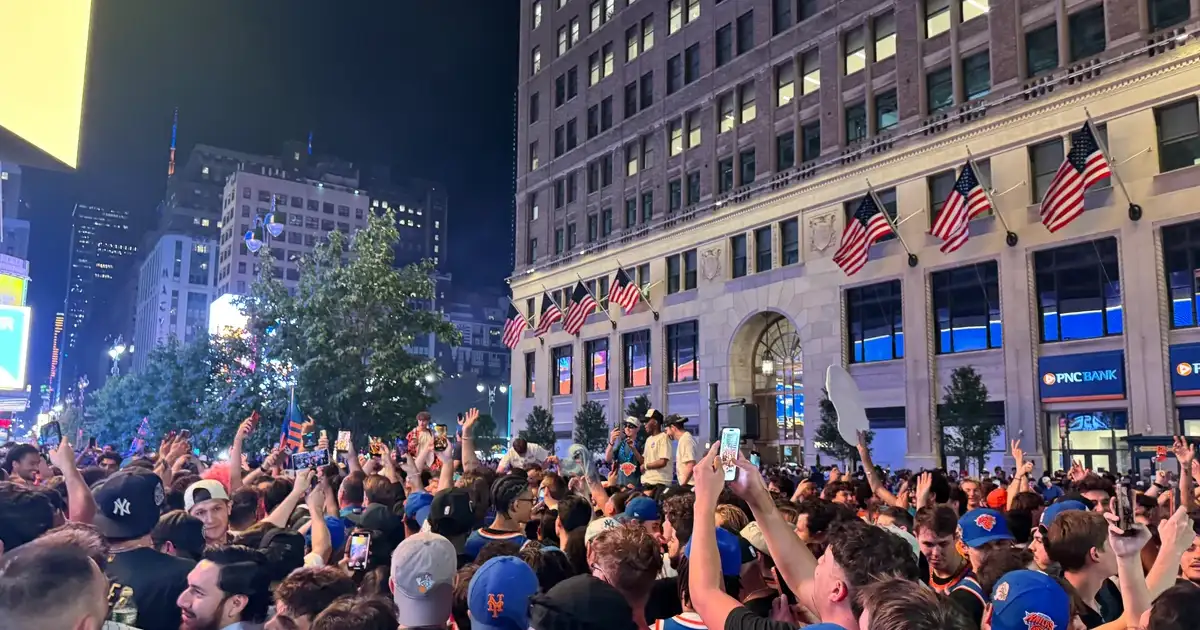
The Knicks secured their championship with that thrilling Game 7 win late on Sunday, June 14, 2026. As the final buzzer sounded, a tidal wave of fans immediately swarmed iconic spots. Times Square, Herald Square, and the immediate vicinity of Madison Square Garden became ground zero for what began as cheers but rapidly descended into screams, chaos, and criminal acts.
By early Monday, June 15, emergency calls flooded the 911 dispatch. The New York Police Department (NYPD) confirmed the 63 arrests, with charges ranging from disorderly conduct and assault to egregious acts of vandalism and resisting arrest. This was no mere expression of exuberant rowdiness; these were deliberate, criminal behaviors that threatened public safety and property.
Four separate stabbing incidents ripped through Midtown Manhattan and the Garment District, turning celebratory crowds into scenes of panic. While all victims fortunately sustained non-life-threatening injuries, the sheer brutality was undeniable.
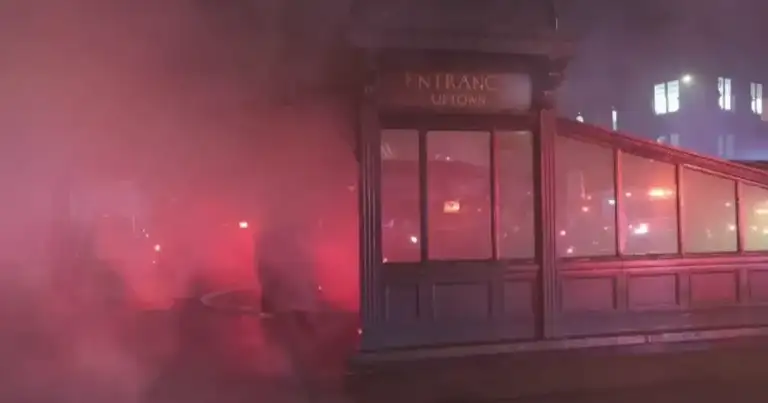
Then, the unthinkable occurred: a shooting near Madison Square Garden around 2:30 AM EST. One person was hospitalized with a gunshot wound, a stark reminder of how quickly celebration can turn lethal. Disturbingly, no arrests have been made in that critical incident yet, leaving a dangerous perpetrator at large.
Police units deployed in force, a reactive measure that struggled to contain the burgeoning pockets of unruly crowds. Vandalism ran rampant, an unchecked destructive force.
Street vendor carts were overturned, their livelihoods shattered. Storefront windows were systematically smashed, leaving businesses reeling from both physical damage and the psychological blow. The financial cost of this “celebration” will be immense, a bill the city and its taxpayers will be forced to foot.
The Price of Victory: A City’s Black Eye
This wasn’t simply a party getting out of hand; this was a complete, unconscionable breakdown of civic responsibility and public order. What kind of message does this send, not just to the nation, but to the very fabric of New York’s identity? Is this truly the legacy we want for our champions?
The Knicks earned their victory with grit and determination. Jalen Brunson delivered an incredible 45 points in Game 7, a heroic performance worthy of legend. Josh Hart pulled down a crucial 11 rebounds, embodying the team’s relentless effort.
Mikal Bridges dished out 4 assists, orchestrating the offense with precision. These players delivered a championship, pouring their hearts and souls onto the court. Yet, a destructive segment of the fan base, a minority that nonetheless cast a long shadow, delivered nothing but chaos and criminal behavior, spitting on the very spirit of victory.
Mayor Eric Adams and NYPD Commissioner Edward Caban were quick to condemn the violence, labeling it unequivocally unacceptable. “While we celebrate our Knicks, we absolutely condemn the actions of those who used this joyous occasion as an excuse for violence and destruction,” Mayor Adams stated, his voice firm. “This is not who New York is. We will find those responsible and hold them accountable.”
“While we celebrate our Knicks, we absolutely condemn the actions of those who used this joyous occasion as an excuse for violence and destruction. This is not who New York is. We will find those responsible and hold them accountable.”
— Mayor Eric Adams (CNN, June 15, 2026)
Commissioner Caban echoed the sentiment, highlighting the tireless work of his officers. “Our officers worked tirelessly through the night to restore order,” he affirmed. “The vast majority of fans celebrated responsibly, but the criminal acts we witnessed are unacceptable. Investigations into the stabbings and shooting are ongoing, and we will pursue every lead.”
“Our officers worked tirelessly through the night to restore order. The vast majority of fans celebrated responsibly, but the criminal acts we witnessed are unacceptable. Investigations into the stabbings and shooting are ongoing.”
— NYPD Commissioner Edward Caban (Reuters, June 15, 2026)
One eyewitness fan, a young woman named Sarah Chen, a lifelong Knicks supporter, summed up the profound disappointment. “It was amazing at first, everyone was hugging, chanting, just pure joy,” she recounted, her voice tinged with sadness.
“Then it just got crazy, people started smashing things, fighting. It’s heartbreaking that a few idiots ruined it for everyone, tarnished the biggest win in decades.” This sentiment reflects the true, immeasurable cost of the night’s anarchy: the theft of a city’s pure joy.
Rethinking the Game Plan: What Comes Next?
The critical question now is simple, stark, and demands immediate answers: What will the city do differently? How can New York prevent this from happening again after future major sports victories? This isn’t merely about damage control; it’s about fundamentally re-evaluating our defensive strategy.
The city’s current playbook for managing mass celebrations is clearly inadequate and requires a complete overhaul. Expect not just minor tweaks, but major strategic shifts in how these events are policed and managed. This isn’t just about increasing police presence; it’s about implementing a multi-layered, proactive defensive strategy designed to anticipate and neutralize threats before they escalate.
First, the NYPD will undoubtedly conduct a full, forensic review of its crowd control tactics. This will almost certainly lead to even larger, more visible pre-emptive deployments for future celebrations.
Officers must be strategically positioned at known flashpoints before crowds gather, ready to establish control and deter criminal activity. The goal must be to get ahead of the problem, not merely react to its devastating consequences.
Second, expect a massive upgrade in surveillance and technology. More high-definition cameras will be deployed, strategically positioned for maximum coverage.
Drone technology will play a significantly larger role, providing real-time aerial intelligence. Social media monitoring will intensify, allowing authorities to identify potential instigators and organized acts of vandalism before they can cause damage. This is about leveraging real-time intelligence to maintain order.
Third, city officials must launch aggressive, impactful public awareness campaigns. These campaigns should partner directly with sports teams, leveraging the influence of beloved players and coaches.
They need to emphasize responsible celebration, clearly outlining the severe legal consequences of destructive behavior. What better way to reach passionate fans than through the very heroes they celebrate?
Fourth, there will be much closer coordination with venues and local businesses. This means enhanced security measures, including temporary closures or restricted access to vulnerable areas during anticipated celebrations. Businesses should never again have to pay the price for fan lawlessness; they are partners in the city’s success, not collateral damage.
Finally, expect serious, perhaps uncomfortable, discussions about alcohol sales restrictions. Temporary bans on alcohol sales in specific areas during high-risk periods could significantly mitigate incidents fueled by intoxication.
This is a tough call, impacting local businesses, but public safety and the city’s reputation must come first. New York cannot afford another night like this, where celebration turns to anarchy.
Lessons from the Sidelines: A History of Unforced Errors
New York has a long, often tumultuous, history of intense championship celebrations. The infamous 1994 Rangers Stanley Cup victory, while joyous, saw widespread
Photo: Wikimedia Commons (query: New York arrests)
Source: Google News