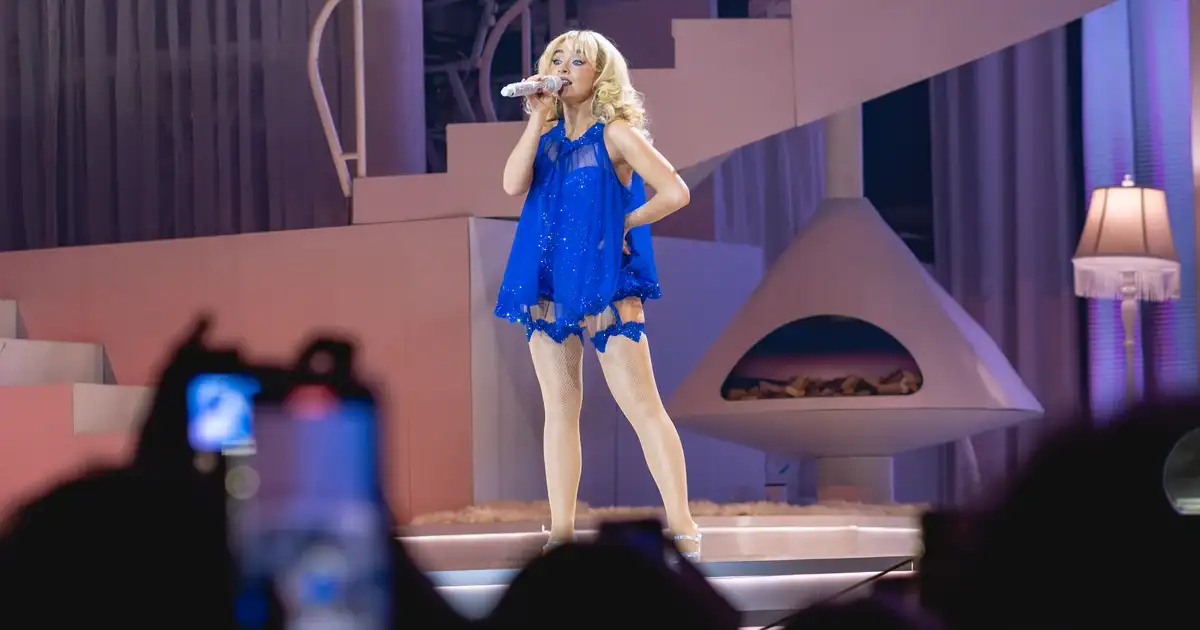

The glittering façade of pop stardom often obscures a chilling reality, and for Sabrina Carpenter, that reality just became terrifyingly tangible. She has secured a five-year restraining order against a man who breached the sanctity of her home, a legal victory that peels back the veneer on the high-stakes, often perilous, cost of fame.
This week, a court order finalized robust protections for Carpenter, shielding her until 2031 from Lucas James Worley, a 33-year-old accused of relentless, deeply disturbing stalking. It’s not merely a piece of paper; it’s a desperate attempt to reclaim a sliver of peace in a life constantly under scrutiny.

The Unseen Price of Stardom
Worley is now legally forbidden from approaching within 100 yards of Carpenter, a perimeter that encompasses her home, her vehicle, her workplace, and any venue where she might perform. He is also prohibited from any form of contact, direct or indirect, a mandate that speaks volumes about the lengths to which his obsession had stretched.
Carpenter’s legal team presented a compelling, almost cinematic, array of evidence. This included chilling security footage and a trove of messages detailing Worley’s persistent, invasive attempts to access her private residence in early June 2026.
He hadn’t merely stumbled upon her; he had reportedly traveled from another state, a pilgrimage fueled by a singular, unsettling intent: to meet her. One wonders at the mental architecture that allows such a journey to feel reasonable, even destined.
The singer articulated a profound, visceral fear for her safety and that of her family. She described incidents that caused her severe emotional distress, transforming the sanctuary of her home into a source of constant anxiety. To feel unsafe within one’s own walls is a violation no one should endure, least of all a young woman whose career thrives on public adoration.
“I am in constant fear for my safety and the safety of my family. This individual’s actions have caused me severe emotional distress and and have made me feel unsafe in my own home,” Carpenter stated in court documents.
This statement, stark and unvarnished, lays bare the psychological toll of such invasions. It offers a disquieting glimpse into the daily anxieties that plague public figures, a hidden burden often overshadowed by red carpets and chart-topping hits.
When Admiration Morphs into Menace
A natural, if disturbing, question arises: how frequently do these incidents blight the lives of celebrities? And what, if any, lasting consequences do these stalkers actually face? The answers, unfortunately, paint a rather bleak picture.
Celebrity stalking is not an anomaly but a disturbingly common fixture in the entertainment industry. A 2020 study by the University of Leicester revealed that public figures are statistically far more likely to become targets than the general population.
Many endure not just one, but multiple, terrifying incidents, a relentless psychological siege that few outside their gilded cages can truly comprehend. This recurring pattern often sparks public outrage and calls for stronger protections, yet the cycle persists.
The legal system, for all its ponderous gears and occasional blind spots, does offer some recourse. Violating a restraining order is not a trivial matter; it carries significant legal weight, potentially leading to immediate arrest, substantial fines, and even incarceration.
Depending on the severity and nature of the threats or violence involved, charges can escalate from misdemeanor contempt of court to felony stalking. The law, in theory, is a bulwark of protection, yet the emotional scars inflicted by such obsessions often prove far more intractable than any court order.
Beyond the Courtroom: Security, Scars, and Sanity
Many individuals who develop obsessive fixations on celebrities, particularly those who cross into stalking territory, often grapple with severe underlying mental health issues. Delusional disorders frequently complicate both legal proceedings and any attempts at rehabilitation, trapping victims and the justice system alike in a frustrating, challenging cycle. It’s a stark reminder that the problem is often deeper than mere malice, rooted in profound psychological distress.
For stars like Carpenter, a legal order is merely the first line of defense, a piece of paper against a determined mind. The true battle requires substantial investment in private security: round-the-clock bodyguards, fortified residences in gated communities, and sophisticated home surveillance systems that transition from luxuries to absolute necessities. These aren’t just perks of the job; they are vital bulwarks against the constant threat of intrusion.
The financial outlay for such comprehensive security can easily run into hundreds of thousands, even millions, of dollars annually. It’s a staggering financial burden, an invisible tax on fame, paid not for opulence but for the fragile hope of reclaiming some semblance of a normal, safe existence. Imagine having to budget for your personal safety on a scale most corporations reserve for their CEOs.
The psychological impact on victims is, predictably, profound and long-lasting. Even with the imprimatur of court protection, the insidious tendrils of anxiety and paranoia can linger, twisting the perception of safety.
A diminished sense of personal security often necessitates ongoing therapy and support. Fame, for all its perceived glamour, frequently demands a heavy, unseen emotional toll, a Faustian bargain where public adoration can invite private terror.
This isn’t a novel phenomenon. High-profile cases involving luminaries such as Taylor Swift, Selena Gomez, and Halle Berry have repeatedly illuminated this dark, persistent reality. Each incident underscores the urgent, undeniable need for robust legal protections and a more nuanced understanding of the forces at play. As a source close to Carpenter confirmed, “Sabrina is relieved to have this legal protection in place. It’s been a very unsettling time for her.” This simple statement speaks volumes about the immense stress these situations inflict, confirming that peace of mind, however fleeting, is truly invaluable.
The Blurry Line of Fandom and the Digital Abyss
This latest incident forces a crucial, often uncomfortable, conversation about the evolving nature of fan culture. It sparks renewed public debate: At what point does passionate admiration morph into dangerous obsession? In our hyper-connected, digital age, social media, while ostensibly bridging the gap between stars and their admirers, also inadvertently enables deeply concerning behaviors.
Personal information, once guarded, can now be easily unearthed with a few clicks. The illusion of direct access to public figures feels more attainable than ever to some, creating a toxic alchemy of perceived intimacy and profound delusion for unstable individuals. The distance between a fan and their idol has never felt shorter, and for some, that perceived proximity becomes an invitation to trespass.
Celebrities, consequently, must contend with an increasingly treacherous landscape. They are compelled to balance genuine engagement with their audience against the very real, often existential, risks that come with such visibility. Their privacy, once considered a fundamental right, feels constantly under siege, a casualty of a world where boundaries are increasingly blurred.
Sabrina Carpenter’s experience serves as a stark, urgent reminder for us all. Stalking is not an isolated incident but a pervasive issue, affecting millions, with public figures disproportionately targeted by its insidious reach. Legal actions like restraining orders are not just bureaucratic formalities; they are essential, albeit imperfect, tools in a constant fight for personal autonomy and safety.
This case is more than a news headline; it is a chilling cautionary tale, exposing the profound dangers lurking within obsessive fan behavior. It demands not just our attention, but our empathy and an unwavering respect for personal boundaries, both digital and physical. Sabrina Carpenter has fought for her safety and, for now, she has won a crucial battle. Yet, the relentless war against invasive obsession, a shadow cast by the very spotlight of fame, rages on for every public figure.
Source: Google News