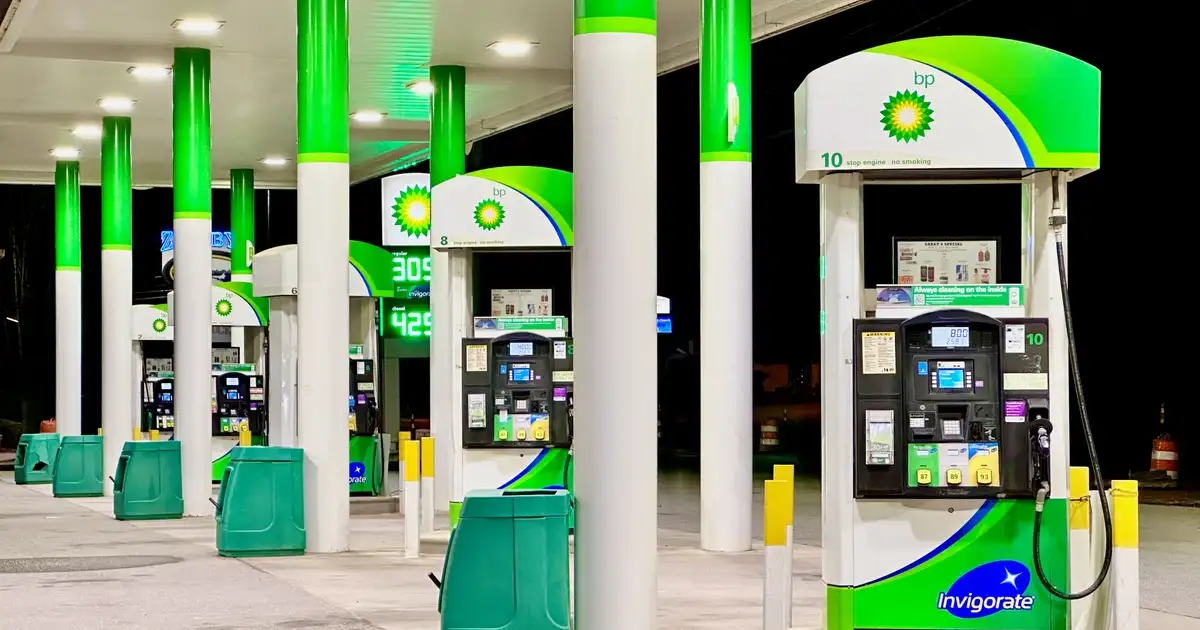

American drivers are breathing a collective sigh of relief, but they shouldn’t get too comfortable. Gasoline prices have finally dipped below $4 a gallon for the first time in over five months—a direct, if precarious, dividend from a provisional US-Iran agreement to reopen the crucial Strait of Hormuz. This deal might feel like a lifeline for strained household budgets, yet its inherent instability makes it a dangerous, high-stakes gamble for global energy markets.
The national average for regular gasoline registered at $3.98 per gallon on June 17, 2026, marking a significant psychological and economic threshold. This sudden and welcome decline was triggered by a breakthrough on June 16, 2026, when the United States and Iran forged a provisional agreement. The core of the deal guarantees safe passage for commercial ships through the Strait of Hormuz, the world’s most critical oil chokepoint.

In exchange for this maritime security, the U.S. has temporarily lifted specific financial sanctions, allowing Iran to access previously frozen funds. Crucially, Iran is also permitted to boost its crude oil output by an initial 500,000 barrels per day (bpd). This delicate arrangement, designed to cool regional tensions and global oil prices, is slated for review in a mere six months—a timeline that underscores its fragile, stop-gap nature.
Market reaction was both swift and unequivocal. WTI crude futures plummeted over 5%, settling at $72.50 a barrel, while Brent crude followed suit, falling to $76.80. The geopolitical risk premium, which had inflated prices for months, evaporated almost instantly, signaling a momentary détente in a volatile region.
A Fragile Truce in an Active War Zone
The most pressing question for anyone tracking global energy and geopolitics is starkly simple: How long can this last? The Strait of Hormuz is not merely a shipping lane; it is an economic artery, through which roughly 20% of the world’s oil supply transits daily. Any disruption there doesn’t just send ripples through markets; it unleashes immediate, seismic shockwaves.
This agreement offers a critical, albeit fleeting, pause—a moment of de-escalation in a region perpetually on edge. Yet, we must not mistake a temporary waiver for a lasting peace.
The underlying tensions between the US and Iran are not just deep-seated; they are actively inflamed. The US and Israel launched military strikes against Iran on February 28, 2026, and this conflict remains active and ongoing.
Forging a deal amidst active hostilities reflects both desperation and calculated risk.
Because this deal is provisional, a temporary waiver, it possesses an alarming capacity to unravel with breathtaking speed. Energy analysts, while acknowledging the immediate market upside, are rightly cautious.
“While this deal provides immediate market stability by removing a significant supply-side risk premium, the long-term geopolitical risks in the region remain. The market will be closely watching for compliance and any potential breakdowns,” commented John Smith, an energy market strategist at Bloomberg Intelligence.
His measured tone is a stark reminder that this isn’t a peace treaty; it’s a calculated gamble within an active warzone. The stakes are measured in both barrels of oil and human lives.
The world is holding its breath, watching whether both sides will adhere to their word. Any misstep could reignite hostilities and send prices soaring beyond recent peaks.
Who Wins, Who Worries?
Undoubtedly, American consumers are celebrating this morning. Lower gas prices inject much-needed capital back into household budgets, offering a welcome reprieve just as summer travel season kicks into high gear. Sarah Jenkins, a spokesperson for AAA, perfectly captured the prevailing mood:
“The dip below $4 is a welcome relief for American households, just in time for summer travel season, offering a much-needed boost to budgets.”It’s a tangible, immediate benefit that resonates deeply with everyday Americans.
The Biden Administration is, predictably, touting this as a significant diplomatic victory. It showcases a commitment to de-escalation and directly addresses the persistent specter of inflation, a major concern for voters. A senior State Department official, speaking to CNN on background, emphasized the strategic intent:
“This agreement underscores our commitment to de-escalation and ensuring the free flow of commerce through vital international waterways.”For the administration, it’s a political win that delivers immediate economic relief.
Iran, too, stands to gain substantially. The increased oil exports provide a vital economic lifeline, offering a crucial influx of revenue. Furthermore, gaining access to previously frozen funds is a significant boost for a nation under heavy international pressure. An Iranian Foreign Ministry spokesperson in Tehran framed it as a step toward broader engagement:
“This agreement facilitates legitimate economic activities for the Iranian people and is a step towards mutual understanding.”For Tehran, this deal provides a much-needed economic oxygen mask.
However, not everyone is applauding. US Republican critics are vociferously raising alarms, arguing this deal offers financial succor to Iran without adequately addressing its “malign activities” and persistent nuclear ambitions.
They have swiftly labeled it “appeasement,” a loaded term designed to galvanize opposition. This deep political division within the U.S. adds yet another layer of profound instability to the agreement’s already precarious future.
Can a deal survive such domestic ideological warfare?
Meanwhile, oil producers in OPEC+ face a significant dilemma. Iran’s increased output, even if initially modest, could flood the market and compel the cartel to reassess its own production quotas.
The potential for internal disagreements within OPEC+ is high, threatening the delicate balance they’ve maintained. Environmental groups are also sounding alarms.
They argue that cheaper gasoline will inevitably slow the critical shift to renewable energy, making ambitious climate goals even harder to achieve. The short-term relief for consumers comes with long-term environmental costs.
The Long Road Ahead for Oil Markets
The current drop in gasoline prices is undeniably significant for everyday Americans. Prices had peaked at a painful $4.55 per gallon in late May 2026, and the last time they were consistently below $4 was late January 2026. This sudden relief is a direct, tangible consequence of the perceived reduction in risk in the Strait of Hormuz, offering a much-needed psychological and economic balm.
Yet, the oil market remains a complex, unpredictable beast driven by a multitude of variables. The initial 500,000 bpd increase from Iran is merely a starting point.
If this agreement miraculously holds—and that is a colossal “if”—more Iranian oil could eventually flow into global markets, potentially pushing prices down further.
But the phrase “if it holds” hangs heavy over every projection, a constant reminder of the deal’s inherent fragility.
The temporary nature of this agreement means that volatility could return with brutal force at any given moment. Any perceived violation by either side, a new maritime incident in the Gulf, or even aggressive rhetoric from Tehran or Washington could instantly trigger a market panic, sending prices soaring once more.
The market, especially in a conflict zone, trades not just on supply and demand, but on sentiment and, above all, on fear.
This deal offers a brief respite, a momentary lowering of the immediate risk of major military escalation, cooling energy prices for now. But it fundamentally fails to solve the core, deeply entrenched issues.
The US-Iran relationship remains profoundly complex, fraught with historical distrust and geopolitical rivalry. The ongoing armed conflict adds layers of severe, almost insurmountable, instability to any diplomatic effort.
The stability of this agreement is not just questionable; it is an illusion. It is a tactical pause, a temporary truce, not a strategic shift towards lasting peace.
Consumers should indeed enjoy the lower prices while they last, but they must also remain acutely aware of the underlying volatility.
This deal is not built on solid ground; it is constructed on shifting sands, liable to crumble without warning, leaving us once again grappling with the harsh realities of a volatile world.
Source: Google News