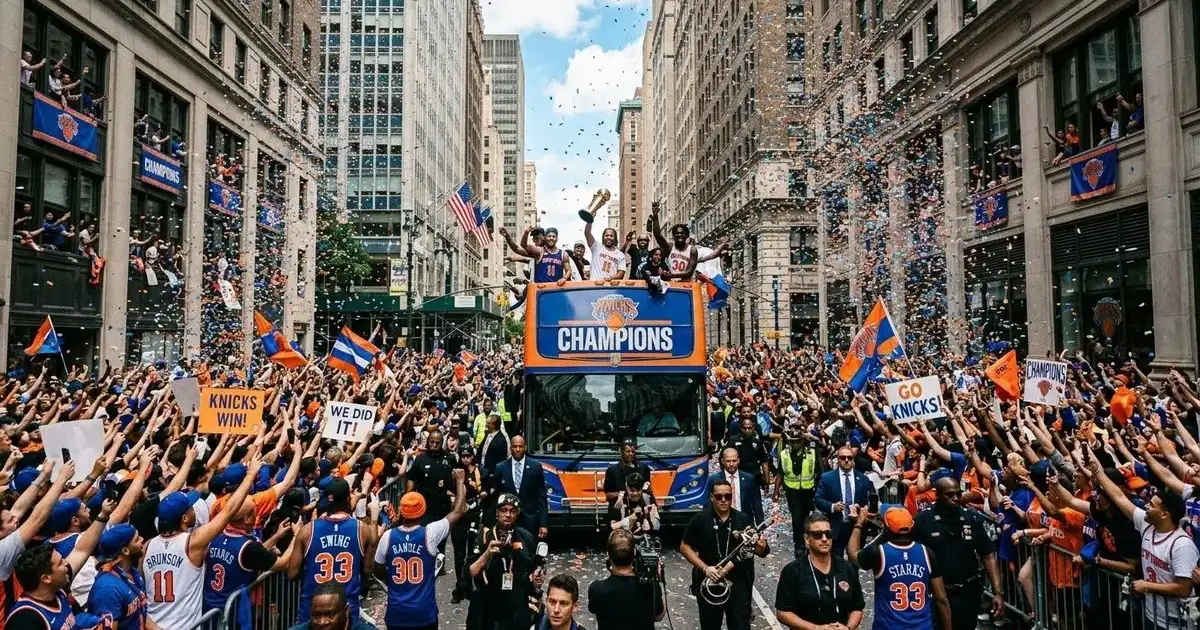

Manhattan wasn’t just celebrating a championship today; it was overrun, a strategic failure of crowd control that turned euphoria into a chaotic maelstrom. Knicks fans, unleashed after decades of waiting, swarmed the streets in numbers that defied every projection, transforming the city into an impassable orange and blue battlefield. This wasn’t merely a parade for their first NBA championship since 1973; it was a testament to the raw, unbridled power of collective passion, and New York paid a steep, tactical price for the party.
Millions poured into the borough, a human tide that obliterated every planned barrier. 10,000 NYPD officers, a formidable tactical squad, found themselves facing an unstoppable, emotional tsunami. Their attempts to cordon off the island, to manage the flow, were utterly overwhelmed. The sheer force of fan devotion rendered every defensive strategy moot. Emergency services, the city’s vital frontline, were stretched beyond their breaking point, battling the crush not just of bodies, but of a city’s pent-up yearning.

Manhattan’s Gridlock Meltdown: A Defensive Collapse
The city’s arteries, its famed streets, coagulated into an impassable sea of orange and blue. Every transit line choked, every subway car crammed, every bus route stalled. New York’s vaunted infrastructure, designed for resilience, buckled under the unprecedented weight of such massive crowds. This wasn’t just a celebratory procession; it was a total urban takeover, a complete loss of control. Police, once the orchestrators of order, struggled merely to maintain a fragmented semblance of it. Was there a playbook for this level of fan fervor? Clearly, the city’s strategists were caught flat-footed.
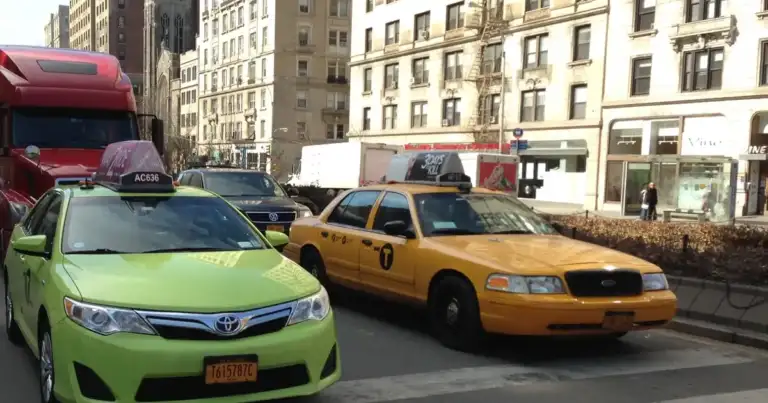
Traffic ground to a complete standstill for hours, a concrete monument to planning inadequacy. Essential services faced critical delays, their vital missions stymied by impassable avenues. Ambulances, sirens wailing in futility, struggled to reach those in urgent need. The city’s emergency response system, the bedrock of urban safety, was tested to its absolute breaking point, revealing gaping holes in its readiness. It was an epic display of fan devotion, yes, but also a catastrophic logistical failure, a defensive breakdown that allowed the opponent – in this case, joyous citizens – to run rampant.
“We planned for big crowds,” one NYPD captain, who declined to be named, told DailyNewsEdit. “But this… this was a different beast entirely. It was like every single fan decided to be here, all at once. We were playing defense against a tsunami, and the wave just kept coming.”
The Unseen Casualties of Victory: A Public Safety Interception
The celebration’s darker side, an inevitable consequence of unchecked chaos, quickly emerged. Dozens of Knicks fans were rushed to hospitals across the city, their day of triumph ending in emergency rooms. Reports cited severe heat exhaustion, minor injuries from the crushing crowd surges, and a regrettable number of alcohol-related incidents. The intoxicating joy of victory came with a tangible, painful cost for many attendees, transforming celebration into a medical emergency.
Emergency rooms, already operating at capacity, saw an unexpected, overwhelming surge in patients. Hospital staff, the unsung heroes of this urban drama, worked overtime, bracing for an escalating influx. This wasn’t just about celebrating a long-awaited title; it was about managing a burgeoning public health crisis unfolding in real time, a critical interception by the realities of mass gatherings. The thrill of victory, for many, was tragically masked by real danger and genuine suffering. Why were these risks not adequately mitigated?
- Dozens of fans sought urgent medical attention, overwhelming local facilities.
- Hospitals faced unprecedented strain, operating in crisis mode.
- Overcrowding led to dangerous, even life-threatening, conditions in the streets.
- City officials issued pleas for caution, but these warnings were utterly lost in the deafening roar of a city finally exhaling.
New York’s first NBA championship in over five decades sparked an unprecedented outpouring of emotion. Fans had waited their entire lives, some for generations, for this moment. They were not going to miss it, not for anything. The energy was palpable, a force of nature, but so too was the peril. The city, in its enthusiasm, failed to account for the sheer, unquantifiable weight of that collective longing.
A Long-Awaited Triumph, A Tactical Blunder?
For decades, the New York Knicks have been a punchline, a perennial underachiever, a team that couldn’t quite close the deal. Now, they’ve hoisted the Larry O’Brien trophy, bringing glory back to Madison Square Garden after a half-century drought. This parade was the culmination of generations of hope, a victory for the long-suffering faithful who never lost belief. It was a historic moment that deserved to be flawlessly executed.
However, the ensuing chaos raises not just questions, but demands answers. Was the city truly prepared for this kind of fan response, or did it grossly underestimate the depth of the Knicks’ appeal? Could more, much more, have been done to ensure public safety beyond mere deployment? The planning might have looked solid on paper, a well-drawn X’s and O’s diagram, but the execution failed spectacularly against the sheer numbers. This was not just a breakdown; it was a full-scale defensive collapse, a failure to anticipate the opponent’s true strength.
The team, featuring stars like Jalen Brunson, OG Anunoby, and Josh Hart, delivered a dream season, igniting a city starved for success. Their triumph was absolute. But the city’s response, while massive in its deployment, simply couldn’t contain the raw, explosive emotion of its populace. It was like trying to bottle a lightning storm with a flimsy cork, an impossible task without a truly robust strategy.
This long-awaited title was always destined to be epic. The Knicks roster delivered a dream. What followed was a harsh, unforgiving lesson in urban crowd dynamics and crisis management. The city was not merely overwhelmed; it was outmaneuvered by the very joy it sought to celebrate. The passion was undeniable, but the preparation was demonstrably insufficient.
The Price of Glory: A New Game Plan is Needed
The cleanup begins now, but the real work is just starting. The city must assess the damage, both physical and logistical, with the cold, hard precision of a post-game film review. What critical lessons can be learned from this unprecedented event? How can New York manage future mass gatherings of this scale without sacrificing public safety on the altar of celebration? This isn’t just about basketball; it’s about the fundamental integrity of our public safety infrastructure and the city’s ability to protect its own.
The true cost of this parade extends far beyond medical bills and strained police resources. It’s a stark, undeniable reminder that passion, when unchecked and poorly managed, can quickly turn dangerous. The victory is undeniably sweet, a taste of glory long overdue, but the aftermath is undeniably bitter for those caught in the crush, for the emergency services pushed to their limits. New York got its championship. It also received a harsh, undeniable reality check on crowd control, a glaring weakness exposed on its biggest stage.
The city’s leadership needs to huddle, and they need to do it now. They need a new game plan, a comprehensive strategy for managing not just disaster, but overwhelming joy. The Knicks won a title, but New York itself faced a formidable, unexpected opponent in its own celebratory citizens. This wasn’t just a win; it was a deafening wake-up call, demanding immediate, tactical adjustments before the next wave of triumph brings another, potentially greater, challenge.
Photo: Wikimedia Commons (query: New York knicks)
Source: Google News