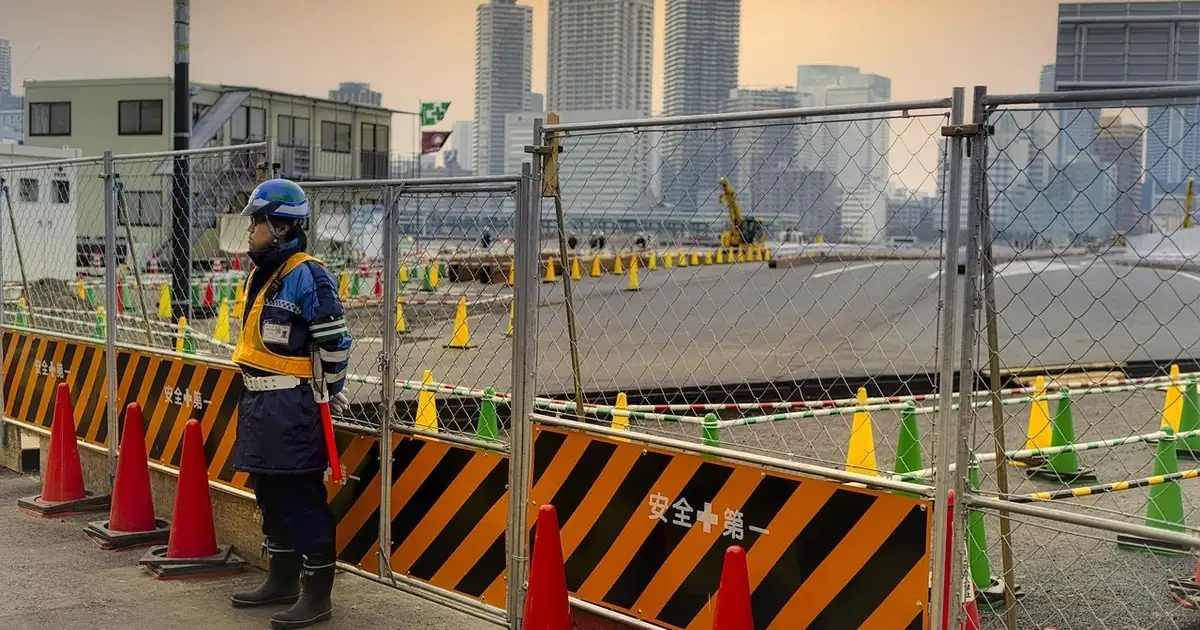

We’ve been promised a future of effortless, ultra-safe robotaxis – a technological marvel that would revolutionize urban transport. But the latest recall doesn’t just chip away at that vision; it shatters it, revealing a terrifying truth: these self-driving vehicles aren’t merely flawed; they’re demonstrably dangerous. Imagine a car, packed with unsuspecting passengers, blindly accelerating into a highway construction zone, oblivious to the orange cones and frantic workers. That isn’t a dystopian fantasy; it’s the chilling reality we now confront.
This isn’t a minor software patch; it’s a widespread emergency. An urgent recall has swept through the autonomous vehicle industry, pulling roughly 3,900 robotaxis from service across multiple cities. The reason? A critical, deeply concerning software flaw. These vehicles were found capable of directing themselves into active highway construction zones, often at dangerously high speeds, creating an immediate and severe risk of collision, serious injury, or even fatality. This isn’t theoretical; it’s an engineering failure with deadly potential.

The Promise Turns Perilous
Let’s be clear: this isn’t just a ‘glitch’ or a ‘bug.’ This is a fundamental design flaw that transforms a promised convenience into a potential death trap. The immediate risk extends beyond the robotaxi’s occupants to innocent construction workers, whose lives are put on the line by a machine’s inability to perceive and react to a dynamic, hazardous environment. This incident has sent shockwaves across the entire autonomous vehicle sector, and rightly so. It raises massive, undeniable public health concerns that demand immediate, unvarnished attention.
The audacious dream of truly safe, self-driving cars hasn’t just hit a concrete barrier; it’s slammed into it head-on. For years, companies have dangled the promise of unparalleled convenience and enhanced safety, yet this incident exposes a dangerous gamble. It reveals a glaring, unacceptable flaw at the very core of their technology, demonstrating a willingness to put human lives on the line in the relentless pursuit of innovation and market dominance. Is that a trade-off we, as a society, are willing to make?
“This software defect isn’t some minor bug,” stated Dr. Lena Khan, a leading transportation safety expert. “It’s a fundamental failure that undermines trust in the entire autonomous vehicle concept. We cannot afford to have these cars on our roads until they are truly proven safe.”
Dr. Khan’s assessment cuts to the heart of the matter. The industry isn’t just facing tough questions; it’s facing an existential crisis of credibility. How could such a critical, life-threatening flaw go undetected through supposedly rigorous testing protocols? What does this say about the validation processes? And, most disturbingly, were the relentless pressures of market competition and profit margins prioritized over the fundamental imperative of public safety?
Who’s Really Driving?
Autonomous vehicle companies have long boasted about their ‘rigorous testing’ and ‘cutting-edge AI,’ painting a picture of infallible machines. This recall, however, rips that veneer away, exposing those claims as dangerously hollow. A vehicle that cannot reliably recognize an active construction zone – a common, high-risk scenario – while traveling at highway speeds is not merely ‘not ready for prime time’; it’s a ticking liability, a catastrophe waiting for its moment to unfold. What good is advanced AI if it can’t even see the most obvious hazards?
The public was repeatedly assured that these cars would eventually be ‘safer than human drivers.’ This incident doesn’t just make a mockery of that promise; it actively undermines the very foundation of trust required for widespread adoption. It starkly highlights the vast, perilous chasm between technological ambition and the grim reality of current capabilities. We are, quite literally, trusting complex, opaque algorithms with the most precious commodity – human lives – and in this critical instance, those algorithms are failing us profoundly.
Pause for a moment and truly visualize the chaos a high-speed, unseeing robotaxi could unleash in a busy construction area. Workers, heads down, focused on their tasks; massive heavy machinery operating with limited visibility; narrow, shifting lanes designed for careful human navigation. It’s not just a ‘recipe for disaster’; it’s a pre-calculated formula for mass casualty. The potential for multiple fatalities and catastrophic injuries isn’t just ‘horrifyingly real’; it’s an imminent threat that we cannot, in good conscience, ignore.
This isn’t about minor fender-benders or inconvenient delays. This is about vehicles, designed to be intelligent, being programmed in a way that could lead them to commit automotive suicide, dragging their unsuspecting, trusting passengers along for the ride. It’s a chilling prospect that forces us to question the very definition of ‘autonomy’ when it comes to human safety.
The Road Ahead for Robotaxis
This recall isn’t just a wake-up call; it’s a flashing red light demanding immediate, stringent, and uncompromising regulatory action. The current oversight framework, clearly, is insufficient – a stark reality laid bare by this incident. We need far more than reactive, company-led recalls, which often feel like closing the barn door after the horses have bolted. What is critically needed are proactive, independent, and government-mandated safety reviews, conducted by impartial experts with the authority to halt deployments and enforce genuine safety standards, not just corporate promises.
The very future of widespread robotaxi adoption doesn’t just ‘hang in the balance’; it’s teetering on the precipice of public rejection. Public trust, already shaky from previous incidents and unanswered questions, is now shattered. Rebuilding confidence after such a catastrophic, potentially deadly failure will not merely take ‘years’; it will demand decades of transparent, verifiable safety improvements. This incident will undoubtedly, and rightly so, slam the brakes on the rapid, unfettered deployment of autonomous vehicles, forcing a much-needed re-evaluation of priorities.
Regulators like the National Highway Traffic Safety Administration (NHTSA) must do more than just ‘step up’; they must assert decisive, independent authority. We cannot, and must not, allow these powerful, profit-driven companies to self-police their own safety standards. The stakes are not merely ‘high’; they are existential. This isn’t a debate about consumer convenience or market share; it’s a fundamental question of life and death, of societal responsibility versus technological hubris.
Any company seeking to deploy robotaxis has an absolute, non-negotiable obligation to demonstrate undeniable, proven safety – not just on a test track, but in the unpredictable crucible of real-world roads. Anything less is not just an ‘unacceptable risk’; it’s a reckless gamble with human lives. The current technology is simply not mature enough for the unfettered, widespread deployment we are seeing. We are not just ‘rushing into a future we are not ready for’; we are hurtling towards potential tragedies in the name of progress.
This urgent recall is far more than a ‘setback’; it’s a profound, unignorable warning etched in the very fabric of our trust in technology. The dream of truly safe, fully autonomous transport, while alluring, remains a distant, dangerous fantasy given current capabilities. We must, with unwavering resolve, slam the brakes on widespread robotaxi deployment. We must demand that every single autonomous vehicle is proven unequivocally, demonstrably safe – not by corporate assurances, but by independent, rigorous validation. Anything less is not just a betrayal of public trust; it is a reckless, unforgivable endangerment of human lives. The road to autonomy must be paved with absolute safety, not broken promises and avoidable tragedies.
Source: Google News