
The Super El Niño is getting even STRONGER. New models confirm this, and experts are warning us this is just a “warm-up act.” Get ready for a world fundamentally changed, because what’s coming next will make past climate chaos look tame.
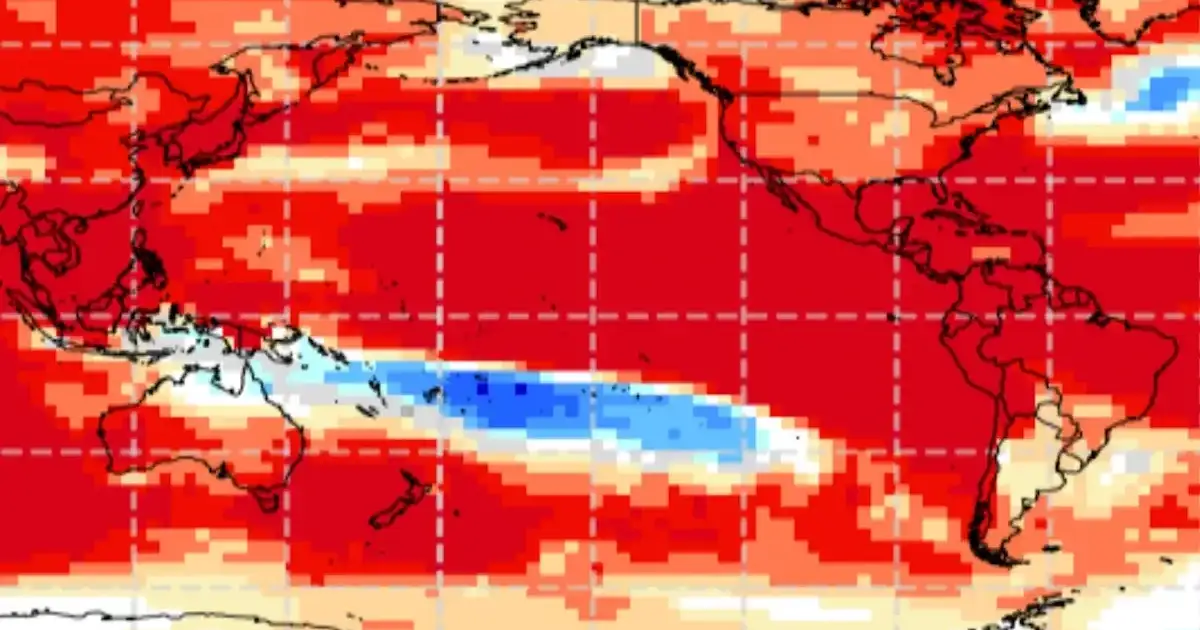
Recent data from NOAA and the European Centre for Medium-Range Weather Forecasts (ECMWF) shows sea surface temperatures in the Niño 3.4 region are soaring. They are now beyond initial projections for early August. This event is not just strong; it’s accelerating.
As of August 3, 2026, the weekly average SST anomaly hit +2.3°C. That blasts past the +2.0°C threshold for a “Super El Niño.” Just two weeks earlier, it was at +1.9°C. This is rapid, undeniable intensification.
“Warm-Up Act” Signals Bigger Trouble Ahead
Forget what you thought you knew about El Niños. This “warm-up act” isn’t a gentle introduction. It’s a preview of amplified climate events, both El Niños and La Niñas, for years to come. Dr. Anya Sharma, a lead climate scientist at the World Meteorological Organization (WMO), put it plainly.
“What we are observing now, while significant, is likely just a warm-up act. The underlying warming trend due to climate change is supercharging these natural cycles, meaning future El Niños, and even La Niñas, could bring even more severe and widespread impacts.”
This means we are entering uncharted territory. The impacts could surpass anything seen historically. Past events like the 1997-98 El Niño, which caused $35-45 billion in damages, might seem minor by comparison. This isn’t just about hotter summers anymore. It’s about a relentless cycle of extreme disruption.
Climate Change Amplifies the Chaos
This isn’t just nature doing its thing. Human-caused climate change is pouring gasoline on the fire. Experts confirm that this rapid intensification is not solely natural. Our activities are adding more energy and moisture to the global climate system. This makes extreme events far more potent.
The atmospheric coupling is already strong. This means El Niño’s influence is spreading far beyond the Pacific. Global wind patterns and rainfall distribution are already shifting. This is a critical sign of a truly powerful and far-reaching event.
The WMO now places the probability of this El Niño reaching “historically strong” levels at 75%. That’s up from 60% in mid-July. The planet is already warmer than ever. This El Niño is pushing global average temperatures closer to the 1.5°C Paris Agreement limit. 2026 will likely be one of the warmest years on record.
Brace for the Double Whammy
The real kicker? This Super El Niño could be followed by a rapid flip to a strong La Niña. La Niña brings opposite but equally severe impacts. Think increased Atlantic hurricane activity. Imagine droughts in South America. Picture heavy rainfall in Southeast Asia.
This creates a relentless, dizzying cycle of climate disruption. It leaves no time for recovery. Disaster management agencies are already activating preparedness plans. They are focusing on early warning systems. They are pre-positioning resources. They know what’s coming.
Public health officials are bracing for a wave of crises. Expect outbreaks of vector-borne diseases like dengue and malaria. Heat-related illnesses will surge. Malnutrition will increase from widespread crop failures. This isn’t fear-mongering; it’s a stark reality.
The Real-World Consequences Hit Home
For everyday people, this isn’t just a science report. It means higher health risks. Think more heatstroke and respiratory issues from wildfires. Infectious diseases will spread faster. Our healthcare systems will be strained to their breaking point.
Food prices will skyrocket. Droughts and floods decimate crops. This impacts everyone, especially vulnerable nations. Water shortages will become critical in some areas. Energy demands for cooling will strain utilities. Your household budget will feel the squeeze.
Extreme weather will displace entire communities. Humanitarian crises will explode. Aid organizations will face unprecedented pressure. This isn’t a distant problem for future generations. This is happening now, and it’s only going to intensify.
“We are actively working with health ministries in vulnerable regions to pre-position medical supplies and enhance disease surveillance,” stated Dr. Lena Hansen, Director of Global Health Initiatives at the World Health Organization. “The health impacts of this El Niño could be profound, particularly with regard to vector-borne diseases and malnutrition.”
The “warm-up act” is over. We are now in the main event. We must adapt, mitigate, and prepare for a future where climate extremes are the new normal. Ignoring this reality is no longer an option.
Source: Google News