
For generations, the great white shark reigned supreme, a symbol of raw power and the undisputed apex predator of the ocean. But forget everything you thought you knew about marine hierarchies. Recent, chilling evidence confirms a seismic shift: the great white’s crown has been violently seized.
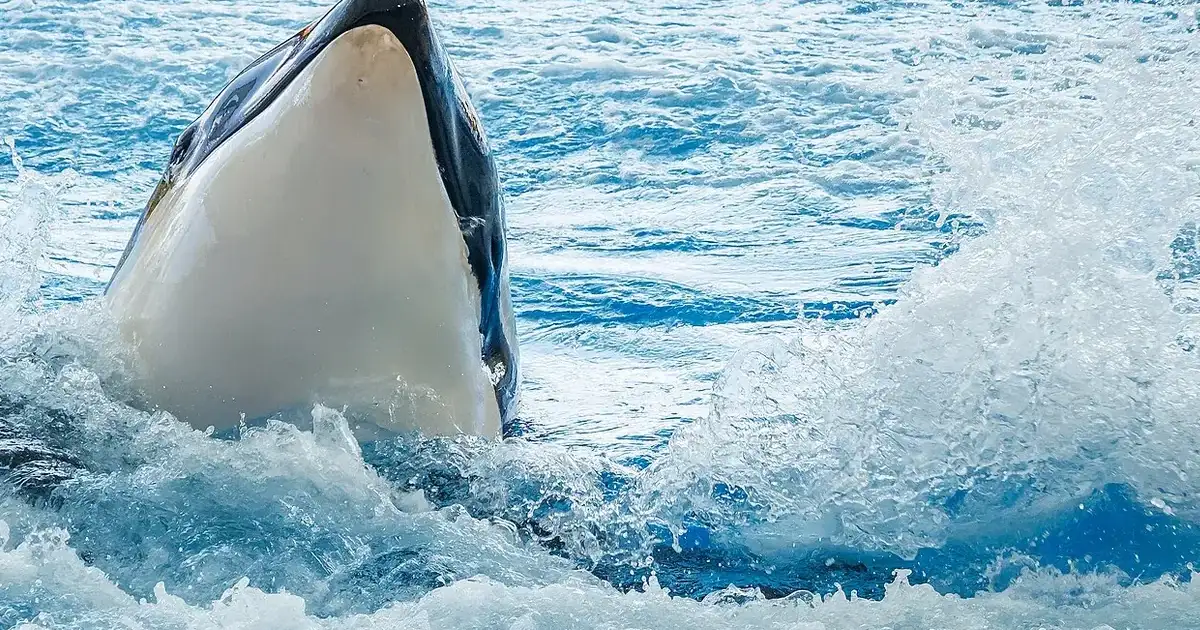
Orcas, with their terrifying precision, are systematically hunting these majestic sharks, not for sport, but to surgically extract their nutrient-rich livers. It’s a brutal, calculated masterclass in predation that has redefined our understanding of the deep.
The full, brutal truth has been laid bare through unprecedented drone footage and sophisticated tracking data, much of it emerging from groundbreaking research published this year. What these observations reveal is not random aggression, but a highly sophisticated, multi-stage hunting strategy employed by orcas. Their target is singular and precise: the massive, oil-rich livers of great white sharks, a prize that fuels their immense energy needs.
The Hunt: Surgical Strike by the Sea’s Smartest
This isn’t some random act of violence; it’s a coordinated, intelligent hunt. Orca pods operate with military-like precision, working in concert to isolate their chosen prey.
In South Africa, specific, notorious individuals like the duo known as Port and Starboard have become synonymous with these attacks, often leading the charge. These aren’t just names; they represent a specialized skill set, passed down and refined.
What truly shocks marine biologists and casual observers alike is the chilling efficiency of their incapacitation technique. Orcas don’t just attack; they strategically disable.
They ram the great white, often with incredible force, then skillfully flip the colossal shark onto its back. This triggers a phenomenon known as “tonic immobility” – a natural, trance-like state that renders the shark utterly helpless, effectively paralyzing it. It’s like watching a master chess player execute a perfect checkmate.
With the great white rendered immobile, the orcas proceed with a remarkably precise, almost surgical, incision. They target the area near the pectoral fins, a vulnerable spot that grants direct access to the liver.
This isn’t a messy, chaotic feeding frenzy. It’s a clean, efficient extraction of a high-energy, high-fat prize. The level of anatomical understanding and coordination required for such a maneuver is staggering.
Why the liver? This organ is a powerhouse, packed with squalene oil and vital nutrients. It can constitute an astonishing 25% of a great white shark’s entire body weight, making it an unparalleled source of energy and fat for the orcas.
The rest of the shark’s massive carcass, often weighing hundreds of kilograms, is typically left to sink or be scavenged by other creatures. This selective predation underscores the specific nutritional motivation behind these hunts.
Great Whites: From Apex to Prey
For decades, the great white shark was considered the ocean’s ultimate predator, a creature without peer at the very top of the food chain. The mere thought of one being hunted by anything other than humans was almost unthinkable.
Now, that perception has shattered. They are clearly at a profound disadvantage, and their reign as the ocean’s undisputed killer is unequivocally over.
This isn’t random, opportunistic hunting; it’s a highly specialized, learned technique. We’re witnessing cultural transmission in action, as specific orca pods meticulously pass this deadly skill down through generations. This reflects their ongoing adaptation, refinement, and collective intelligence, evolving their methods to exploit a rich, accessible food source.
The behavioral impact on great white sharks is nothing short of dramatic, even terrifying. When orcas are detected, great whites don’t just retreat; they flee in a panic, abandoning traditional aggregation sites within hours. This isn’t a temporary absence; sometimes, these apex predators do not return to their favored hunting grounds for months, leaving behind what marine biologists describe as “ghost towns” of the deep.
The evidence is grim and undeniable. Studies have documented dozens of great white carcasses washing ashore, all bearing the tell-tale signs: precise incisions and the complete absence of their livers.
Places like Gansbaai, South Africa, once renowned for its shark populations, have become hotspots for these macabre discoveries, offering a stark visual demonstration of the orcas’ destructive efficiency.
Ecosystem Shake-Up: Ghost Towns of the Deep
As a scientist, I’m watching the long-term consequences of this phenomenon with a mix of awe and deep concern. A significant drop in great white populations due to this predation isn’t just a curiosity; it changes everything.
It will inevitably have cascading effects on other species, potentially altering predator-prey dynamics throughout the food web. The delicate balance of marine ecosystems, honed over millennia, could shift dramatically and unpredictably.
The ripple effects are already being felt. Beyond the ecological implications, this shift in shark distribution directly impacts vital eco-tourism industries that rely on shark sightings, as well as crucial research efforts into great white behavior and conservation.
What happens when a top predator, once thought invulnerable, is forced out of its prime habitat? The entire food web, from the smallest fish to other large marine mammals, will undoubtedly feel the profound consequences.
Orcas are effectively dictating the terms of engagement, forcing great whites into less optimal, perhaps riskier, habitats. This displacement inevitably impacts their own hunting success, potentially leading to a decline in their overall health and reproductive rates. It’s a stark reminder that even the most formidable creatures are subject to the relentless pressures of natural selection.
This is the raw, brutal reality of nature, unvarnished and unapologetic. It fundamentally challenges our long-held perceptions of “apex predators” and the stability of marine food webs.
Even the most feared creatures can become prey, and the ocean’s hierarchy, far from being static, is in a constant, dynamic state of flux, shaped by intelligence, adaptation, and sheer power.
Orca Intelligence: A Chilling Masterclass
This highly specialized hunting behavior profoundly demonstrates the incredible intelligence and advanced cognitive abilities of orcas. They are not merely instinct-driven predators; they are constantly learning, adapting, and refining their deadly methods, demonstrating a level of strategic thinking that continues to astound scientists.
The unprecedented drone footage, combined with years of tracking data, offers us an intimate, almost terrifying, look into the full scope of their strategic prowess. Orcas continue to surprise scientists with their adaptability, problem-solving skills, and capacity for innovation. They are, without question, the ocean’s true masters.
While anecdotal reports existed earlier, this phenomenon was first widely and systematically documented in the mid-2010s off South Africa. Before these observations, adult great white sharks were largely considered safe from predation by anything other than their own kind, or occasionally, large groups of other marine mammals.
This discovery has fundamentally rewritten our understanding of marine food webs and the complex interactions within them.
While the focus here is on great whites, similar, though perhaps less frequent, liver-hunting behaviors have been observed targeting other shark species in different parts of the world. This suggests that while it might be a specialized skill, it could be far more widespread among orca populations than we initially believed, hinting at a global shift in marine predator dynamics.
The ocean has undeniably found a new ruler, and it is the orca, reigning supreme with terrifying efficiency and unparalleled intelligence. This isn’t just a story about one predator displacing another; it’s a stark reminder of nature’s raw, evolving power and the constant, brutal dance of life and death beneath the waves.
What other long-held truths about our planet’s wild places are yet to be shattered? For the great white shark, once the king, the future is now defined by vigilance, flight, and perhaps, a primal fear it never knew it could feel.
Source: Google News