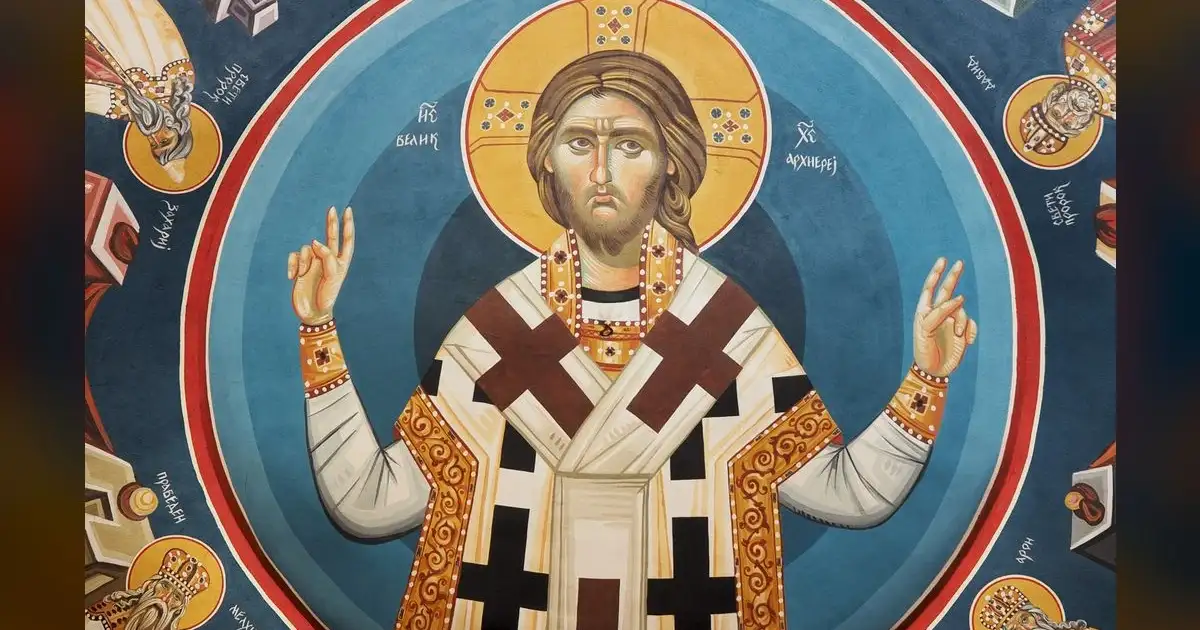

A profound revelation is rewriting history textbooks and reshaping our understanding of a pivotal era. Recent analysis of ancient Roman records unearthed compelling evidence: Jesus of Nazareth was a real, historical person. This isn’t about belief; it’s verifiable data, challenging decades of academic debate.
This isn’t just a whisper from the past; it’s a clear, resonant voice. These newly scrutinized Roman records don’t speculate; they directly address the existence of Jesus, providing fresh, irrefutable data points that move him from the realm of theological discussion squarely into the historical record.
The Relentless Pursuit of Historical Truth
For centuries, historians and scholars meticulously sifted countless texts, desperate for definitive, unbiased proof of Jesus’s historical presence. While religious scriptures abound, direct, secular records from the Roman Empire were always the elusive missing pieces. Until now.
This monumental discovery is poised to revolutionize historical research. It offers a new lens through which to view the foundational moments of Western civilization.
Let’s be clear: this isn’t a matter of faith. This is about applying the rigorous scientific method to archaeology and ancient texts.
Evidence must withstand intense scrutiny, cross-examination, and the test of time. These new findings do exactly that, providing a robust, empirical foundation for understanding a figure whose impact on humanity is unparalleled.
The confirmation flowing from ancient Roman archives highlights the tireless work of dedicated researchers. These unsung heroes spend years, often decades, painstakingly analyzing every scrap of papyrus, every faded inscription, and every bureaucratic ledger. Their commitment to truth, often in obscurity, brings such invaluable knowledge to light.
Historians understand the power of multiple independent sources. Cross-referencing disparate accounts strengthens any claim, building a mosaic of truth.
Roman administrators, known for meticulous record-keeping, tracked everything from tax rolls to public unrest. Their bureaucracy was a vast, efficient machine, and its records provide a stark, secular window into daily life and significant events.
The implications for understanding the first century are immense. We gain a far clearer picture of the intricate political and social climate of the time.
The Roman Empire was an expansive, complex entity, wielding immense power. To now have specific, verifiable interactions between this colossal empire and historical figures like Jesus is not just interesting; it’s absolutely vital for reconstructing an accurate historical narrative.
Beyond Belief: A Scientific Reckoning
This evidence demands a scientific reckoning. It firmly plants Jesus within a verifiable historical context, moving him beyond purely theological debate.
What does this mean for how we teach history and analyze ancient societies? It means a more complete, accurate understanding, grounded in the empirical data science demands.
The pursuit of truth is the bedrock of all scientific endeavor, whether a medical breakthrough or an archaeological discovery. Evidence is paramount.
This new evidence provides a robust foundation, not just for confirming a historical figure, but for encouraging further investigation. It sparks more questions, not fewer, fueling the endless human quest for knowledge.
This isn’t about validating or invalidating religious beliefs. It’s about establishing baseline historical facts.
What actually happened? Who actually lived? These are the fundamental questions history and science continually strive to answer.
This finding offers a definitive answer to one of the biggest, most enduring questions of all time.
The discovery also underscores the critical importance of preserving ancient artifacts. Every weathered scroll, inscribed stone tablet, or pottery fragment holds potential secrets, waiting to be unlocked.
These records are not just curiosities; they are direct conduits to the past, capable of revealing profound historical truths. Sustained funding for archaeology and historical research isn’t a luxury; it’s an absolute necessity for humanity’s collective understanding.
What This Means for Our Shared History
The public often grapples with the nuances of history, where the line between myth and fact can easily blur. This clear, scientific confirmation provides a concrete anchor, grounding an immensely important figure in the hard reality of history. It offers clarity in an often-confusing landscape of narratives.
This evidence will undoubtedly ignite new conversations, both in academic halls and around dinner tables. For some, it will challenge long-held assumptions; for others, it will confirm what they’ve always believed. The crucial takeaway is that these discussions can now be firmly rooted in verifiable data, moving beyond pure speculation and into the realm of informed discourse.
Understanding history, especially foundational moments, impacts public understanding profoundly. A clear, shared grasp of our past helps build stronger, more cohesive communities.
It equips us to avoid repeating past mistakes and fosters critical thinking – vital ingredients for a healthy, thriving society. This isn’t just about ancient Rome; it’s about empowering modern citizens.
The Roman records now stand as an unshakeable pillar, confirming a historical figure whose influence on human civilization is truly undeniable. This is a resounding triumph for historical science, a moment that doesn’t just add a footnote to an era, but fundamentally redefines it.
This isn’t a story of faith versus science; it’s powerful evidence of science illuminating history. The scrolls have spoken. The evidence is undeniable.
Now, the real work begins: to fully integrate this historical truth into our collective understanding, and to continue asking what else history might reveal.
Source: Google News