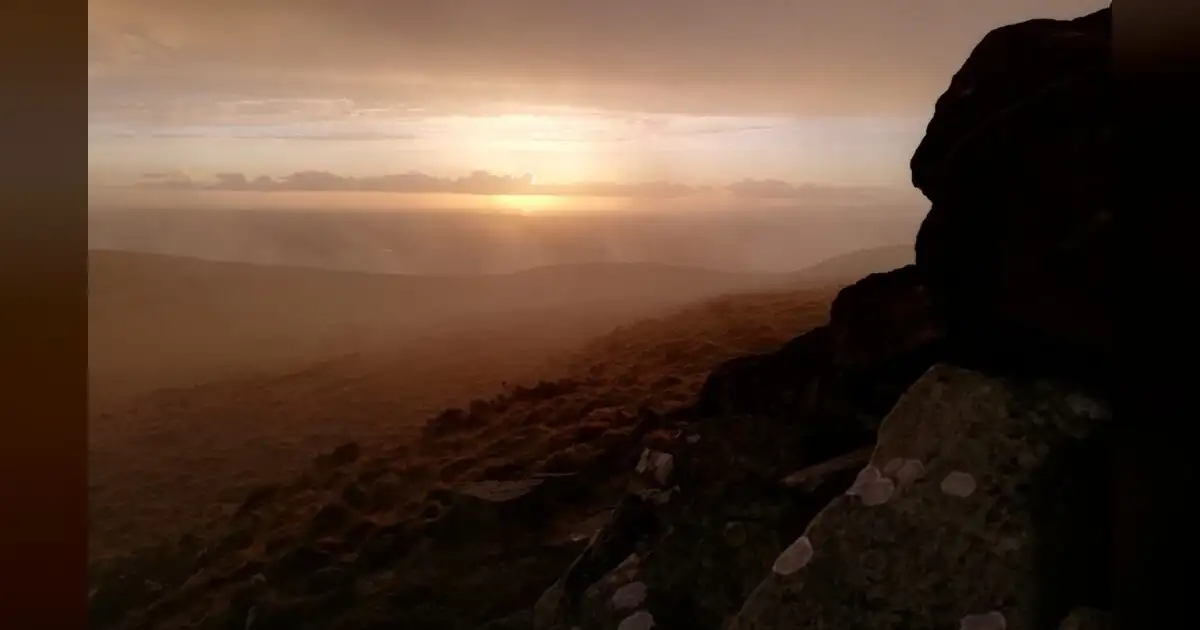

Brace yourselves. A colossal cloud of Saharan dust isn’t just coming; it’s already on its way, bringing lung-shredding particles directly to your doorstep. Forget the romanticized notion of a “pretty sunset”; this is a serious, immediate health threat for millions across the United States.
This enormous Saharan dust plume, born from the scorched, arid reaches of North Africa, is making its relentless journey across the Atlantic. Forecasters confirm this dense Saharan Air Layer (SAL) is barreling towards the US Gulf Coast and southeastern states. Prepare for skies choked with haze, visibility dropping like a stone, and air so thick with particulate matter you’ll feel it in your chest.

The Gritty Invasion Begins
This monolithic cloud departed West Africa roughly a week ago, a silent, airborne invader. Satellite imagery has tracked its steady westward march across the ocean. Its leading edge will slam into the Caribbean in the next 24-48 hours. By late Wednesday or early Thursday (June 24-25), the Gulf of Mexico, then the U.S. coast, will be smothered under its gritty, suffocating blanket.
States like Florida, Louisiana, Mississippi, Alabama, and Texas are not just on alert; they’re in the crosshairs. The National Weather Service (NWS) offices in these regions are already scrambling to issue special weather statements. Air quality alerts aren’t just going out; they’re screaming warnings across the airwaves.
Your Lungs, Their Battleground
This isn’t about a thin film of dust on your car. This is about your very ability to breathe. Public health officials, for once, aren’t just crying wolf – they’re yelling about the microscopic assassins known as fine, lung-penetrating particulate matter, specifically PM2.5 and PM10. These particles are not just small; they are insidious.
These microscopic particles can easily enter the respiratory system, exacerbating conditions like asthma, allergies, and chronic obstructive pulmonary disease (COPD). We urge vulnerable populations to take precautions.
Consider this: normal PM2.5 levels typically hover below 12 micrograms per cubic meter. This dust event could catapult them to a terrifying 35-55 µg/m³ or even higher. That’s not just a jump; it’s a leap into “unhealthy” territory for anyone with a compromised respiratory system, and a severe test for everyone else.
Defending Your Airspace
So, what’s your move? You can’t stop the dust storm, but you can protect your personal airspace. Health officials are unequivocal: stay inside. Keep your windows and doors sealed tight as if preparing for a siege. Run your air conditioning, but ensure it’s equipped with a clean, high-efficiency filter to cycle cleaner air through your sanctuary.
Monitoring the EPA’s AirNow website isn’t just recommended; it’s essential. Your local news outlets will also provide real-time Air Quality Index (AQI) updates. If the AQI hits “Unhealthy for Sensitive Groups” or worse, all outdoor plans are off the table. Period. No exceptions. Your lungs are not worth the risk.
If you absolutely, unequivocally must venture out into the gritty haze, an N95 or KN95 mask isn’t optional; it’s essential. These masks are engineered to filter out the insidious PM2.5 particles – the very ones that burrow deep into your lungs, causing the real, lasting damage.
The Unseen Enemy: Microscopic Mayhem
Let’s be brutally honest about the specific health risks. These particles are tiny, but their impact is mighty. They don’t just irritate; they trigger violent asthma attacks. They worsen bronchitis. You could experience debilitating shortness of breath, agonizing eye irritation, and a significantly increased susceptibility to respiratory infections.
For individuals with asthma or other respiratory conditions, it’s crucial to stay indoors, keep windows closed, and ensure you have your prescribed medications readily available. This is not a drill; it’s a public health emergency.
Even for those who boast robust, healthy lungs, prolonged exposure is a dangerous gamble. Individuals with heart conditions face increased cardiovascular stress, pushing their systems to the brink. Stay hydrated. And if symptoms escalate, don’t hesitate – see a doctor immediately. This isn’t a minor inconvenience; it’s a genuine threat to life and limb.
Beyond the Haze: A Devil’s Bargain
Meteorologists at NOAA’s Atlantic Oceanographic and Meteorological Laboratory (AOML) are tracking this beast with grim fascination. Dr. John Hinson noted this plume is “particularly expansive.” It possesses a strange, almost paradoxical power: it can suppress tropical cyclone development, which sounds like a win. But that benefit comes with an immediate, undeniable downside: a devastating hit to air quality across vast swathes of the continent.
Past “Godzilla dust clouds” in 2020 and 2022 brought similar widespread haze and abysmal air. They also carry mineral nutrients that fertilize the Amazon rainforest, a fascinating ecological detail. But what comfort is that when your lungs are burning, and every breath feels like sandpaper? The trade-off is stark and clear: fewer hurricanes, more respiratory suffering.
Visibility will plummet, impacting aviation and maritime activities. While no major disruptions have been declared yet, don’t count on crystal-clear skies. This is nature’s raw, unfiltered reminder that we are all just breathing her air, whether we like its quality or not. The dust doesn’t care about your weekend plans, your health insurance, or your politics. It just is.
This massive dust cloud is not merely a weather report; it’s a direct, undeniable threat to public health. Take these warnings seriously. Protect your lungs, because when the air turns toxic, nobody else will fight for your every clean breath. The choice, as always, is yours – but the consequences are universal.
Source: Google News