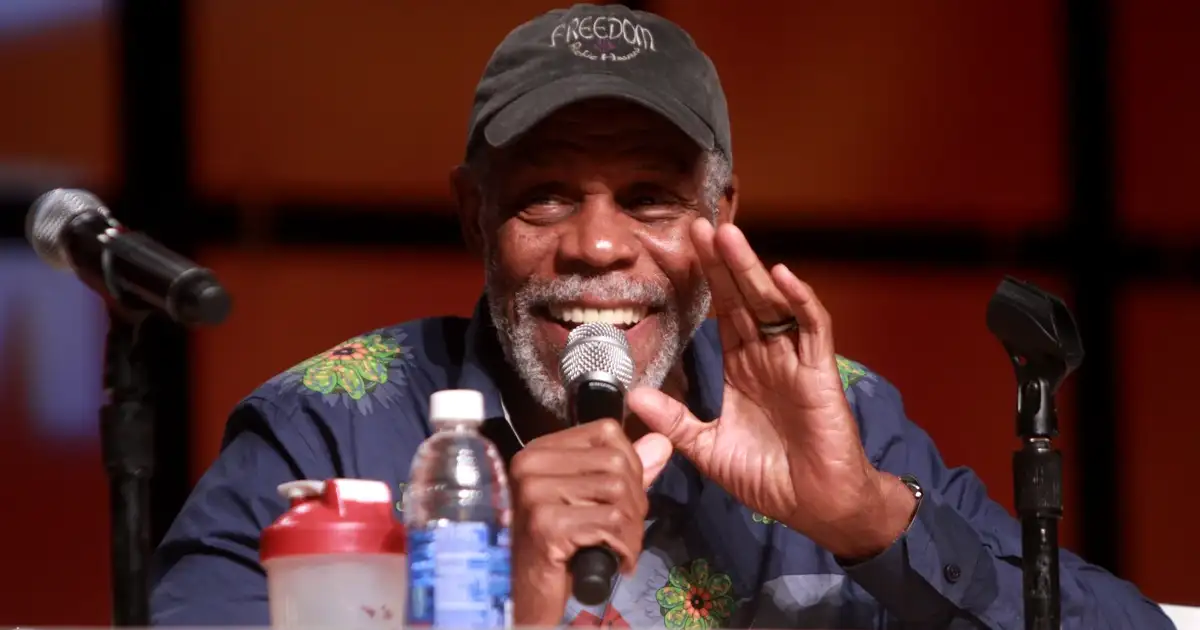

The news hit with the force of a gut punch: Danny Glover, the iconic actor whose powerful presence has graced screens for decades, has revealed he is living with Alzheimer’s disease. At 79, this isn’t just a celebrity headline; it’s a stark, deeply personal reminder of the fragility of our minds and the silent battle millions wage against this insidious disease. It forces us all to confront a reality we often prefer to ignore.
Glover, known for his unwavering conviction both on and off screen, now faces perhaps his most challenging role. Alzheimer’s isn’t merely “forgetfulness”; it’s a progressive, relentless brain disorder that systematically erodes memory, thinking skills, and ultimately, a person’s very essence. His public revelation isn’t just news; it’s a clarion call, shining a harsh, necessary light on a widespread struggle that demands urgent attention and action from every one of us.

The Unseen Battle: Alzheimer’s Robbing Identity
This diagnosis transcends the individual. It’s about a disease that doesn’t just take away memories; it systematically strips individuals of their identity, their independence, and the ability to connect with the world around them.
Imagine waking up one day and finding the familiar landscape of your mind slowly dissolving, taking with it the stories, the faces, the very fabric of who you are. That is the devastating reality of Alzheimer’s.
As the most common cause of dementia, Alzheimer’s affects over 6 million Americans – a number projected to skyrocket to nearly 14 million by 2060 if current trends hold. This isn’t just a statistic; it’s a looming public health catastrophe.
The disease doesn’t merely cause memory loss; it attacks brain cells, leading to profound confusion, personality changes, difficulty with language, and a gradual loss of all cognitive function. The emotional and financial burdens on family caregivers are immeasurable, often leading to burnout and profound grief long before a loved one is physically gone.
Currently, there is no cure for Alzheimer’s. Existing treatments can, at best, offer limited relief by slowing progression or managing symptoms. They are not a solution, but a temporary reprieve.
When a figure of Danny Glover’s stature steps forward, it doesn’t just change the conversation; it puts a human face to a condition too often hidden in the shadows. It compels us to look, to understand, and to confront this reality head-on, not as a distant threat, but as an immediate crisis.
A Ticking Clock: The Public Health Crisis We Can’t Ignore
Glover’s announcement underscores a critical public health crisis already at our doorstep. Our rapidly aging global population means an ever-increasing number of people are at risk, and frankly, we are woefully unprepared for the tidal wave that is coming. The economic toll alone is staggering, with estimated annual costs in the hundreds of billions of dollars for care in the U.S. alone – a figure that will only climb higher, threatening to overwhelm healthcare systems and national economies.
But beyond the fiscal numbers lies an ocean of human suffering. Families are forced to watch loved ones slowly fade away, grappling with impossible choices and an endless, anticipatory grief.
This isn’t a private struggle confined to individual homes; it is a profound societal challenge that demands collective action, and it demands it now. Why do we hesitate when the stakes are so high?
Medical experts, including those at institutions like the Mayo Clinic, consistently emphasize the importance of early diagnosis. It allows for crucial planning, provides access to support networks, and offers the best chance to participate in clinical trials for emerging therapies.
Yet, a pervasive stigma surrounding dementia often causes individuals and families to delay seeking help, fearing judgment or the stark reality of the diagnosis itself. Glover’s openness isn’t just brave; it’s a powerful blow against this stigma, potentially encouraging countless others to seek testing and support earlier.
Beyond the Headlines: Supporting Danny Glover and Every Family Fighting Alzheimer’s
For Danny Glover, this diagnosis marks the beginning of a profoundly challenging new chapter. It will require immense strength, unwavering resilience, and the steadfast support of his family and close friends.
Living with Alzheimer’s means a constant process of adjusting daily life, accepting new limitations, and finding solace and connection in moments of clarity. It’s a journey no one should have to walk alone.
His courage in sharing this deeply personal news is truly admirable. It will undoubtedly empower countless others who feel isolated or ashamed by their own diagnosis or that of a loved one.
By lending his voice, Glover offers a beacon of hope and solidarity to those who often feel unseen and unheard. The entertainment industry has, over the years, seen other beloved figures battle dementia, and their stories have consistently sparked vital discussions. Glover’s story will be no different, amplifying the urgency of this conversation.
As a society, we have a responsibility to ensure that comprehensive resources are readily available. Patients and their caregivers desperately need access to support groups, up-to-date educational materials, respite care services, and financial planning assistance. This fight is not fought in isolation; it takes an entire community rallying around those affected by this terrible disease, offering practical help and profound empathy.
Our Moral Imperative: Investing in a Future Free from Alzheimer’s
The scientific community, from researchers at institutions like the National Institutes of Health to biotech startups, works tirelessly, day and night, hunting for breakthroughs. We desperately need new treatments that can halt or reverse the disease, and ultimately, a cure. Every dollar invested in Alzheimer’s research is not just an expenditure; it’s an investment in the future, offering hope for generations to come.
New discoveries are happening constantly, with scientists learning more about the complex mechanisms of brain function and identifying promising new drug targets, from amyloid plaques to tau tangles, and even exploring genetic interventions.
Alongside this, preventative strategies are gaining traction. Lifestyle choices profoundly impact brain health: a balanced diet, regular physical exercise, consistent mental stimulation, and robust social engagement all play crucial roles in reducing risk. These aren’t just suggestions; they are actionable steps we can all take.
This is undeniably a race against time. The longer we wait, the more lives are irrevocably altered, the more families are shattered, and the greater the societal burden becomes. We simply cannot afford to be complacent.
Danny Glover’s announcement forces us to look beyond the headlines, to feel the profound impact, and to demand more from our leaders, our researchers, and ourselves.
We owe it to him, to the millions currently living with Alzheimer’s, and to all future generations. We must accelerate the search for a cure with every resource we can muster. There is simply no other acceptable option.
Let Danny Glover’s courage be the catalyst for a renewed, unwavering commitment to eradicating this devastating disease once and for all.
Photo: Wikimedia Commons (query: Danny Glover)
Source: Google News