
President Trump Demands Gas Stations Cut Prices to $2.50 ‘Immediately,’ Warns of ‘Big Problems Ahead’
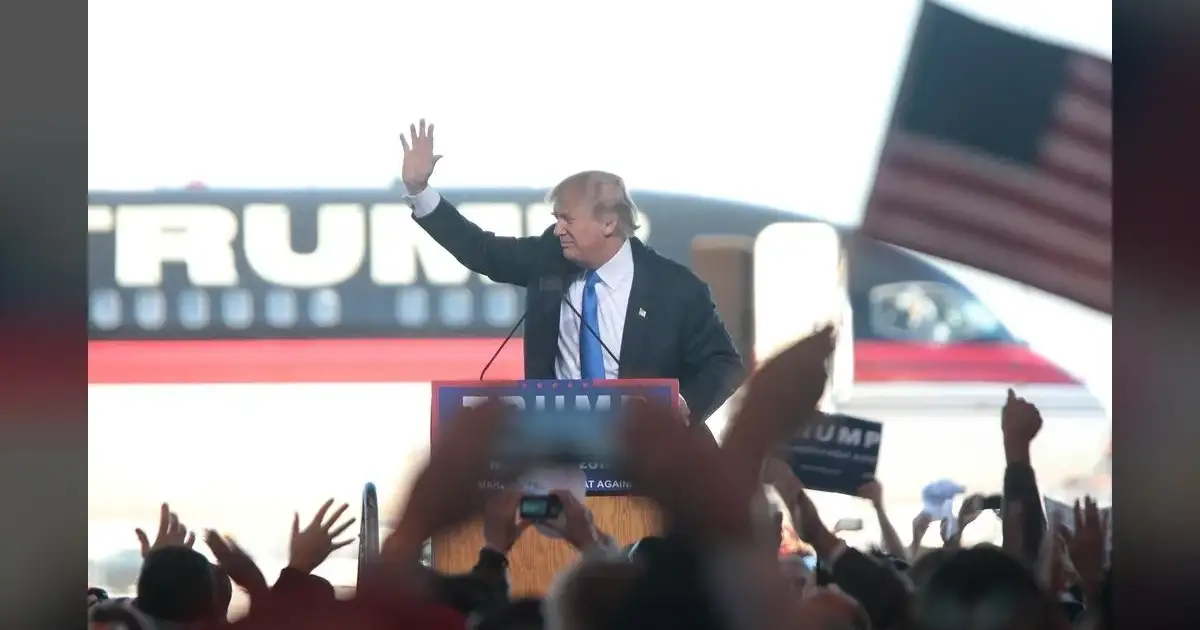
President Donald Trump didn’t just suggest lower gas prices; he issued an unequivocal ultimatum from a Pennsylvania campaign stage on June 29, 2026: slash pump prices to a flat $2.50 a gallon ‘immediately,’ or face ‘big problems ahead.’ This wasn’t merely a campaign promise; it was a defiant, almost monarchical challenge to the very fundamentals of economic reality, aimed squarely at the gut-level frustration of every American family struggling with inflation.
Amplified on his favored platform, Truth Social, this audacious demand for $2.50 per gallon stands in stark, almost fantastical, contrast to the prevailing national average, which stubbornly hovers between $3.80 and $4.00 per gallon. It’s a chasm not just in price, but in political philosophy: one side acknowledging complex market forces, the other simply commanding them into submission.

For Trump, this isn’t an economics lesson; it’s a political declaration. It’s about demonstrating an unyielding, almost visceral, fight for the common voter, positioning himself as the sole champion willing to confront what he frames as unchecked corporate greed. The ominous “big problems ahead” isn’t just a warning; it’s quintessential Trumpian rhetoric—a vague, yet potent threat designed to galvanize his base, instill apprehension in opponents, and compel immediate, unquestioning compliance.
Can a President Really Control Gas Prices?
The immediate, sobering answer to whether President Trump can unilaterally force gas stations to slash prices to $2.50 a gallon is an emphatic no. A U.S. president, regardless of their political will or executive muscle, simply lacks the direct legal or constitutional authority to mandate retail gas prices across the nation.
Gas prices operate within an intricate web of global market forces, far beyond the reach of a presidential decree. They are dictated by the volatile dynamics of crude oil supply and demand, the substantial costs of refining, complex distribution networks, and a labyrinthine structure of federal, state, and local taxes. This isn’t a local corner store setting its own price; it’s a global commodity, subject to geopolitical tremors and economic shifts.
Economists and energy experts are unanimous on this point. As Dr. Sarah Chen, a leading energy economist, bluntly explained to Reuters:
“Retail gas prices are a function of global crude oil prices, refining capacity, distribution costs, and taxes. A unilateral demand for a $2.50 price point is simply not sustainable without massive, unprecedented government intervention that would likely lead to severe market distortions and potentially shortages.”
Such a drastic price cut—over 30% from current averages—is not merely economically unviable; it would be catastrophic. It would spell financial ruin for countless gas stations and distributors, forcing them into bankruptcy or demanding unprecedented, massive government subsidies to maintain operations. The inevitable consequence would be widespread fuel shortages, a scenario far more damaging and chaotic than the high prices Trump purports to combat.
The Populist Playbook and Voter Frustration
If such a mandate is economically impossible, why then does President Trump issue it with such conviction? The answer lies in the cynical brilliance of populist politics. High gas prices are not just an economic data point; they are a constant, visceral reminder of persistent inflation and the relentless erosion of living standards for everyday Americans. It’s a direct, weekly assault on household budgets, a pain point felt acutely at every pump.
For the vast swathes of the electorate tethered to long commutes, a $4.00 gallon of gas isn’t merely an inconvenience; it’s a recurring, demoralizing punch to the gut. Trump’s audacious call for $2.50 gas taps directly into this raw, widespread frustration, offering a deceptively simple antidote to a deeply complex economic ailment. He doesn’t just acknowledge the anger; he amplifies it, weaponizes it, and positions himself as the sole political figure brave enough to articulate the public’s profound sense of being squeezed.
This aggressive tactic is hardly new territory for the former President. Throughout his previous administration and successive campaigns, Trump has consistently leveraged his formidable platform to exert immense pressure on both domestic oil companies and the OPEC cartel, demanding increased supply and lower prices. This specific, concrete $2.50 target, however, represents a significant escalation, transforming a general grievance into a precise, almost biblical, demand.
Deconstructing the “Big Problems” Warning
President Trump’s ominous warning of “big problems ahead” is more than a mere phrase; it’s a meticulously crafted political weapon. Deliberately vague yet undeniably menacing, it’s engineered to generate a potent cocktail of urgency, fear, and the implicit threat of severe, unspecified consequences for those who fail to comply. But what, precisely, does “big problems” truly signify in the Trumpian lexicon?
Is it a foreboding prophecy of economic downturns to come? Or a thinly veiled threat of unprecedented government intervention, the specifics of which remain conveniently opaque? More profoundly, it functions as a rhetorical sledgehammer, designed to bludgeon his opponents and force a national reckoning on the perceived limits of presidential power over the economy. Crucially, it draws an unmissable, stark line between his audacious, interventionist approach and the more cautious, market-aligned stances of his political adversaries.
The Biden campaign, predictably, was quick to dismiss it. A spokesperson stated:
“President Trump’s latest demand is a fantasy, showing a complete misunderstanding of how our economy and energy markets work. It’s a desperate attempt to distract from his own failed economic policies and offer empty promises.”
Democrats, predictably, were quick to dismiss the demand as a cynical distraction, a calculated maneuver to deflect from their own economic vulnerabilities and the undeniable realities of global energy markets. Yet, for the average American, the daily grind of exorbitant pump prices is not an abstract economic theory; it’s a tangible, painful reality. They crave immediate relief and tangible solutions, not nuanced economic explanations or political posturing.
The Real Stakes: Who Pays, Who Profits?
This entire, politically charged debate rips open the raw nerves of American household budgets. High fuel costs are far more than a mere inconvenience; they represent a direct, brutal assault on disposable income, driving up the cost of everything from groceries to childcare. They push already strained family finances to their absolute breaking point, creating fertile ground for populist grievances.
When a politician, particularly one of Trump’s stature, demands such a dramatic price reduction, it resonates powerfully with a beleaguered electorate. It projects an image of decisive action, of a leader who genuinely cares. But the fundamental, inconvenient question that always follows is this: who, precisely, bears the cost? If gas stations are compelled to sell fuel below their operational costs, they face inevitable bankruptcy. Should the government intervene with massive subsidies, it is the already burdened taxpayer who ultimately foots the bill, shifting the economic pain rather than eliminating it.
This, then, is not an earnest search for a sustainable economic solution. It is a calculated, almost cynical, leveraging of acute public pain for maximum political gain. It deliberately steers the national conversation away from nuanced economic realities and into the realm of pure political theater. The energy industry, for its part, remains steadfast, simply pointing to the immutable laws of supply and demand, a language few politicians seem willing to speak.
The Washington D.C. Game: All Talk, No Action?
This entire spectacle, make no mistake, is a masterclass in the ruthless, often theatrical, game of Washington D.C. politics. It is a potent populist appeal, meticulously engineered to galvanize a loyal base and draw an unyielding ideological line against political opponents. It vividly underscores President Trump’s unwavering willingness to confront and dismantle established norms, even when those norms are anchored in fundamental economic principles.
While a President certainly wields considerable power to influence energy policy—through strategic petroleum reserve releases, regulatory adjustments, or international diplomacy—the direct mandate of retail prices remains firmly beyond the constitutional bounds of executive authority. Such a radical intervention would necessitate legislative action, a perilous path fraught with the inherent risks of severe market distortions, unintended economic consequences, and potentially, a dangerous precedent for government overreach.
This, then, is the stark, cynical truth of how power is often wielded in a polarized democracy. A shrewd politician understands that in the court of public opinion, a bold, impossible promise can often outweigh a nuanced, achievable plan, especially when tapping into deep-seated economic pain. The real impact isn’t on gas prices, but on the political narrative itself.
Source: Google News