
What transpired at Paris Fashion Week on July 8, 2026 wasn’t merely a “rude awakening” for Lily Collins. It was a brazen, contemptuous act, a power play so audacious it should send shivers down the spine of anyone who believes in basic human decorum.
A prominent CEO, whose name is now synonymous with front-row boorishness, shoved her. Not nudged, not brushed past — shoved her. The internet, as it always does, erupted.

This wasn’t a minor bump in a crowded hallway; it was a deliberate, public demonstration of utter disrespect, captured in excruciating detail for the entire world to dissect. The implications extend far beyond a single celebrity incident; it’s a stark, ugly mirror held up to the entitled arrogance that too often defines the upper echelons of luxury fashion.
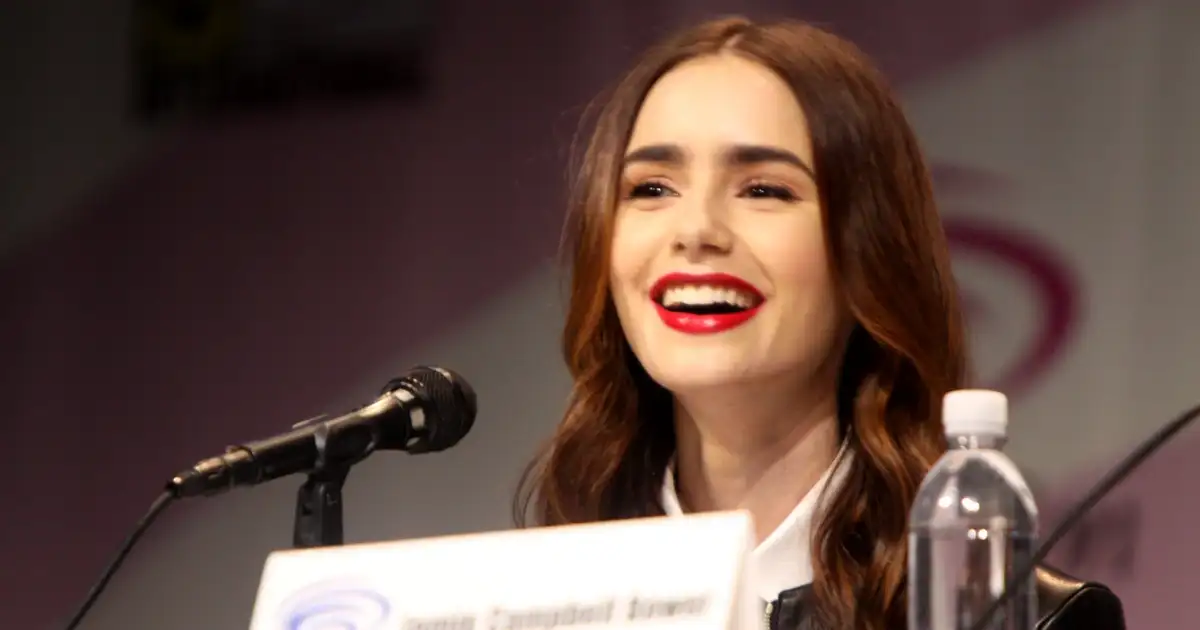
The stage was set at a Fall/Winter 2027 show, an exclusive event where Lily Collins, global darling of “Emily in Paris,” rightfully commands a front-row seat. But the curated veneer shattered in an instant.
Fan-shot videos, now viral across X and TikTok, show a man making aggressive, undeniable contact with Collins. He was quickly identified as a formidable CEO within the luxury fashion sector.
Her visible flinch, the subtle but telling shift in her posture, speaks volumes. It wasn’t an accidental brush; it was an imposition, a physical assertion of dominance that left no room for misinterpretation.
The Audacity of Power: A CEO’s Front-Row Shove
Let’s not mince words: fans didn’t just “identify” this man; they unmasked him. He is a titan in the luxury fashion sector, a figure whose “direct approach” is often lauded as decisive in boardrooms.
In public, however, this “direct approach” translates to sheer boorishness. His identity, though still officially unconfirmed by the brands involved, has become a lightning rod for online fury, a symbol of everything wrong with unchecked corporate ego.
This was no innocent jostle in a bustling backstage corridor. This was the front row – a sacred, meticulously controlled space where every seating arrangement is a calculated statement. To invade that space with such casual aggression isn’t just a lapse in judgment; it’s a declaration.
It screams, “I am above the rules, and you, even a global star, are merely an obstacle.”
The deafening silence, the complete absence of an immediate, heartfelt apology from the CEO, hasn’t just “fueled the fire”; it has poured gasoline on an already raging inferno. It is a complete disregard for common courtesy, a chilling reminder of the entrenched power dynamics that allow some to operate with impunity, even when caught red-handed on camera.
The Industry’s Cowardly Silence
As of July 10, 2026, a suffocating, almost defiant silence blankets the fashion world. Not a peep from Lily Collins or her formidable team, a strategic move perhaps, but one that leaves fans clamoring for justice.
The offending CEO? Predictably mute. And the fashion house itself, the very stage where this indignity played out, has offered nothing but crickets.
This isn’t a “calculated risk”; it’s a desperate gamble, a craven hope that if they ignore the uproar long enough, it will simply dissipate into the digital ether. But in 2026, that strategy is not just naive; it’s suicidal.
This corporate cowardice isn’t making the situation “worse”; it’s turning it into a full-blown crisis. Calls for boycotts are no longer whispers; they’re a roar across social media. Fans, armed with their collective outrage, are relentlessly flooding every channel with demands for accountability.
Let’s talk numbers: Collins commands over 28 million followers on Instagram. Her global resonance, largely fueled by “Emily in Paris,” makes her an irreplaceable brand ambassador.
To alienate that audience, to risk that kind of negative association, is not merely “damaging brand perception.” It’s a catastrophic miscalculation that could irrevocably tarnish the fashion house’s reputation.
This brand’s decision to stonewall the backlash isn’t just “dangerous”; it’s an insult to public intelligence, a brazen dismissal of consumer sentiment, and a profound disrespect for the very A-list talent they rely on to sell their dreams. Do they truly believe their haute couture is immune to the court of public opinion?
The Digital Guillotine: Social Media’s Unforgiving Verdict
Once upon a time, such an egregious display might have been confined to hushed whispers behind velvet ropes, a fleeting scandal in exclusive echo chambers. But that era is dead.
Today, every smartphone is a witness, every scroll a jury. Social media is the unforgiving court that amplifies every slight, every transgression, into a global spectacle.
The fans aren’t just “acting as judge and jury”; they are the judge and jury, delivering real-time verdicts with unparalleled ferocity. They demand accountability, not just for Lily Collins, but for the fundamental principle of human dignity.
This incident doesn’t just “highlight” the power of online communities; it demonstrates their absolute, unyielding dominion.
This isn’t merely about a celebrity being disrespected. This is about the universal affront of being treated as less than, of being dismissed with a casual shove. Who among us hasn’t felt the sting of such arrogance, the indignity of being deemed insignificant?
The fashion world, with its carefully constructed facade of untouchable glamour, often operates as if outside the bounds of common decency. This incident doesn’t just “pull back the curtain”; it rips it down, revealing the raw, often ugly power dynamics at play beneath the polished surface.
Are celebrities merely decorative props, silent mannequins positioned for marketing optics? Are they expected to absorb such contempt with a forced smile? The collective roar of millions online answers with a resounding, unequivocal “No.”
The Unmasking: High Fashion’s Ugly Hierarchy
This entire debacle isn’t just an incident; it’s an unmasking. It brutally exposes the entrenched, often toxic, hierarchy that defines high fashion.
CEOs, cloaked in their self-importance, don’t just “walk around like they own the place”; they act like they own the people in it, treating A-list talent, the very faces that lend their brands cachet, as disposable afterthoughts.
Lily Collins, a bona fide global star, a woman whose image graces billboards and screens worldwide, was, in that chilling moment, reduced to an inconvenience, a mere obstacle in the path of a man who felt entitled to push her aside. For her millions of fans, this isn’t just a “bitter pill”; it’s an indigestible lump of injustice.
The fashion house had a moral imperative to intervene, to defend their guest, to uphold some semblance of decency. The CEO had a human obligation to offer an immediate, unequivocal apology.
Their collective, ongoing silence isn’t a “tactical blunder.” It’s a craven abdication of responsibility, a PR catastrophe of epic proportions that will haunt them.
This silence screams volumes about their true regard for their high-profile guests – not as partners, but as props. It reveals an astonishing ineptitude in handling public relations, a tone-deafness that borders on contempt.
This incident won’t just “linger”; it will become a cautionary tale, an indelible stain on their legacy, long after the fleeting trends of any runway show have faded.
This isn’t merely about a physical shove. It’s about a profound, systemic lack of class.
It’s about the unbridled, entitled arrogance that doesn’t just “sometimes plague” luxury industries; it defines a significant, ugly portion of them.
It’s the emperor’s new clothes, revealed to be threadbare and utterly devoid of grace.
The outrage, then, is not just justified; it is a righteous roar. The fashion world, in its gilded cage of exclusivity, needs more than a “wake-up call”; it needs a seismic shift in its very foundation.
Let this be the unequivocal decree: respect is not a negotiable luxury, not an optional accessory, and certainly not something to be shoved aside, even in the most coveted, front-row seat.
The world is watching, and it demands better.
Photo: Wikimedia Commons (query: Lily Collins)
Source: Google News