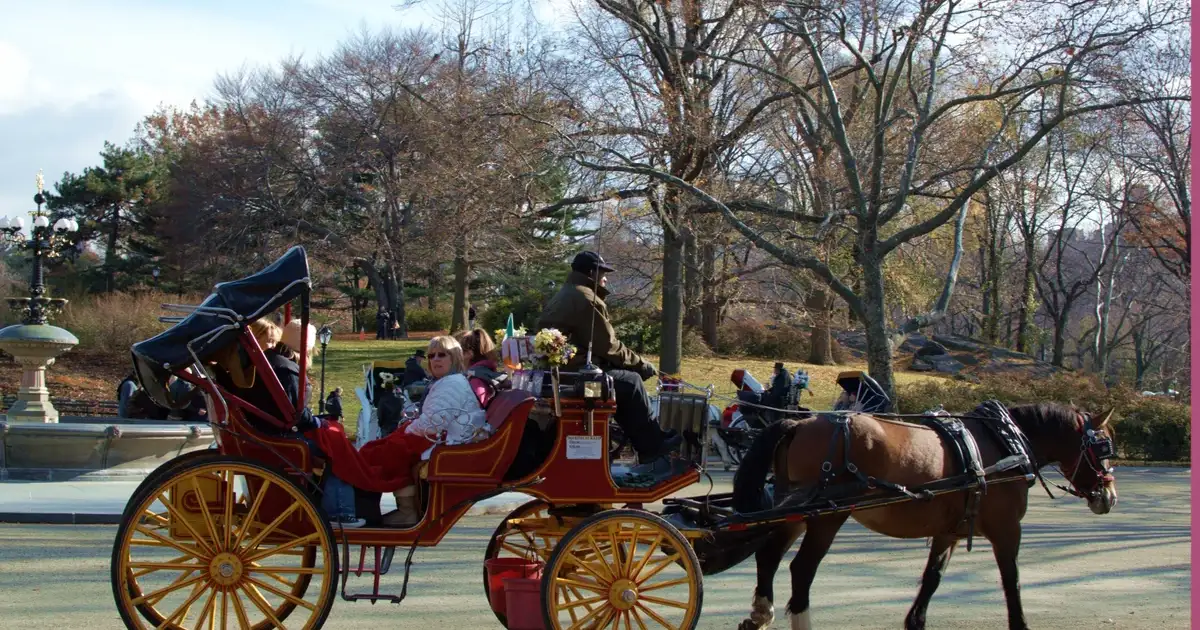

A father’s gut-wrenching account of his 18-year-old son’s death in a New York City horse carriage accident isn’t just a tragic headline; it’s the final, damning indictment of a dangerously outdated operation. This horrific fatality is now the undisputed centerpiece of an aggressive, renewed campaign to shut these rides down for good. The final score is clear: one young life lost, and the horse carriage industry is on the clock.
The incident itself is a devastating blow, a brutal reality check. An 18-year-old lost his life inside a horse carriage in New York City – a fact that should chill any rational mind. His heartbroken father bravely, agonizingly, recounted the terrifying final moments.

This isn’t merely a local story. It carries the crushing weight of a national debate about safety, tradition, and animal welfare, now amplified by an unbearable human cost.
Make no mistake, this isn’t a scrimmage. This is a full-contact, sudden-death battle for the future of New York’s streets. The family’s fight adds undeniable emotional leverage to a long-standing legislative push. City Hall is feeling the heat like never before, and the pressure is mounting for a definitive play.
The Playbook for a Ban: A New Offensive
The horse carriage industry in NYC has been on the defensive for years, clinging to a fading tradition. Animal rights groups have run their own relentless, strategic campaigns, arguing these operations are inherently cruel to animals.
More critically, they have consistently highlighted the inherent dangers of mixing large, unpredictable animals with dense, chaotic urban traffic. This isn’t a theoretical risk; it’s a daily gamble.
Accidents, while often non-fatal, are far from uncommon. They serve as constant, stark reminders of the risks. This latest fatality, however, doesn’t just change the game plan; it blows it up entirely. It irrevocably moves the discussion from abstract animal welfare concerns to the undeniable, tragic reality of human lives lost.
Opponents of the ban, primarily the carriage drivers and their powerful union, push back hard, clinging to the narrative that these rides are a historic part of New York’s charm. They speak of livelihoods and tradition, claiming their horses are well-cared for. But this tragedy puts their entire defense on impossibly shaky ground. How can charm or tradition outweigh a human life?
“The city needs to face facts,” an animal rights advocate previously stated, her voice ringing with prophetic urgency. “These carriages are a ticking time bomb. It’s not a matter of if, but when another tragedy strikes.”
Now, the “when” has arrived with horrific clarity. The father’s testimony is a direct, unfiltered punch to the gut of every policymaker and citizen. It exposes the brutal, unacceptable reality of what can and will go wrong when an archaic practice collides with modern urban life.
Momentum Shifts on the Field: The Unstoppable Drive
The legislative effort to ban horse carriages has seen too many false starts, too many stalled drives. Bills have been introduced, debates have raged, and yet, the industry always found a way to hold its ground, leveraging enough political muscle to block the ban.
But this time, the playing field is fundamentally different. The death of an 18-year-old demands a different response, a decisive action. This is no longer an abstract issue debated in committee rooms.
It’s a real person, a real family, shattered by an accident that countless experts consider entirely preventable. The human element has irrevocably altered the calculus.
Public opinion is a powerful, often irresistible, force. When a story hits this hard, it doesn’t just shift the narrative; it can create an unstoppable wave. Politicians who once sat on the fence will find it impossible to ignore the outcry. The optics are beyond terrible for anyone defending the status quo; it’s a political third-and-long with no timeouts left.
- Key Players: City Council members, the Mayor’s office, and various advocacy groups are now under intense scrutiny.
- The Stakes: The future of a century-old, romanticized New York tradition versus undeniable public safety and animal welfare concerns.
- Pressure Points: Emotional testimony, relentless media coverage, and an unprecedented public outcry are forming an unyielding blockade against inaction.
This isn’t just about a horse and buggy; it’s about a modern, forward-thinking city grappling with an archaic practice that has no place in its future. It’s about weighing sentiment against cold, hard risk and undeniable human tragedy. The city isn’t just being asked to make a call; it’s being forced to make the right call.
The Unacceptable Risk: A Clear-Cut Fumble
As a seasoned analyst, I’ve seen plenty of high-stakes situations. This one, however, is clear. The horse carriage industry is a relic, a dangerous anachronism. It simply doesn’t belong in a bustling metropolis like New York City. The risks are too high, the potential for catastrophe too great, and the benefits are simply too few to justify the gamble.
You cannot put a price on a human life. You certainly cannot justify its loss for the sake of a tourist attraction. This isn’t some quaint country road where a horse-drawn carriage might add a touch of rustic charm.
This is Manhattan traffic – a relentless, unforgiving urban jungle. Horses, by their very nature, are susceptible to startling, to fear, to panic. They are not machines with predictable responses. They do not have fail-safe brakes. They cannot handle rush hour like a taxi or a subway car. To suggest otherwise is pure delusion.
The argument for tradition rings hollow, even offensive, against this tragic backdrop. There are countless other, safer ways to experience the magic of New York.
There are other jobs for the drivers, many of whom are skilled and adaptable. There are other, more humane homes for these magnificent animals. These are not insurmountable problems; they are merely convenient excuses for clinging to a dangerous, outdated enterprise.
The heartbreak of this father is more than a powerful signal; it’s a flashing red light, a blaring siren, an undeniable warning. It tells the city council exactly what needs to happen, without equivocation. This isn’t a debate anymore. It’s a call to immediate, decisive action. The time for deliberation is over; the time for leadership is now.
Fourth Down for Horse Carriages: The Final Play
The legislative push will not just gain serious traction; it will become an unstoppable force. The emotional weight of this tragedy is immense, a gut punch that will resonate with voters and policymakers alike. It’s hard to look away from a grieving father, his life irrevocably altered.
It’s even harder, indeed morally indefensible, to justify continuing a practice that directly led to his son’s death. We’ve seen these battles before, these protracted struggles between entrenched interests and public good.
They often come down to a single, defining moment – a moment of undeniable truth that shatters all resistance. This fatality, and the father’s raw, powerful testimony, is that moment. It’s the kind of irreversible play that changes the outcome of the entire season, leaving no room for doubt.
The question isn’t whether the ban will be debated; it’s whether those in power possess the courage to make the tough, but necessary, call. They must put public safety, human life, and animal welfare ahead of a romanticized, dangerous tradition. This family’s unbearable pain must be the final whistle, signaling the permanent end of horse carriages in New York City. Anything less would be a dereliction of duty and a profound injustice.
Source: Google News