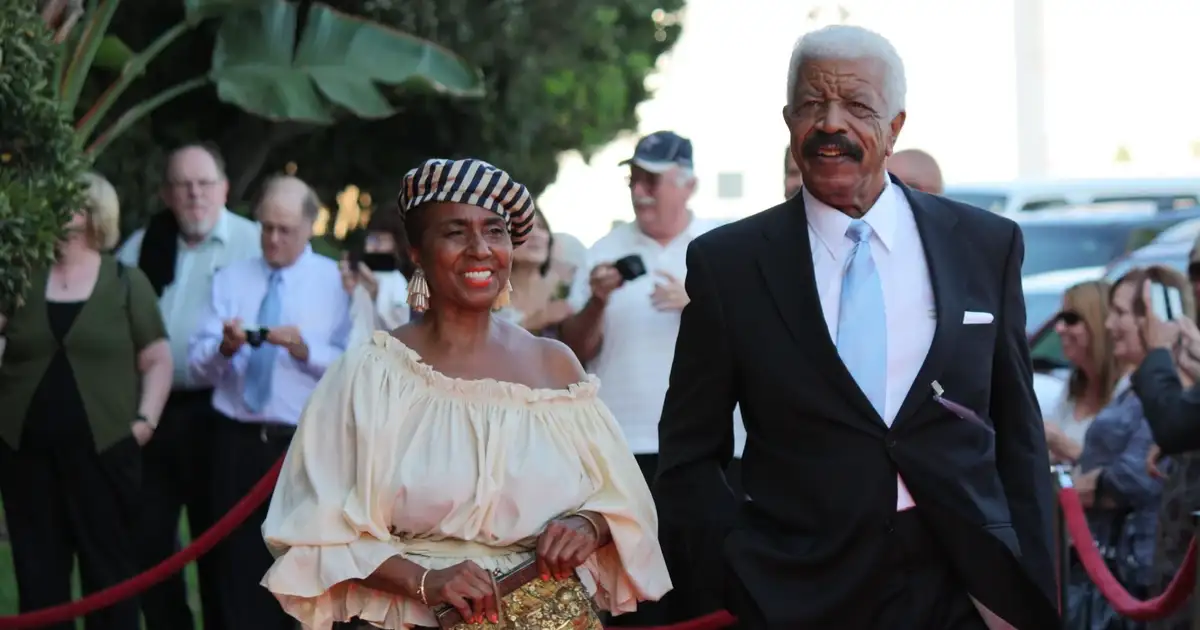

The final whistle has blown for Hal Williams, a gridiron-tough veteran of classic American television, who passed away at 91 in California. While the news only just hit the wire, his quiet departure on August 8, 2022, marks the loss of a true utility player who consistently delivered powerhouse performances across the small screen. This isn’t just a delayed announcement; it’s a stark reminder of how some of the most impactful careers are built not on flash, but on relentless reliability and unparalleled adaptability.
Williams didn’t just carve out a career; he engineered it with the precision of a seasoned offensive coordinator. His playbook included two legendary shows: the riotous comedy “Sanford and Son” and the deeply moving family drama “The Waltons.”

To pivot between these vastly different worlds – from urban grit to rural charm, from slapstick to heartfelt sincerity – showcased a rare, almost unprecedented versatility. Think of a defensive end who can flawlessly drop into coverage or an offensive lineman who dominates at both guard and tackle. That was Hal Williams: a master of every position he was asked to play.
The Stoic Anchor in Sanford’s Storm
On “Sanford and Son,” Williams became an instantly recognizable face as Officer Smith. He was one-half of the recurring police duo, often sharing the screen with Howard Platt’s Officer Hopkins. Their mission, a near-impossible one, was to maintain some semblance of law and order amidst the glorious chaos orchestrated by Fred Sanford and Lamont.
Fred Sanford was a maestro of evasion, a grand theatrical schemer. Officer Smith, in stark contrast, was the essential foil, the unshakeable bedrock against which Fred’s antics crashed. He wasn’t there for the punchlines; he enabled them.
Williams brought a commanding, almost unflappable authority to the role. He wasn’t flashy; he didn’t need to be. His strength was his unwavering presence, his quiet power.
Every time he stepped onto that junkyard set, you knew you were getting a performance as solid and dependable as a veteran center anchoring the offensive line. That kind of consistency isn’t just admirable; it’s the absolute backbone of any winning team, whether in Hollywood’s demanding arena or on the gridiron’s unforgiving turf.
Without Officer Smith’s grounded realism, Fred Sanford’s outlandishness wouldn’t have resonated with such comedic force. Williams understood the assignment: be the straight man, be the voice of reason, and hold the line.
He executed it flawlessly, week after week, making the outrageous believable and the hilarious even funnier through his understated conviction. That, my friends, is precision acting.
From Junk to the Blue Ridge Mountains: A Masterclass in Adaptability
The transition from the urban sprawl of “Sanford and Son” to the serene, yet emotionally complex, rural charm of “The Waltons” wasn’t just a change of scenery for Williams; it was a complete shift in his tactical approach. On “The Waltons,” he portrayed Harley Foster, a recurring character in a series celebrated for its warmth, its profound depiction of Depression-era family life, and its quiet dignity. This wasn’t merely about changing costumes; it was about embodying an entirely different spirit.
Harley Foster demanded a softer touch, a more nuanced, empathetic portrayal. The comedic timing of “Sanford and Son” had to be swapped for genuine dramatic weight and subtle emotional depth.
Williams didn’t just adapt; he transformed. He blended seamlessly into the beloved ensemble cast, proving he could handle both the sharp, reactive energy of comedy and the profound, reflective demands of drama. This wasn’t just range; it was a demonstration of his comprehensive mastery of his craft.
He proved he could adapt to any playbook, any coaching philosophy, and any game situation. That’s the mark of a true professional, someone who deeply understands the demands of the game and can execute with precision regardless of the scheme.
How many actors can truly say they’ve conquered two such disparate worlds with equal conviction? Few, I’d argue, and Williams did it with the quiet confidence of a champion.
A Deep Bench of Unsung Heroes
Williams’ career spanned decades, extending far beyond his two most famous roles. He was the quintessential working actor, a reliable soldier in the trenches of television and film, consistently appearing and always delivering. He built a reputation not on celebrity, but on unwavering dependability—the kind of performer you call when you absolutely need the job done right, every single time.
His filmography reads like a tactical breakdown of classic American television, a true “who’s who” of iconic shows. He graced the screens in “The Jeffersons,” “Good Times,” “Hill Street Blues,” and “227,” among countless others.
He wasn’t just part of the fabric of American television; he was an integral thread, weaving through the narratives that defined generations. These were the shows that shaped our cultural landscape, and Williams was right there, contributing solid, memorable work that often went unrecognized by the mainstream, yet was indispensable to the final product.
He was the kind of actor who elevated every scene he entered, not always the star quarterback, but always the essential offensive lineman, the defensive back who makes the critical tackle, the unsung hero whose contributions are vital to victory, even if they don’t always hit the highlight reel. His consistent professionalism and ability to make every character, no matter how small, feel authentic and impactful is a lesson in the power of true craft over fleeting fame.
The Enduring Legacy of a Character Actor’s Grit
The delayed news of Hal Williams’ passing, though years old, still resonates today, a powerful echo from a golden era of television. It reminds us of a time when performers mastered the art of the character role, understanding that impact isn’t solely tied to top billing. They simply needed a chance to play their part, and they played it with conviction.
Williams’ seamless work in both comedy and drama wasn’t just versatility; it was a profound demonstration of range. He could make you laugh out loud one minute and stir genuine empathy the next.
That’s a brutal skill to master, a rare combination of raw talent, relentless dedication, and tactical precision. His contributions to foundational shows like “Sanford and Son” and “The Waltons” weren’t peripheral; they were integral to their longevity, grounding the narratives and infusing them with undeniable life.
The fact that his performances continue to be discovered by new generations, still available for viewing and appreciation, speaks volumes about the lasting impression he made. Hal Williams played his roles with integrity, skill, and an unwavering commitment to the craft.
He was a consistent force, a reliable presence in an often-fickle industry. His career stands as an enduring demonstration of the power of solid, dependable acting—the kind that builds dynasties, not just fleeting moments.
He may be gone, but his work continues to resonate, a permanent fixture in the annals of television history. What greater victory can any performer claim than that kind of indelible, enduring legacy?
Source: Google News