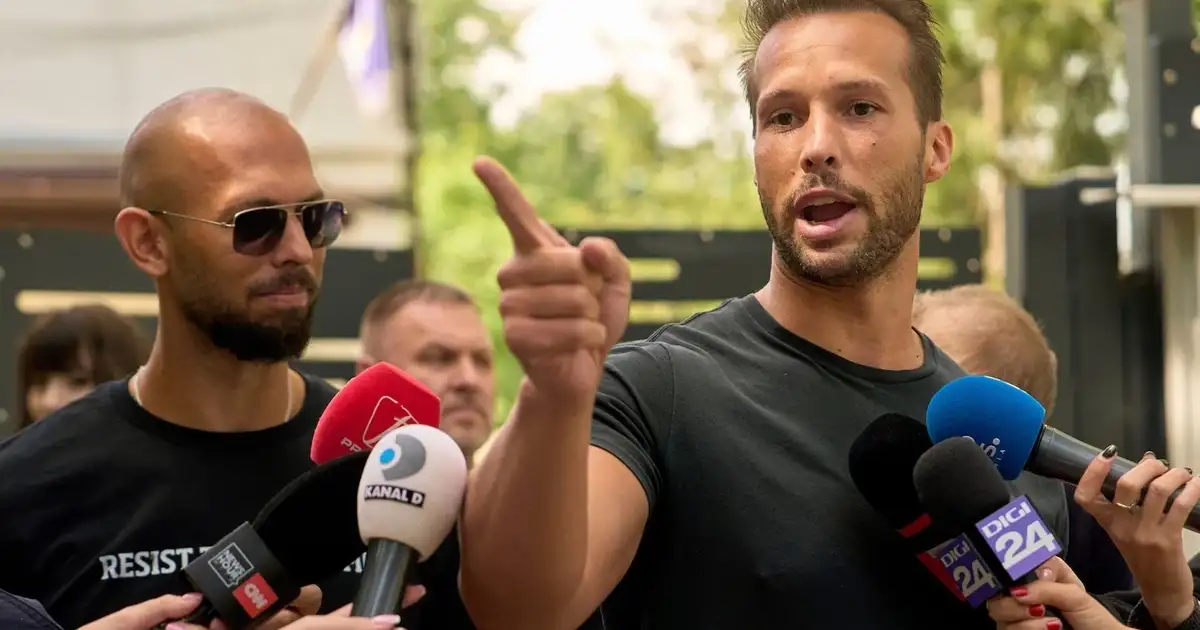

The audacity is breathtaking: President Donald Trump, a man who once held the most powerful office on earth, is now being openly courted by the legal team for Andrew and Tristan Tate. These controversial brothers, currently embroiled in what their lawyer calls “sickening” new charges in the United Kingdom, are banking on Trump’s intervention to derail their extradition – a move that, if successful, would not merely bend, but outright shred any pretense of impartial international justice.
The Tate brothers are battling a fresh extradition request from the UK, a development that has sent shockwaves through their already beleaguered legal defense. These new charges reportedly include grave allegations of sexual assault and exploitation, spanning a period before their initial high-profile arrest in Romania in late 2022. The brothers, predictably, vehemently deny these accusations, branding them a “coordinated attack” orchestrated by shadowy forces determined to silence their controversial voices.

The Tate Playbook: Banking on Trump’s Crusade
Eugen Vidineac, the Tate brothers’ lawyer, has publicly staked their hopes on President Trump, an extraordinary gambit in a high-stakes international legal battle. Vidineac claims Trump’s known stance against “cancel culture” and “political persecution” makes him a natural, ideological ally. This isn’t merely about legal precedent or procedural nuances; it’s a shrewd, if cynical, play for political theater, explicitly leveraging the powerful, polarizing brand of a former U.S. President.
The Tates remain under judicial control in Romania, where they face separate, equally grave charges. These include human trafficking, rape, and forming an organized crime group – accusations they also deny. The new UK charges only deepen their legal quagmire, creating a complex web of international legal challenges.
Vidineac’s strategy is transparent: to recast the Tates not as alleged criminals facing severe charges, but as victims. He aims to portray them as targets of a sprawling, global conspiracy, a narrative that perfectly mirrors and reinforces President Trump’s own frequent, vociferous claims of being unfairly targeted by weaponized legal systems, a biased media, and a deep state. This alignment is no accident; it is a calculated attempt to tap into a wellspring of populist grievance.
“We believe that President Trump, given his consistent stance against what he perceives as politically motivated attacks and cancel culture, would understand the Tates’ situation,” Vidineac stated, his words clearly aimed beyond the courtroom. “He has always stood for individuals being unfairly targeted, and we are counting on that principle to resonate.”
Andrew Tate himself has enthusiastically echoed this victimhood narrative, using his massive online platform to rally supporters and frame his legal battles as a fight against an oppressive establishment. This digital influence, cultivated over years of controversial commentary, is a key, undeniable part of their strategy to sway public opinion.
“They will try to silence me with every tool they have,” Andrew Tate has claimed, projecting defiance to his millions of followers. “These new charges are just another desperate attempt. I will fight this injustice, and the world will see the truth.”
The legal defense for such labyrinthine international cases devours fortunes. While Trump is unlikely to directly fund their defense, his powerful, symbolic endorsement could be the catalyst their own fundraising efforts desperately need. This could transform a legal quagmire into a political crusade, a nakedly cynical play for public opinion. It aims to galvanize a base already primed to distrust mainstream institutions and rally behind perceived victims of the establishment.
Trump’s Potential Avenues of “Support”: More Political Than Legal
The real question isn’t if Trump will offer support, but how he might choose to manifest it. Direct legal intervention in a UK extradition from Romania is a fantasy, a legal impossibility. This is about politics, plain and simple, a calculated maneuver on the global stage.
- Public Statements & Endorsements: Trump could effortlessly unleash a barrage of statements via social media or through interviews, expressing unwavering solidarity with the Tates. Such pronouncements would invariably frame the brothers as victims of yet another “witch hunt,” designed to silence dissenting voices. This wouldn’t just rally his devoted base; it would inject a potent dose of doubt into public perception surrounding the legitimacy of the charges. It could potentially even influence the political calculus of foreign governments and the broader narrative disseminated by outlets like CNN or The Guardian.
- Amplify “Cancel Culture” Narrative: This isn’t merely Trump’s most realistic avenue of “support”; it’s his most potent weapon. By amplifying the Tates’ claims of politically motivated attacks and framing their plight as a battle against “cancel culture,” Trump seamlessly aligns their struggle with his own perceived existential battles against the entrenched establishment. This intellectual and ideological endorsement, delivered from the pulpit of a former president, lends the Tates a crucial, albeit manufactured, legitimacy among his millions of followers. It transforms a criminal defense into a culture war battleground.
- Lobbying Efforts (Indirect): While direct, overt legal intervention in an extradition between two sovereign nations remains largely a fantasy, Trump’s vast political network could theoretically exert informal pressure. This might involve subtle, behind-the-scenes diplomatic channels, perhaps raising “concerns” about due process or political motivations through unofficial contacts. However, any direct intervention would be unprecedented, legally fraught, and carry the distinct risk of severe diplomatic blowback. It could potentially strain alliances and undermine the very principles of international legal cooperation.
- Future Presidential Actions (If Elected): The thought of a future President Trump directly influencing a private citizen’s extradition case is chilling. If re-elected, Trump would command the full weight of U.S. foreign policy. He could express official concerns, apply economic pressure, or even leverage diplomatic relationships to influence the process. Such an action would not merely be unusual; it would be an audacious, unprecedented breach of international legal norms, carrying massive international legal and ethical implications. It would effectively signal that American political power can be wielded to shield favored individuals from justice abroad.
President Trump has a long, well-documented history of defending controversial figures, especially those who claim political targeting or media bias. He often champions individuals he believes are unfairly treated, and his “America First” stance fuels a deep skepticism towards international legal cooperation. Yet, direct intervention in a private citizen’s extradition case, particularly one involving such serious allegations across multiple sovereign nations, would still represent an unusual and potentially dangerous step, even for him.
The “So What” Factor: Justice on Trial
This isn’t merely a sensational sidebar involving the Tates or a fleeting political maneuver by Trump. This saga strikes at the very bedrock of the international justice system. It challenges the sanctity of international legal cooperation, dangerously blurring the lines between legitimate prosecution and politically engineered vendettas. When a former, and potentially future, U.S. President is invoked in such a manner, the stakes don’t just skyrocket; they threaten to destabilize the entire framework of global legal accountability.
The case highlights the immense complexities of international extradition and the formidable challenges of prosecuting alleged crimes across borders, particularly when high-profile individuals are involved. Their pervasive online influence further complicates matters, weaponizing digital platforms to impact not only legal proceedings but also the broader public perception, creating a parallel narrative that often clashes with factual evidence.
For the alleged victims of sexual assault and exploitation, both in the UK and Romania, the outcome of this convoluted extradition battle is not merely critical; it is a profound test of faith in the justice system. Justice, in its purest form, demands accountability, irrespective of fame, wealth, or political connections. Any perceived political interference, any hint that a powerful patron can circumvent due process, sends a chilling, demoralizing message to victims worldwide: that their suffering can be dismissed, their pursuit of justice rendered futile by political maneuvering.
Trump’s potential involvement isn’t just a tactical move; it would further solidify and define his political identity as the ultimate anti-establishment champion. His willingness to align with figures who openly defy mainstream norms and challenge established legal systems would not only energize his base but also fundamentally warp broader political discourse, elevating conspiracy theories and distrust in institutions. It’s a perilous game, not just for the rule of law, but for the very fabric of democratic accountability.
The Tates are banking on more than legal arguments. They seek a political rescue, a presidential pardon from the court of public opinion. This isn’t merely about their freedom. It’s about a far more corrosive principle: whether the powerful, by merely invoking “cancel culture,” can effectively declare themselves above the law. The real, indelible cost of such a precedent would be borne by every citizen who still clings to the fading ideal of equal justice under law. The question isn’t *if* Trump will respond, but *what price* the world will pay if he does.
Photo: Wikimedia Commons (query: Tate brothers)
Source: Google News