

Colorado Chokes: Your Air, Your Lungs, Their Inaction
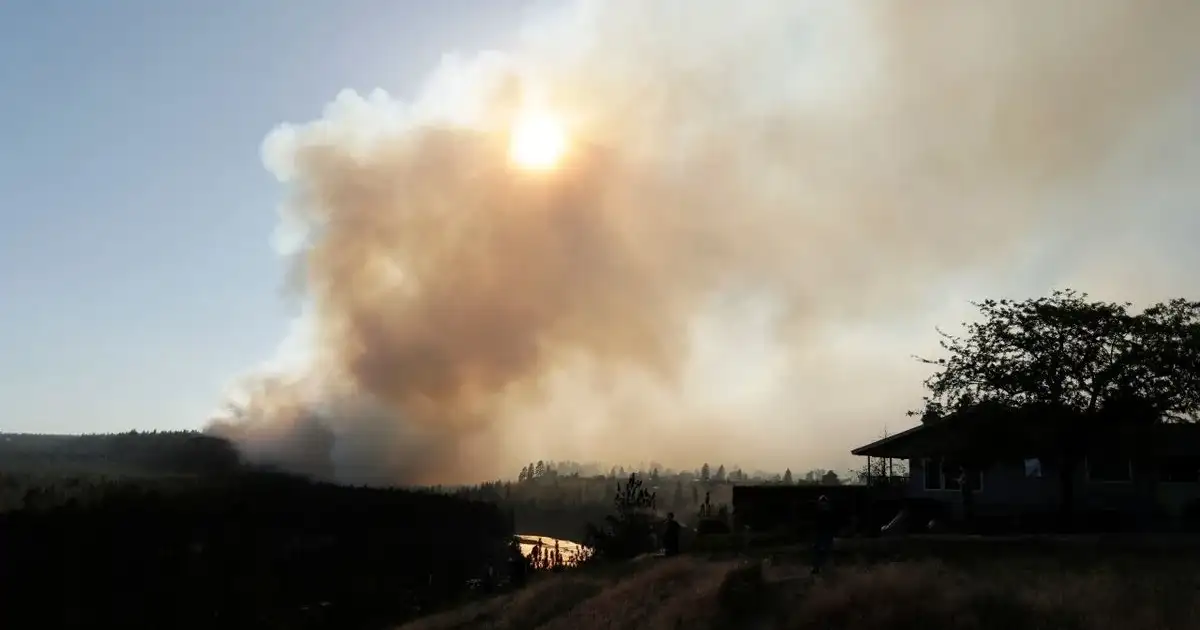
Forget “another year.” This isn’t a cycle; it’s a crisis. Right now, as you read this, the air you’re breathing across Colorado is poisoning you. It’s not an exaggeration: breathing our wildfire-choked air is scientifically proven to be like smoking seven cigarettes a day. This isn’t some abstract climate warning whispered by distant “experts.” This is happening now, to your lungs, your kids, and your neighbors. And while officials issue warnings, we’re left to inhale the consequences – and their excuses. Over the past 72 hours, from August 3rd to 6th, **2026**, air quality across western and central Colorado has plummeted from bad to worse. The “High Park 2” fire in Larimer County rages at over 5,000 acres, only 60% contained. Add smoke from blazes far beyond our borders, and you get a lethal cocktail. The Colorado Department of Public Health and Environment (CDPHE) has been busy, alright. Busy issuing “advisories.”The Invisible Killer They Ignore
The science is stark. It’s also terrifyingly simple. A PM2.5 concentration of 22 micrograms per cubic meter (µg/m³) equals those seven cigarettes. The EPA’s own 24-hour standard is **35 µg/m³**. Yet, what happens here? Many parts of Colorado routinely blow past that 22 µg/m³ threshold. We’re not just talking “unhealthy for sensitive groups”; we’re talking full-blown “unhealthy” Air Quality Index readings (AQI 101-200). Places like Grand Junction and Aspen have seen these dangerous levels recently. Dr. Eleanor Vance, from CDPHE’s Air Quality Division, offered the usual platitudes:“Wildfire smoke is not just an irritant; it’s a complex mixture of pollutants that can have serious, long-term health consequences, especially for our most vulnerable populations. The ‘cigarette equivalency’ helps put that risk into perspective for the general public.”Perspective? We don’t need perspective. We need action.
The Real Cost of Hot Air
Think this is just a little cough, a minor inconvenience? Think again. This PM2.5 nightmare isn’t just irritating; it’s a slow, insidious killer. Long-term exposure is directly linked to increased rates of asthma, chronic bronchitis, and reduced lung function. It jacks up the risk of heart attacks, strokes, and hell, even lung cancer. Children’s developing lungs are particularly vulnerable. Older adults face compounded risks. Maria Rodriguez, a Colorado resident and mother of two, spoke the truth:“We’re seeing more and more days where the air quality is simply unsafe. It’s becoming the new normal, and we need to treat it with the same urgency as any other public health crisis.”She’s right. The state’s response? More warnings. More “limit outdoor activity” advice. Meanwhile, this recurring health crisis costs Colorado millions of dollars annually in increased emergency room visits and hospitalizations. Who pays for that? You do. John Miller, a Colorado State Forest Service official, chimed in with his agency’s boilerplate:
“While we’re doing everything we can to manage active fires, the long-term solution lies in proactive forest health initiatives and addressing the underlying factors contributing to these extreme fire conditions.”“Proactive forest health initiatives.” Sounds great on paper. Where’s the urgency? Where’s the budget to match the crisis? Here’s the brutal, undeniable truth: Colorado’s leadership talks a big game about “resilience” and “proactive management.” But when the smoke rolls in, their *only* consistent strategy is telling you to stay inside and buy an air purifier. They’ve known for years – *decades* – the health devastation these smoke seasons cause. They know the escalating risk. Yet, the systemic, bold changes needed to truly tackle this – massive, sustained investments in forest management, aggressive climate action – are always relegated to “long-term solutions” that get kicked down the road, year after year. The real, cynical motive? Avoiding the immediate, politically difficult spending required to prevent future disasters, preferring instead to manage the fallout with platitudes and advisories. Coloradans are left gasping, their health compromised, their wallets drained by medical bills and mitigation efforts, while officials pat themselves on the back for another “advisory” well-issued. This isn’t just about battling fires; it’s about battling political cowardice, apathy, and a dangerous lack of foresight. Unless something fundamentally shifts, expect more of the same next year. Your lungs will pay the ultimate price. Demand better.
Photo: Ethan Sahagun
Source: Google News