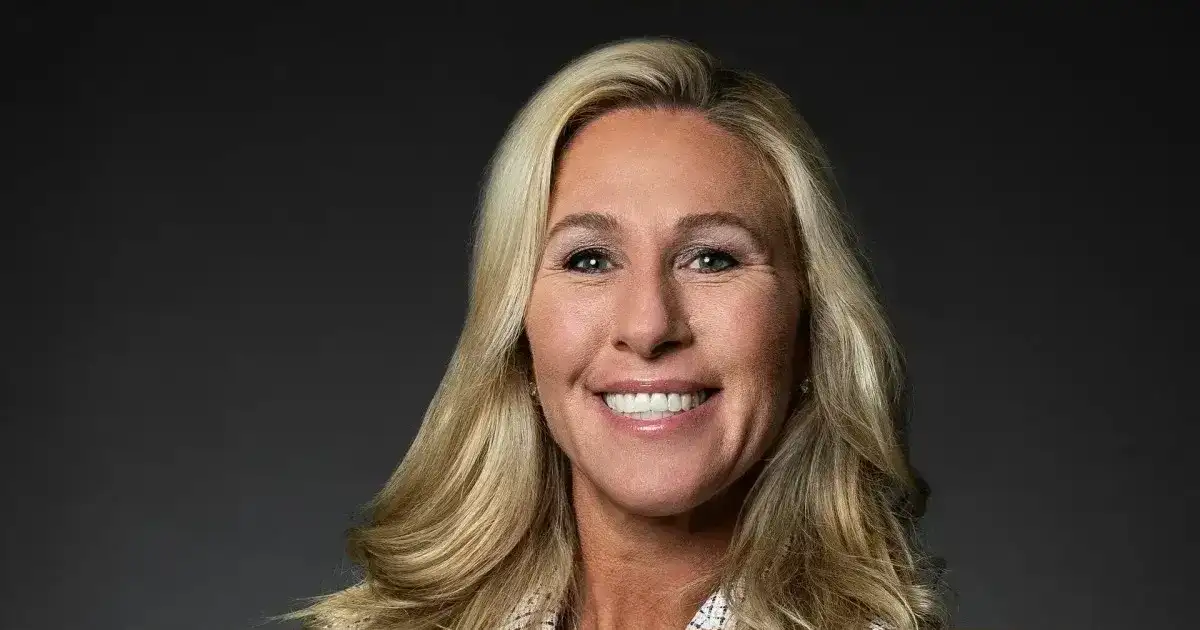

Marjorie Taylor Greene isn’t just a politician anymore; she’s a brand, and she’s charging top dollar for it. The Georgia firebrand has just launched on Cameo, not merely to ‘connect with fans,’ but to brazenly monetize her political notoriety, demanding a shocking $500 for a personalized video message.
News broke on August 4, 2026, that Representative Greene’s profile went live. Her price tag for a brief personal video is an eye-watering $500.

For businesses, she wants a staggering $2,000. A live chat will cost $1,500. This isn’t just about connecting; it’s a blatant, unapologetic political money grab.
The digital town square erupted in outrage. Critics immediately slammed the “absurd” pricing, seeing it as a brazen attempt to profit directly from public office. This move doesn’t just suggest commercialization; it screams the outright exploitation of a public persona for private gain.
The Ethical Minefield of Monetized Politics
This isn’t merely about sticker shock or the audacity of the price tag. It’s about a sitting member of Congress actively monetizing her position, turning her public platform into a personal ATM. Dr. Evelyn Reed, a sharp political analyst, didn’t pull punches on CNN.
“This isn’t just about a personalized message; it’s about a member of Congress leveraging their official position for personal gain at an exorbitant price. It’s a troubling trend that erodes public trust.”
Greene’s team, of course, offered a different spin, a thinly veiled justification for the cash grab. They told The Hill she is “excited to connect directly with her supporters,” claiming her pricing reflects “high demand and value of her time.” One has to wonder: is the “value of her time” truly measured by a five-hundred-dollar video, or by the public service she’s elected to perform?
Is It Even Legal? Navigating the Loopholes
But the burning question remains: can she actually do this? Members of Congress operate under a labyrinth of ethics rules.
They are permitted to earn income from legitimate outside employment, yes. However, using their official position or resources for personal gain remains a cardinal sin in public service.
Federal law explicitly bans “honoraria”—payments for speeches or appearances linked to official duties. Cameo videos, however, are often framed as “personal” messages, ostensibly separate from congressional work. This isn’t a grey area; it’s a gaping chasm in the rules, a loophole big enough to drive a truck through.
Every member of Congress must file annual financial disclosure reports. Any income from Cameo would indeed need to be listed, offering some semblance of transparency into their outside earnings.
But transparency doesn’t magically dissolve the stench of impropriety. Other politicians have tried similar ventures, facing scrutiny and public backlash.
Yet, time and again, if the activity can be tenuously spun as ‘personal,’ it slips through the cracks. This leaves a trail of public cynicism in its wake. Direct legal challenges or formal sanctions are as rare as a politician refusing a pay raise.
The Price of Public Service: A Disgraceful Trend
This entire spectacle isn’t just an isolated incident; it’s a glaring symptom of a disturbing trend. Public service is becoming a side hustle, a stepping stone to influencer status. Politicians are shamelessly leveraging their notoriety, turning their taxpayer-funded platforms into personal cash cows.
For $500, you get a few seconds of a politician’s time—a politician you already pay with your taxes. This isn’t just blurring the line between public servant and celebrity influencer; it’s obliterating it.
It makes people cynical, and rightly so. It screams that public office is not a calling, but merely a pathway to personal enrichment, a brand to be aggressively marketed.
It also raises profound questions about accessibility and democratic principles. Is a politician only available to those who can afford a $500 video? Or a $2,000 business message?
This isn’t constituent outreach; it’s a cynical pay-to-play scheme. It transforms elected officials into exclusive, high-priced content creators. This is not public service; it’s a perversion of it, creating an exclusive, paying audience at the expense of genuine representation.
Marjorie Taylor Greene’s Cameo debut isn’t just a fleeting headline; it’s a stark, neon-lit billboard screaming the ugly truth: politics has become a brand, and some politicians are unapologetically charging top dollar for it. The price tag isn’t just outrageous; the implications are a cancerous growth on the very idea of public service. When did the people’s house become a storefront, and when did our elected officials become glorified content creators?
Source: Google News